


2,700-Year-Old Etruscan Tomb Unearthed at Vulci Still Holds Gold, Weapons and Banquet Sets
Archaeologists have unearthed a monumental 2,700-year-old tomb at Vulci, an important ancient Etruscan city north of Rome. Despite repeated attempts by tomb robbers to plunder the burial site over the centuries, it still contained an extensive collection of grave goods, including weapons, gold and bronze plates, chariot parts, rare women’s shoes and complete banquet sets.
Archaeologists locate a burial chamber first noted in 1889
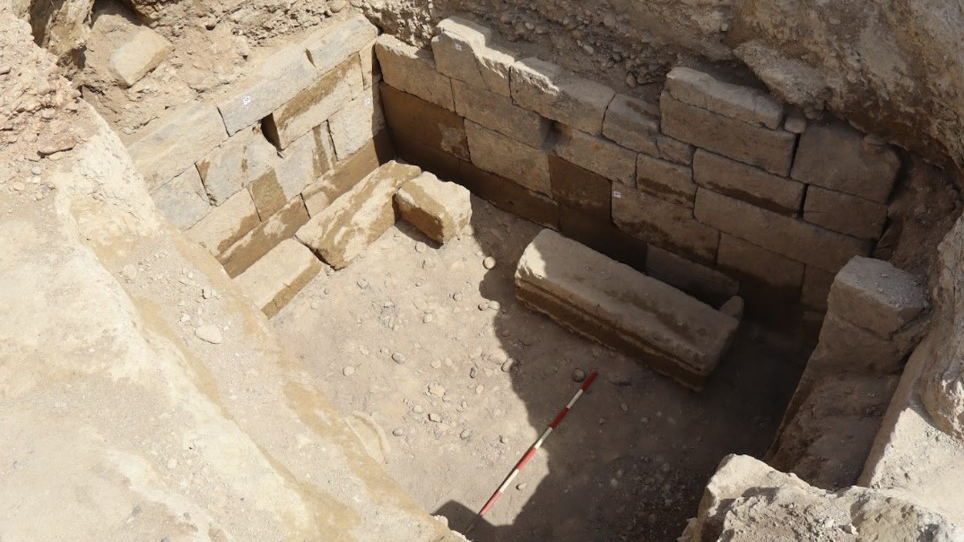
According to a statement from the Superintendent of Archaeology, Fine Arts and Landscape of the Province of Viterbo and Southern Etruria (SABAP-VT-EM), Italy, the Stone Chamber Tomb was excavated this summer.
The discovery builds on research conducted by French archaeologists in the late 19th century. In 1889, archaeologist Stefan Gsell identified the circular enclosure of an Etruscan burial mound in the Vulci cemetery. He sketched the area surrounding what he believed was a tomb, but ran out of time and money before he could locate the burial chamber.
Now, archaeologists working with the Return to Vulci project believe they have finally found the chamber within the “Guseru Burial Mound.” The tomb proved to be much larger than Gsell or the modern researchers expected.
“This is the burial. We are absolutely sure of that,” said Christian Mazet, a British Museum archaeologist and co-director of the project, according to Etruscan Times.
The discovery of weapons, chariot parts, gold objects and high-quality pottery indicates that the tomb belonged to someone of the highest rank, Mazet said.
Rare shoes and elaborate banquet sets found inside
The stone-chambered tomb dates to the 7th century BC. Archaeologists excavated the walls of its three burial chambers and found numerous artifacts, including jewelry, clothing and shoes preserved beneath the collapsed roof.
A side room contained several especially unusual objects, including a bronze tripod made on the modern-day Greek island of Rhodes, off the southwestern coast of Turkey, according to SABAP-VT-EM.
Researchers also discovered nearly complete banquet sets. Some vessels remained in their original positions after spending centuries underground, offering a glimpse into the ceremonial practices of the Etruscan elite.
One of Vulci’s most monumental tombs
The Etruscan cemetery at Vulci is well known for its wealthy tombs. Thousands were discovered during the 19th century, but the newly excavated tomb may rank among the largest and most significant burial monuments at the site.
Gsell estimated that the mound was about 102 feet (31 meters) in diameter and called it the “New Cucumela,” after the largest Etruscan burial mound previously discovered at Vulci. The enormous Cucumela tomb measures about 230 feet (70 meters) in diameter.
Preliminary calculations by experts with the Return to Vulci project suggest that the newly identified chamber tomb may have been as large as Cucumela, or possibly even larger.
“Everything shows that this building is one of the most monumental in Vulci,” Mazet told Etruscan Times.
What the tomb reveals about the Etruscans
The tomb was built during the heyday of Vulci, when the Etruscans controlled central Italy. Their society began to decline in the 4th century BC as Roman power expanded.
Although the Etruscan language is only partially understood today, archaeological sites such as Vulci provide important evidence about the civilization’s wealth, trade networks and burial customs.
SABAP-VT-EM said the tomb and its burial mounds have been covered for preservation. Research on the site is expected to continue until 2027.
Source: www.livescience.com