


Two New Snail Species Discovered in Montenegro’s Mountains
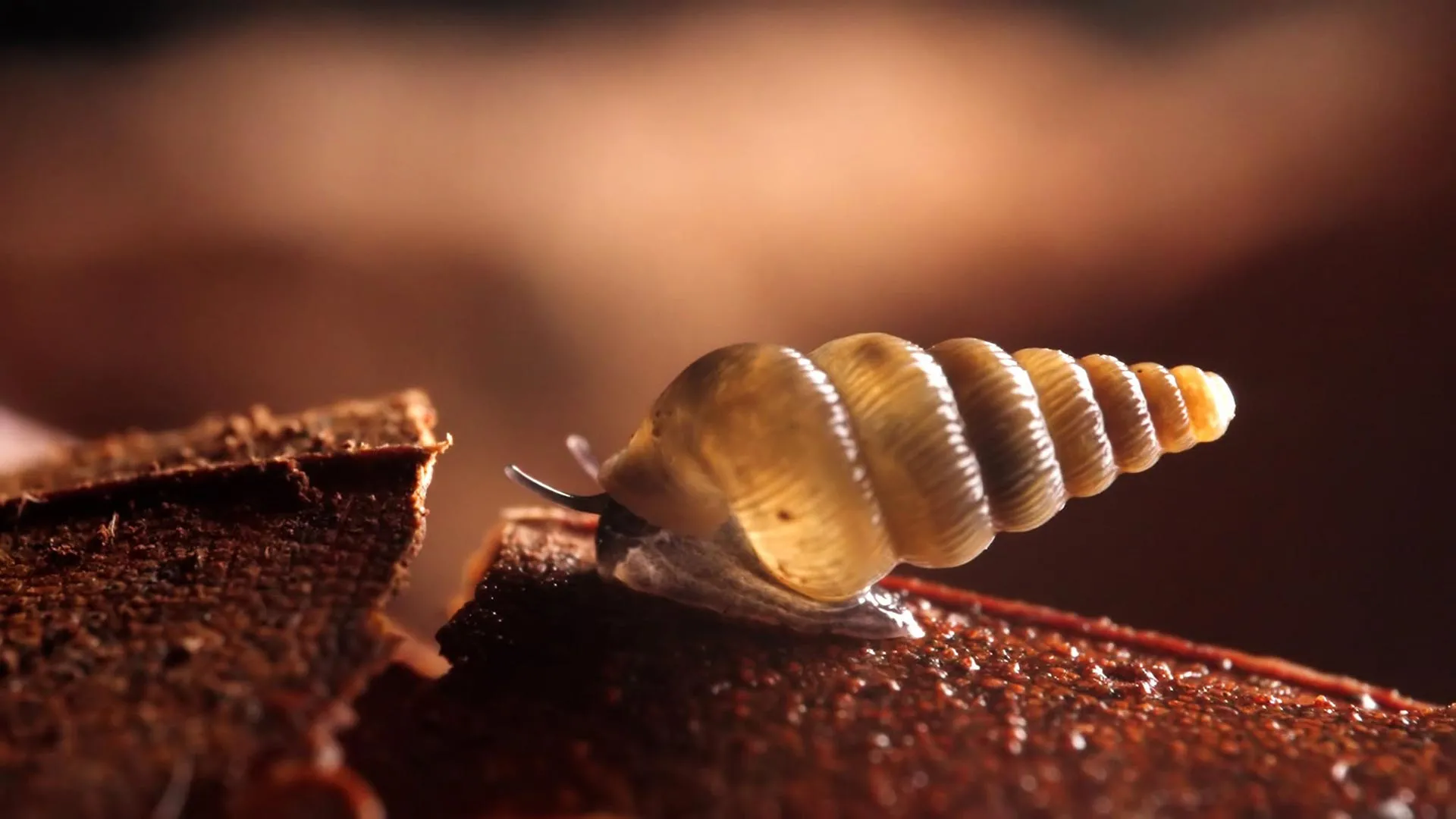
Two newly identified snail species have expanded the known diversity of European land snails. Cochlostoma komarnica and Cochlostoma dobrido are described in a new open-access study published in the Biodiversity Data Journal.
Neither species has an English common name yet. Both are small, with conical shells measuring about 6 millimeters long. They live on limestone rocks and feed on algae and lichens.
The snails also have unusual anatomical features. Unlike most land snails, their eyes are positioned along the sides of the head rather than at the tips of their eyestalks. Their tails have a circular disc that can seal the shell opening like a door when the animals retreat inside.
New snail species discovered in Montenegro
The snails were discovered during an expedition organized by Taxon Expeditions, an initiative that allows members of the public to participate in authentic scientific fieldwork.
Between 2018 and 2025, expeditions in Montenegro were conducted through a partnership involving Taxon Expeditions, the nonprofit Taxon Foundation and local collaborators from the Montenegro Ecologist Association.
The field teams included international researchers, citizen scientists, local students and conservationists investigating biodiversity in Durmitor National Park and the Komarnica Valley.
Researchers encountered the snails at several locations across the region’s rugged mountainous terrain. However, it was not immediately clear whether they represented species previously unknown to science. That became apparent only after the animals were dissected and genetically analyzed in a field laboratory.
New snail species named after Montenegrin locations
The expedition team selected the species names in a vote held at camp.
Cochlostoma dobrido was named after the Dobri Do Plateau, located at the top of Durmitor National Park. Cochlostoma komarnica takes its name from the Komarnica Valley south of Durmitor, an important area of biodiversity that remains unprotected.
“I was surprised that we could still discover new species of animals in Europe,” said Janine Buisman, a musician from the Netherlands who participated in one of the expeditions and later co-authored the study.
Another study author, biologist Jovana Čokic of the Montenegrin Society of Ecologists (MES), said the gorges, mountains and valleys of this part of the Balkan Peninsula contain a wide range of underexplored biodiversity. Many species may still be waiting to be recorded, she added.
Komarnica Valley faces hydropower development threat
Čokic said proposed plans that would affect the Komarnica Valley are a particular concern.
“What is even more worrying is that the Komarnica Gorge is being flooded by hydroelectric dams and reservoirs. This will destroy this wild river gorge and all its biodiversity, including many species that are still unknown to science.”
— Jovana Čokic
The proposed development has helped make the Komarnica Valley a major focus for organized biodiversity research. Researchers and conservation groups are documenting the area’s wildlife to build a scientific basis for protecting it.
MES is calling for the protection of the Komarnica Valley and the cancellation of hydropower projects. The valley is located near Durmitor National Park, a UNESCO World Heritage Site. More information about the campaign to protect the valley is available through Save Komarnica.
“Hydropower, which destroys these unique ecosystems, is not green or sustainable energy,” Čokic said.
Source: www.sciencedaily.com