


‘You Can’t Police the Sea’: How Overfishing, Illegal Fishing and Climate Change Are Reshaping the Ocean
In Every Last Fish, journalist Rose George examines the global fishing industry, fish intelligence, ocean conservation and the human cost of bringing seafood to our plates.
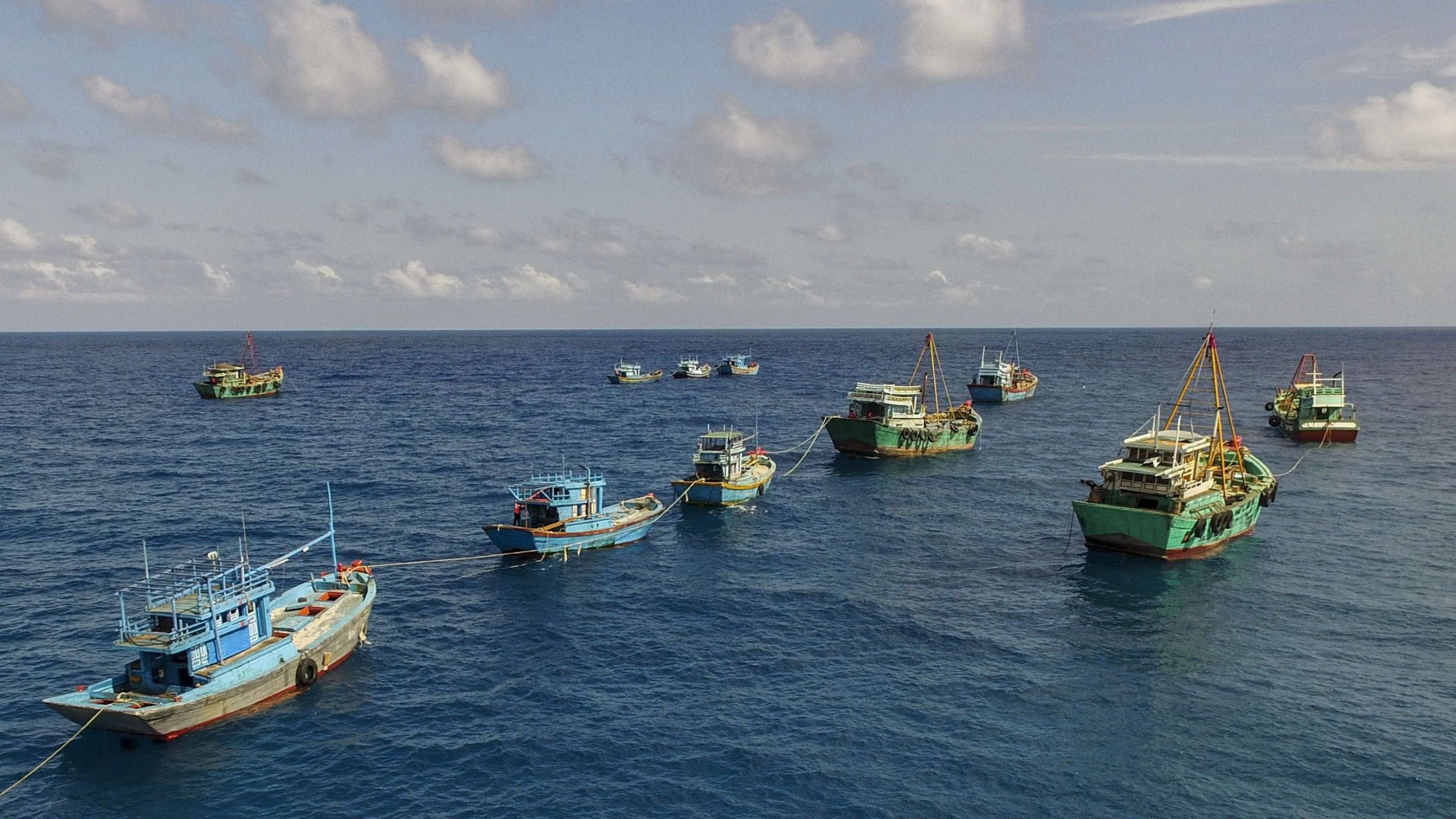
The global fishing industry faces a deepening crisis. Overfishing remains a severe threat as seafood production and consumption reach record levels. Illegal, unreported and unregulated fishing continues to thrive, disrupting marine ecosystems and efforts to manage the oceans sustainably.
At the same time, climate change is warming the seas, shifting marine populations and shrinking fish body size.
Against this backdrop, journalist and author Rose George wrote Every Last Fish: A Deep Dive into the World of Fishes and Fishing (Granta Books, 2025).
George previously wrote the award-winning book Deep Sea and Foreign Going: Inside Shipping, the Invisible Industry that Brings You 90% of Everything (Granta Books, 2013). While researching the shipping industry, she became increasingly aware of the complex and often hidden problems facing fishing.
For her new book, George traveled across continents, joining trawlers, fishers and aquaculturists — fish farmers — to understand the challenges they face. She also explored fish intelligence and welfare with scientists, as well as slavery, unsafe working conditions and murder at sea.
“You can’t police the sea; it’s too big,” George told Live Science.
Every Last Fish was shortlisted for the 2026 Royal Society Trivedi Science Book Prize.
Rose George
Rose George is a British journalist and author. She has worked as a postwar correspondent, written reportage and regularly reviewed books. Her nonfiction titles include A Life Removed, The Big Necessity: The Unmentionable World of Human Waste and Why it Matters, Deep Sea and Foreign Going, Nine Pints: A Journey Through the Money, Medicine, and Mysteries of Blood and Every Last Fish.
Why Rose George wrote about fishing
Hannah Osborne: You’re a vegetarian who gets bad motion sickness. What made you want to write a book about the fishing industry?
Rose George: When I wrote my shipping book, I was skeptical about how the shipping industry works. But whenever I spoke to people in shipping, they would say, “If you think we’re bad, you should look at fishing.” They were right. Fishing is much more complicated, baffling and difficult in many ways.
During my initial research, two things struck me. First, for the first time in history, we are going to eat more farmed fish than hunted fish. We have shifted from hunter-gatherers to settled farmers, even though in this case the farming involves fish.
There are also the grim statistics about fish stocks being overfished, depleted and under pressure. People know some of this, but it is difficult to get them excited about the fact that the ocean is in such a terrible state.
The other subject that fascinated me was research into fish abilities and sentience. I wanted the book to be about more than fishing. I wanted it to be about fishes — the creatures and animals themselves.
I don’t think we generally think of fish as animals. Many people associate animals with furry, cute creatures they can empathize with. But fish live in complex environments, so they need complex abilities.
Over the past 20 years, scientists have examined what fish can actually do. I loved that research. In one study, scientists taught goldfish to steer around in an aquarium. It was extraordinary and fascinating.
I wanted to examine both the industry and the animals. I wanted to make fish more than a dead thing on a plate, and I hope I did that.
What fishers around the world have in common
HO: You traveled to many places for this book. Were there common themes among fishers around the world?
RG: Fishing is a unique profession, and it is dangerous because the sea is dangerous. Every ship can sink, regardless of its size.
People die and suffer injuries. Large fishing vessels contain heavy machinery, including winches and chains under tension, so accidents happen. The industry has become safer in some parts of the world, but it remains dangerous.
There are similarities between the small-boat fishers I met in England and the Senegalese fishers. Both take pride in what they do and feel beleaguered.
That feeling is particularly strong in Senegal, where much of the fish has been taken by European and other nations and turned into fish meal elsewhere. Sardinella, a type of sardine and a staple fish in Senegal, is no longer available in the same quantities.
The more heavily a fishery is exploited, the smaller the fish tend to become. Eventually, fishers catch juvenile fish before they have a chance to grow and reproduce.
West Africa is a particularly sad example of how the fishing industry works because many of the problems result from legal fishing. In Senegal, the government sold licenses to Chinese, Spanish and other trawlers. Much of the damage is not caused by illegal fishing, but by fishing that is legally authorized.

Fishing boats on a beach in Senegal, where much of the fish caught ends up in other countries.
Image credit: Anadolu/Getty Images
In the United Kingdom, fishers also feel under pressure. They describe themselves as overwhelmed by paperwork, particularly because fishing is now a small industry despite its powerful cultural and nostalgic significance.
The industry is nothing like it once was, and there are far fewer fishers. Young men and women often do not want to enter the profession. Still, fishers take pride in being part of a unique occupation. They are, in many ways, the last hunters.
Why fishing regulations fail at sea
HO: What is the biggest disconnect between regulations and the reality of working on a boat?
RG: The fishing industry is so broad that it can mean a 3-foot (1-meter) wooden boat without an engine or one of the world’s massive trawlers. All of that is fishing.
Across the industry, what is needed is more effective monitoring. A vessel cannot routinely be monitored at sea, so much of what happens is self-reported.
Fishing observers do extremely risky work, yet only about 2% of the global fishing fleet has an observer on board. Some fisheries have much higher coverage. In the United States, Alaska’s Pacific Coast has a strong observer system.
But the case of Eritara Aati Kaierua, a fishing observer from Kiribati who was apparently murdered, shows the dangers observers face.
Observers on large tuna vessels in the Pacific have gone missing, been injured or died. George said that forensic reports have sometimes attributed deaths to hypertension, describing the pattern as if it were an epidemic.
Observers are currently one of the only ways to gather information at sea. Remote electronic monitoring could provide a better system, but it would still require accurate data transmission and people capable of processing the information. Self-reporting has clear limits as a monitoring tool.
Those limits can also make it difficult to know whether the fish being sold is what the label claims. A fisher may have reached the quota for a particular stock, creating opportunities for catches to be swapped or misidentified.
Illegal fishing creates further problems. One common practice is transshipment, in which two fishing vessels exchange catches at sea.
We have to stop taking everything from the ocean and assuming it’s got an infinite bounty, because it clearly doesn’t.
Rose George
Slavery and abuse in the fishing industry
HO: What shocked you most while researching the book?
RG: I was most shocked by meeting four Ghanaians who had accepted jobs on a scallop vessel because they believed the United Kingdom was reputable and that everything would be conducted properly.
The men had completed safety training, but once they began working on the vessel, they found themselves in what George described as a horror show. The scalloper operated in the U.K. exclusive economic zone, or EEZ — the region between 14 and 230 miles (22.5 to 370 kilometers) from a country’s coast where marine resources can be explored.
The vessel never operated on the high seas. It remained off the U.K., yet the men were treated appallingly.
The company involved was known to be rogue and was subsequently subject to prosecution. Around the same time, the International Transport Workers’ Federation highlighted the use of so-called transshipment visas.
Workers who arrived in one country and immediately boarded a vessel could be issued these visas. Because they were unable to come ashore, they were effectively imprisoned on their boats.
There are many responsible fishing operators, George said. But the lack of oversight at sea also creates opportunities for criminal behavior.
“You can’t police the sea; it’s too big,” she said.
How one fisher reduced seabird bycatch by 90%
HO: What was the most moving story you encountered?
RG: I loved Rex’s story of saving seabirds. Rex had fished in Filey Bay, off England’s eastern coast, for 40 years. He had come to accept that bycatch — the unintended capture of other species — was a major problem.
When fishers target one species, they often catch others. Many animals are thrown back into the water and do not survive. Seabird bycatch is another issue because seabirds are also attracted to the fish.
Filey Bay is near Bempton Cliffs, an RSPB reserve known for puffins, guillemots, kittiwakes and other seabirds. Rex had become used to seeing birds die in his nets before he met Rory Crawford of BirdLife International.
At first, Rex and the other fishers were wary. But Rex and Rory developed a friendship based on mutual respect. Rex changed his nets to a darker filament so birds could see them more easily, and he altered the design to reduce the chance of entanglement.
The changes reduced seabird bycatch in Filey Bay by 90%.
George also described her friendship with Captain Tom McClure, a trawler captain from Cornwall. They strongly disagree about bottom trawling — George considers it a destructive fishing method — but they remain friends, and McClure continues to invite her aboard his trawler.
Lillian Bilocca and the fight for fishing safety
HO: The book includes the story of Lillian Bilocca and her campaign to improve fishing safety. Has safety improved enough?
RG: Safety has improved significantly, but serious problems remain.
Lillian Bilocca was a working-class campaigner who worked as a fishwife and in a fish-processing factory. In 1968, three full trawlers sank, leaving only one survivor and killing approximately 50 or 60 men from one town.
Bilocca became an influential campaigner. She and others traveled to London to meet ministers, and a series of safety measures was introduced quickly, partly because publicity embarrassed the government.
She faced intense hostility from the trawler industry. Owners were incentivized to send vessels into dangerous Icelandic waters in the depths of winter to catch as much fish as possible. At the time, vessels lacked radio operators, medical ships were not nearby and crews had little access to help.
Many safety improvements have been made since then, but the industry still faces serious risks.
Can the fishing industry become sustainable?
HO: Did you see any signs of hope for a more sustainable fishing industry?
RG: If you learn about fishing, you may not come away feeling optimistic. However, experts who understand the industry deeply do see reasons for hope, and we need to learn from them.
One important development was the Global Ocean Treaty. Most international legislation depends on consensus, meaning that many countries must agree before action can be taken. The treaty does not operate in the same way.
Under the treaty, states can nominate areas of the high seas for protection. That makes the process more flexible and could help protect parts of the ocean beyond national jurisdictions.
The limitation is that only 10% of fishing occurs on the high seas. Protecting international waters is important, but it may not address where the largest problems occur.
Another reason for hope is the speed at which marine ecosystems can recover when they are given a chance. No-take zones, where fishing is prohibited, can allow sea life to recover rapidly.
As fish populations rebuild, they move beyond protected areas, allowing the benefits to expand. Protecting even small parts of the ocean can therefore have a wider effect.
But achieving that requires us to stop treating the ocean as an infinite resource.
This interview has been condensed and edited lightly for clarity.
About Every Last Fish
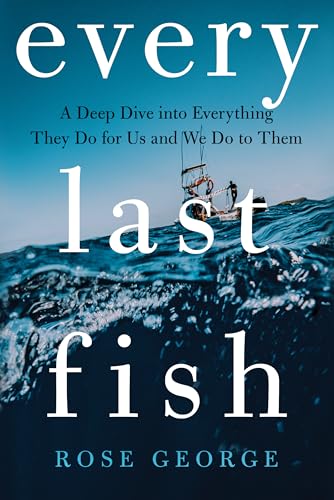
In Every Last Fish, Rose George explores the industries that support the world’s appetite for fish sticks and salmon burgers, along with the vast illegal fishing trade whose practices and standards are often unmonitored and dangerous.
The book examines a rapidly growing $200 billion food system at a time when fish populations are disappearing, taking readers from the fishing boats to the bottom of the ocean and back.
Greystone Books
Every Last Fish: A Deep Dive Into Everything They Do for Us and We Do to Them
Every Last Fish explores the vast industries behind our appetite for seafood and the illegal fishing trade whose practices and standards are often unmonitored and dangerous.
TOPICS
Source: www.livescience.com