


Close Menu
HitechubHitechub
    What's Hot
    Technology

    Google Wants to Host Your Personal Vibe-Coded App on the Google Play Store

    Science

    Revolutionary 3D Camera Developed by Scientists to Track Invisible Particles

    Science

    Post-Paris Agreement Emissions Intensified Europe’s Heatwave

    Important Pages:
    • About Us
    • Privacy Policy
    • Terms & Conditions
    Facebook X (Twitter) Instagram Pinterest
    Facebook X (Twitter) Instagram
    HitechubHitechub
    Friday, November 27
    • Shop
      • Fashion
        • Mens
        • Womens
        • Accessories
          • Handbags
          • Keychain
          • Masks
          • Money clicps
          • Neck Pillow
          • Rings
          • Towels
          • Wallets
        • Jewelry
        • Watches
        • T-shirts
        • Hawaiian shirts
        • Vests
        • Swim trunks
        • Swimsuits
      • Fun
        • Magic cubes
        • Magnifiers
        • Misc
        • Photo books
        • Puzzles
        • Toys
      • Home
        • Cleaning/Care
        • Mailbox covers
        • Mugs
        • Pot Holders
        • Spoon
      • Office and Electronics
        • Chairs
        • Office Supplies
        • IPad cases
        • Laptop stickers
        • Mouse pads
        • Notebooks
        • Pencil bags
        • Pens
        • Phone cases
      • Personalized
      • Pets
      • Sports
        • Cycling
          • Balaclava Mask
          • Bike Bell
          • Bike Computer
          • Bike Fender
          • Bike Grips
          • Bike Kickstand
          • Bike Light
          • Bike Locks
          • Bike Mitts
          • Bike Pumps
          • Bike Repair Stand
          • Bike Seat
          • Bike Trainer
          • Bike Wheels
          • BIKES
            • Folding Bikes
            • Road Bikes
          • Carbon Fiber Bike Products
          • Cycling Mask
          • Kid’ Bike Helmets
          • Inner Tube
          • Motorcycle Bag
          • Nylon Pedals
          • Adult Helmets
          • Photochromic Sunglasses
          • Soft Coolers
          • Suction Cup Bike Rack
          • Tool accessories
          • Winter Cloth
          • Heart Rate Monitor
        • Outdoors/Camping
          • Outdoor Bags
        • Sweatband
    • Technology
      1. AI
      2. Gadgets
      3. View All

      This is the most popular CEO in the world

      Sectors in which “Chat-GPT” is most often used

      Artificial intelligence has begun to “swallow” professions

      The unusual robot conductor of a concert in Seoul

      Here’s how you can tell if your phone is being tapped

      PlayStation 5 becomes a completely silent console and gets more space

      This is the first phone that can be used to park a car

      Best Gaming Laptops 2023: Powerful Portables for PC Games

      Ars Live Summary: Why Military Attacks on Data Centers Are Unlikely to Stop

      Etsy Clarifies AI Policy and Terms Following Seller Backlash

      Why Is There a Shortage of Elevator and Escalator Mechanics?

      NordVPN Black Friday 2026 Deal: Save 78% on VPN Plans

    • Science
      1. Space
      2. Wheels
      3. View All

      Space Perspective: A Journey to the Edge of Space

      5 Fascinating Facts About Space

      Space Exploration: Unveiling the Wonders of the Universe

      Toyota wants to make a new generation battery with a range of up to 1,200 km

      Meet Toyota’s lunar “baby” that could make exploring the Moon easier

      What does a night drive look like with one of the most beautiful cars in the world: the Rolls-Royce Ghost

      NASA Hubble Observes a Sea of Stars During Roman Space Telescope Construction

      Live Science Readers Reveal the Archaeological Discoveries They Want to Find, Including Attila’s Tomb

      Alpha-Gal Syndrome: Why Tick-Bite Red Meat Allergy Is Puzzling Scientists

      How to Overcome Sadness in Academia and Find Balance

    HitechubHitechub
    Home » Scientists May Have Misinterpreted 2-Billion-Year-Old Clues About Earth’s History
    Science

    Scientists May Have Misinterpreted 2-Billion-Year-Old Clues About Earth’s History

    Share Facebook Twitter Pinterest WhatsApp
    Share
    Facebook Twitter LinkedIn Pinterest WhatsApp

    Earth’s 2-Billion-Year-Old Oxygen Rise May Have Been More Local Than Global

    Between about 2.5 billion and 2 billion years ago, Earth underwent the largest chemical changes ever recorded on its surface. Oxygen began accumulating in the atmosphere, triggering changes that eventually helped allow complex organisms such as plants and animals to emerge about 500 million years ago.

    As oxygen levels first increased, vast amounts of microorganisms were buried on the ocean floor. Their burial trapped carbon in rocks and left behind unusual carbon isotope signals. For decades, many scientists have interpreted these traces as evidence that Earth’s carbon cycle became dramatically unbalanced on a global scale.

    Ancient carbon signals from Russia and Gabon

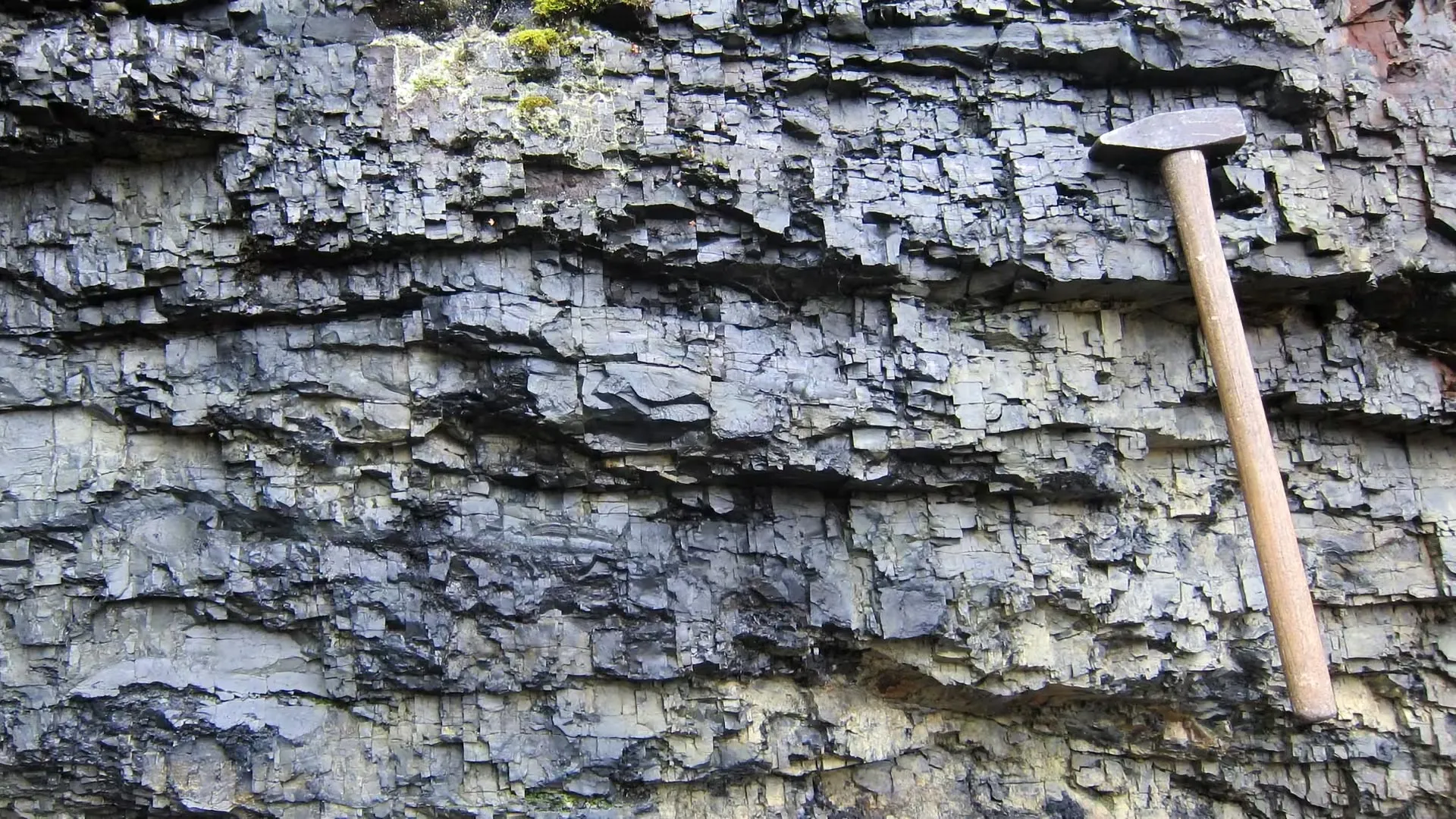
    Evidence for that interpretation comes from drill cores—long cylinders of solid rock recovered from deep underground—from ancient marine deposits in Karelia, Russia, and the French Villian Basin in Gabon. However, a new study led by researchers at the California Institute of Technology raises questions about whether the Russian evidence truly records a global event.

    “One major debate has focused on anomalous carbon isotope signals that are often interpreted as evidence of global environmental change,” says Nivedita Thiagarajan, Ph.D. ’12, a senior research scientist at Caltech who works in the laboratory of John Eyler, the Robert P. Sharp Professor of Geology and Geochemistry and the Ted and Ginger Jenkins Chair in Geological and Planetary Sciences.

    “We studied gas trapped in microscopic pockets within rocks of the Zaonega Formation in Russia’s Karelia, known as the world’s oldest fossil oil field. We found that the carbon isotope signal at this important location can be explained by local phenomena occurring in a sedimentary basin of several hundred square kilometers, rather than globally.”

    Thiagarajan is the lead author of the recently published paper in Geology. The study describes how researchers reconstructed a series of changes preserved in Karelia’s rocks after the first major increase in atmospheric oxygen.

    Carbon isotopes—heavier or lighter forms of carbon—can provide information about the origin of biological materials that accumulated billions of years ago. By measuring the relative abundance of these isotopes in drill cores, researchers can build a record of ancient environmental change, similar to reading tree rings.

    The anomalous carbon signal found in both the Zaonega Formation and rocks in Gabon is known as the Shunga-Franceville phenomenon. Scientists have often cited it as evidence that Earth experienced a major global disruption of the carbon cycle about 2 billion years ago.

    “In a sense, the Earth went crazy during that period when oxygen appeared in the atmosphere. What we are trying to assess is the causes and consequences of the oxygenation of the Earth,” explains Ivo Lepland, a researcher at the Norwegian Geological Survey in Trondheim and a co-author of the study. “This information is stored in the rocks, so we need to study the rocks to study what happened.”

    Gas trapped in rock for 2 billion years

    To examine the Shunga-Franceville phenomenon from another perspective, the researchers analyzed drill cores stored at the Norwegian Geological Survey. They focused on gas trapped inside microscopic fluid inclusions within samples of the pyrobitumen-rich Zaonega Formation.

    The Zaonega Formation was once part of a marine sedimentary basin. Pyrobitumen is an insoluble form of organic carbon produced when buried crude oil or kerogen—a feedstock for natural gas—is exposed to intense heating deep beneath Earth’s surface.

    The project began after Lepland arrived at Caltech for a sabbatical. He brought a new collection of isotope measurements from gas trapped in Zaonega’s rocks that had not yet been fully interpreted.

    At the same time, Thiagarajan and Eyler had recently completed research measuring isotope ratios in natural gas. That work helped develop a broader framework for understanding how natural gas forms.

    When the researchers combined their expertise and data, an alternative explanation for the ancient isotope signatures began to emerge.

    Magma, methane and microorganisms

    The researchers propose that a layer of magma penetrated marine sediments in the Zaonega Formation, which lay directly beneath the prehistoric ocean. Heat from the magma warmed the organic-rich deposits.

    That heating produced hydrocarbons such as methane and propane. The gases then moved upward through the sediments, eventually reaching microorganisms living near the ocean floor. These microorganisms consumed the methane and produced biomass with light carbon isotope signatures, potentially explaining the anomalous signals preserved in the rocks.

    Temperature evidence supports this scenario. The researchers identified a large temperature gradient, with temperatures reaching about 350 degrees Celsius near the magma intrusion and falling to about 72 degrees Celsius at an ancient submarine asphalt spill site approximately 300 meters higher.

    “This set of geological and biological processes could be responsible for the anomalous carbon isotope signal recorded in the Zaonega Formation,” Thiagarajan says. “It was interesting to see that some of the same signatures observed in modern oil and gas reservoirs were present and preserved in samples from 2 billion years ago.”

    The researchers stress that contributions from other processes cannot be completely excluded. Still, their results indicate that the carbon isotope anomalies preserved in Zaonega were primarily caused by events within the local sedimentary basin rather than by global disturbances.

    “Since Zaonega is the reference location for the Shunga-Franceville event, our findings raise important questions about whether it should be considered a global event,” Thiagarajan says.

    Testing the theory in Gabon

    The next step is to determine whether the same explanation can account for similar isotope signals found in Gabon.

    Researchers plan to analyze samples collected through the GOE-DEEP project, which is co-funded by the International Continental Scientific Drilling Program. The goal is to test whether local geological and biological processes like those identified in Russia also shaped Gabon’s rock record.

    In the summer of 2025, Lepland spent four months in Gabon coordinating a drilling campaign. The newly recovered core arrived at the Norwegian Geological Survey in February and will be sampled later this year by an international research team representing 18 countries.

    “By doing a similar study of the rocks in Gabon and comparing the two sites, we were able to really put things together,” Lepland said. “This is how science progresses.”

    The study is titled “Paleoproterozoic thermogenic hydrocarbon production in the Zaonega Formation, Russia.” Additional authors are Florian Aichinger of Hydroisotop GmbH, a natural isotope analysis laboratory in Germany, and Anthony Prave of the University of St. Andrews in Scotland.

    Source: www.sciencedaily.com

    Share. Facebook Twitter Pinterest LinkedIn WhatsApp
    Previous ArticleGitHub Actions Re-Enabled While Mini Shai-Hulud Payload Remains Active
    Next Article Scientists Burn Their Own Scrolls to Unlock a 2,000-Year-Old Mystery

    Related Posts

    Science

    NASA Hubble Observes a Sea of Stars During Roman Space Telescope Construction

    Science

    Live Science Readers Reveal the Archaeological Discoveries They Want to Find, Including Attila’s Tomb

    Science

    Alpha-Gal Syndrome: Why Tick-Bite Red Meat Allergy Is Puzzling Scientists

    Science

    How to Overcome Sadness in Academia and Find Balance

    Science

    Stephen Colbert-Named Tiny Spider Has a Genome 50% Larger Than the Human Genome

    Science

    Oldest Male Killer Whale on Record May Have Been Identified Using Historic Atomic Bomb Test Data

    Science

    345-Million-Year-Old Fossil Fooled Scientists for Decades

    Science

    Has AI Cracked Internet Encryption? Rumored Breakthrough Claim Surprises Scientists

    Add A Comment
    Leave A Reply Cancel Reply

    Stay In Touch
    • Facebook
    • Twitter
    • Instagram
    • Pinterest
    Top Picks
    Technology

    OpenAI Reveals AI-Driven Fraud and Launches Unprecedented Cyber Attack Response

    Gina Neff, director of the Minderoo Center for Technology and Democracy at the University of…

    Why Small Cell Phones Are Disappearing and Why I Want My Compact Phone Back

    Hubble Reveals Something Strange in the Chandelier Cluster – Space Photo of the Week

    Earth’s Mantle Churning May Have Caused the Great Unconformity

    Scientists Discover Brain Switch That May Trigger Weight Loss

    Most Popular
    Technology

    Hyundai Asserts Humanoid Robot Initiative Not Part of Striking Workers Negotiations

    Technology

    Humanoid Robot Cleaning My Apartment: A Glimpse Into the Future

    Categories
    • AI (9)
    • Gadgets (6)
    • Science (3,603)
    • Space (3)
    • Technology (3,034)
    • Wheels (3)
    Our Picks
    Technology

    Digger Review: Features, Performance, and Verdict

    Science

    Record-Early Polar Vortex Weakening Could Bring Snow to the UK

    © 2026 Hitechub.
    • Home
    • About Us
    • Privacy Policy
    • Terms & Conditions

    Type above and press Enter to search. Press Esc to cancel.

    GDPR Cookie Banner

    We are using cookies to give you the best experience on our website.

    You can find out more about which cookies we are using or switch them off in .

    Ad Blocker Enabled!
    Ad Blocker Enabled!
    Our website is made possible by displaying online advertisements to our visitors. Please support us by disabling your Ad Blocker.