


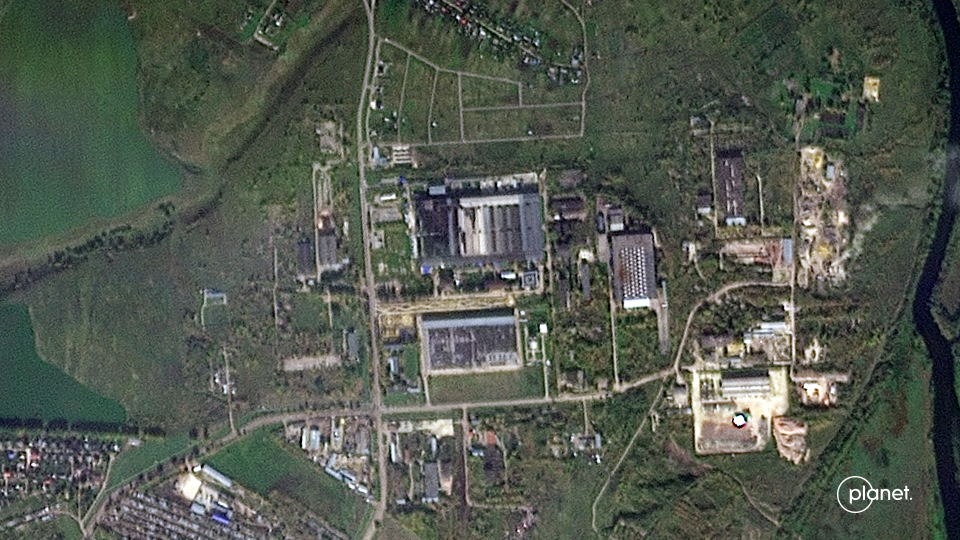
Data centers have become military targets in 2026, as drone strikes linked to the Iran war and Russia’s full-scale invasion of Ukraine have highlighted the risks facing cloud infrastructure. Amazon data centers were the first in the Middle East to come under military attack this year, while Russia and Ukraine exchanged an unprecedented series of strikes against each other’s data centers. These attacks show how the dual use of cloud computing can create both military value and significant vulnerabilities for the cloud services on which modern society depends.
Drone attack on data center.
Ars Technica hosted a live discussion examining what attacks on data centers could mean for the future of cloud services.
During a conversation with Ars Technica technology reporter Jeremy Hsu, Joseph Jarneki of the Royal United Services Institute discussed why public cloud data centers are increasingly becoming military targets amid the 2026 Iran war and Russia’s ongoing full-scale invasion of Ukraine.
Why cloud data centers can become military targets
Jarnetzki said there is growing awareness that public clouds—and, to some extent, private cloud data centers—have a dual-use role. Militaries can use computing resources within cloud services for battlefield management systems, human resources, and resource management.
There is a growing awareness and fact of dual-use, especially in public clouds, but also across private cloud data centers as well. The dual-use I’m referring to is when the military leverages computing capabilities within these data centers (within cloud services) to run battlefield management systems, human resources, and resource management. At least in terms of international law or military-promoted targeting principles, when a military uses a piece of civilian infrastructure, it potentially becomes a military objective and therefore of interest to adversaries, creating an incentive to target it.
Jarnetzki also emphasized that relatively inexpensive kamikaze drones can impose disproportionate economic costs on data center operators and potentially cause widespread disruption to cloud services.
Low-cost drones, high-cost disruption
He identified attacks on Russia’s largest public cloud data centers, including Yandex facilities, and on US hyperscalers based in the Gulf as a way to impose economic costs that would be difficult to create through other means.
The second reason for specifically targeting Russia’s largest data centers, Russia’s largest public cloud data centers like Yandex, and US hyperscalers based in the Gulf, is to impose economic costs in a way that is disadvantageous to adversaries and would be very difficult to impose in any other way. Therefore, while the cost of munitions is relatively low, the cost of disruption is high. If you look at the investment that AWS and other companies in the Gulf have offered to build these data center facilities compared to the cost of the Shahed drones that Iran manufactures, produces, and utilizes to target these data centers, I would say it’s 100 times, or more, to say the least. The cost ratio is highly favorable to the adversary, providing an opportunity to significantly undermine the economic outcomes of the targeted opponent.
Lessons for cloud resilience
The discussion also examined what governments and hyperscalers can learn about cloud resilience. The hyperscalers include major cloud and data center operators such as Amazon, Google, Microsoft, and Meta.
Jarnetski highlighted Ukraine’s efforts to protect its cloud infrastructure after Russian President Vladimir Putin ordered the Russian military to launch a full-scale invasion of Ukraine in February 2022.
Source: arstechnica.com