


Can the International Space Station Survive Without Its Robotic Arm?
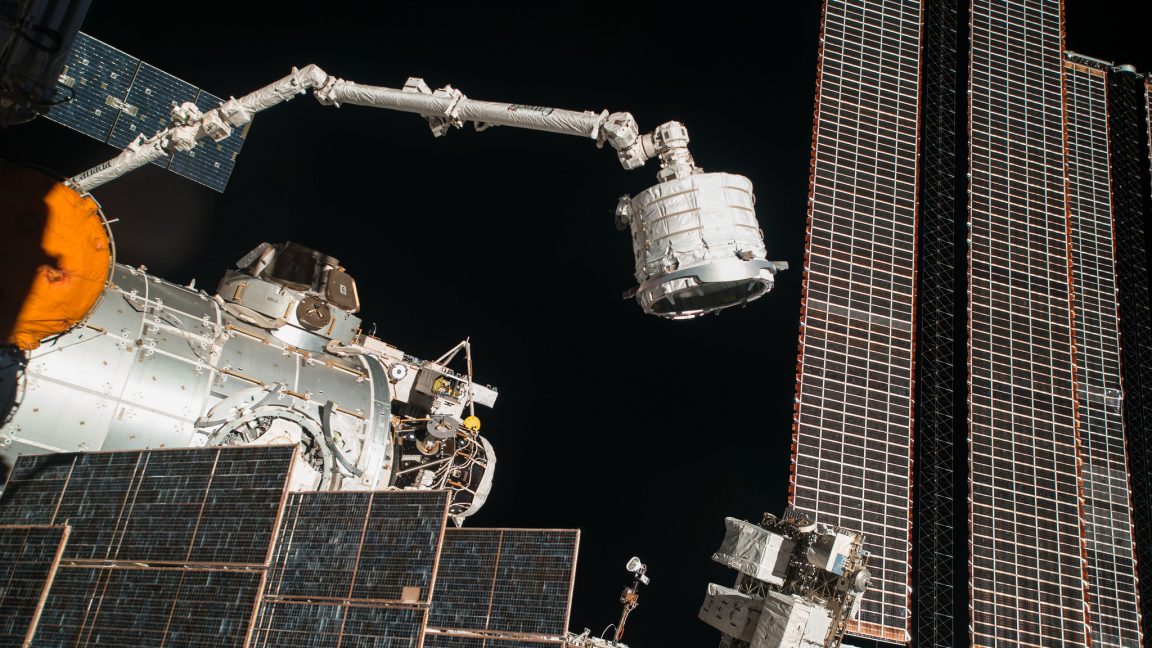
The International Space Station’s robotic arm has a mass of almost 2 tonnes and can handle payloads weighing up to 116 tonnes. For much of the station’s operational life, it has been essential for delivering supplies and moving equipment.
Why the ISS robotic arm matters
The first version of SpaceX’s Dragon cargo spacecraft, like Northrop’s Cygnus and Japan’s HTV-X transport vehicle, was designed to approach the space station, be captured by the robotic arm, and then be moved to a berthing port.
Modern Dragon spacecraft, like Boeing’s crewed Starliner, use autonomous docking for both crew and cargo. However, the robotic arm remains important for missions involving spacecraft and large hardware outside the station.
What happens if the space station loses its robotic arm?
If NASA cannot use the arm to berth spacecraft, cargo missions could be seriously affected. The risk is particularly significant because SpaceX plans to retire its Dragon vehicle within four years, while NASA’s other major cargo delivery vehicles, Cygnus and HTV-X, cannot dock directly at the station.
The robotic arm is also used to move large hardware, including cooling pumps, outside the station in preparation for astronaut spacewalks. NASA and its partners will likely find ways to work around a loss of this capability, but station operations would become considerably more difficult.
A warning about the ISS’s aging infrastructure
The possibility of even a temporary robotic-arm outage caused by a software problem highlights how the International Space Station is nearing its 30th anniversary. Most of its facilities have operated in the extreme vacuum of space for decades, well beyond their planned service life.
So far, the station’s aging process has generally gone smoothly. However, that does not guarantee that its good fortune—and the preparations made by NASA and its partners—will continue.
What comes after the International Space Station?
NASA plans to eventually replace the ISS with one or more privately developed space stations, but the contracting process has not gone particularly smoothly.
That raises a larger question: What would happen if the foundation of NASA’s space activities for the past quarter century suddenly stopped being reliable?
Source: arstechnica.com