


How Wearable Devices Are Transforming Clinical Trials—and What Still Stands in the Way
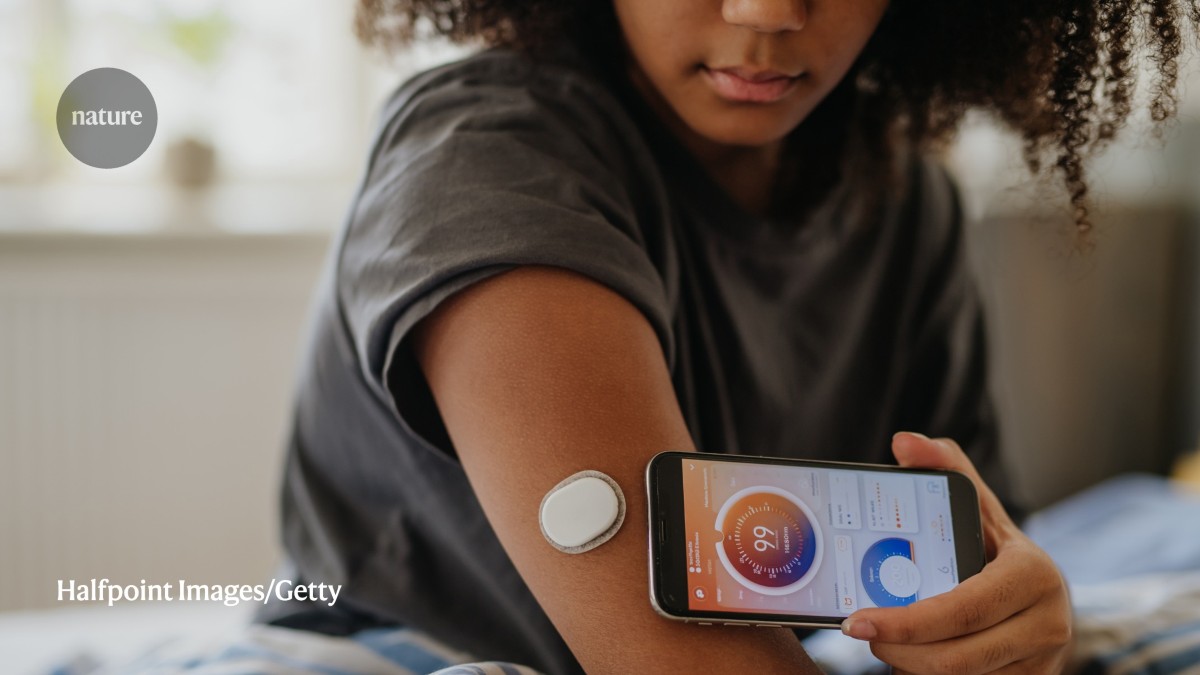
Digital wearables are currently being used to monitor glucose, but could also be used to measure substances such as glutamate and cortisol.
Credit: Halfpoint Images/Getty
The year is 2036. Researchers conducting a randomized clinical trial have distributed wearable devices to 200 volunteers to measure heart rate, blood pressure, hormone levels and activity. Drug doses intended to prevent heart failure are tailored to each participant using real-time data. Artificial intelligence tools power an interactive virtual healthcare assistant that helps researchers select participants, clean data and explain results clearly to volunteers.
For years, technology enthusiasts have predicted a future in which much of clinical research could take place without participants leaving home. That vision gained momentum about a decade ago, as sensor technology improved and the market for digital wearables—including fitness trackers and smartwatches capable of monitoring physiological data such as heart rate—expanded rapidly.
Researchers are now using these devices in clinical trials alongside dedicated telemedicine trackers. “If we can enable patients to conduct trials in their own region, we can get better data, reduce dropout rates and reduce costs,” says Prachi Desai, a clinical data management expert at Quanticate, a contract research organization in Hitchin, UK.
Nature Spotlight: Digital Wearables
Digital wearables now include smartwatches, wristbands, rings, chest straps, adhesive patches, head-mounted devices and sensor-enabled clothing. Accelerometers and gyroscopes track movement. Photoplethysmography (PPG), which measures how blood vessels absorb and reflect light near the skin, can assess heart rate, heart-rate variability, sleep stages and peripheral blood oxygenation.
Barometric sensors provide information about vertical movement and posture. Temperature sensors can help monitor sleep–wake cycles, fever and inflammation, as well as hormonal changes during the menstrual cycle.
Despite this promise, wearables are still a long way from becoming major clinical tools. Their use in clinical trials is increasing, however. Researchers at the Icahn School of Medicine at Mount Sinai in New York City searched ClinicalTrials.gov and found that the number of drug trials involving wearable data rose from fewer than 30 in 2014 to 128 in 2024.1
Some sensor researchers hope their work will broaden the uses of wearable devices and encourage wider adoption. Others say technical capability is not the main barrier. Instead, they point to questions about measurement and verification, regulation, privacy, data security and the ethical role of large technology companies in healthcare.
“I’m a technology enthusiast,” says Martin Cowie, vice president of the biopharmaceutical company AstraZeneca in Cambridge, England. But “it’s more than just collecting data,” he says.
Why wearables are valuable in clinical trials
The use of wearable devices in clinical trials builds on earlier applications of similar technologies in telemedicine and remote patient monitoring. Digital blood-pressure cuffs and scales connected to phones or modems have been available for decades. Improvements in communications and sensor technology helped drive a surge in digital wearables for clinical research around 2015, alongside the growing popularity of personal data tracking, or “self-quantification.”

Are consumer wearable devices safe to use in research?
The sensor determines the medical field in which a wearable is most useful. A 2025 review of smartwatch applications in clinical trials found that cardiology had the highest rate of use, at 28.7%, followed by neurology at 21.8% and oncology at 11.5%.2
Manuel Cossio, an AI engineer at Cytel, a contract research organization in Zurich, Switzerland, and lead author of the review, says cardiology may have taken the lead because PPG heart-rate tracking was built into many of the earliest fitness bands and smartwatches.
In one study, cardiologist Dipak Koteka of the University of Birmingham, UK, and colleagues used a wrist-worn Fitbit fitness tracker, among other methods, to assess the effectiveness of the heart-rate-lowering drugs digoxin and bisoprolol, a beta-blocker. The study involved people with permanent atrial fibrillation and heart failure.
The researchers found that the drugs were equally effective at controlling heart rate. Physical-activity data from Fitbit were also comparable to standard clinical tests in predicting the severity of heart failure.3
“This is the first time that digoxin has been shown to be equivalent to standard treatment with beta-blockers,” Koteka said. “None of this would have been possible without the 150 million heart-rate data points collected by wearables.”

You can track your blood pressure and pulse rate using a wrist-worn device.
Credit: Ying Tang/NurPhoto (via Getty)
The 2024 paper by Koteka and colleagues highlights a central advantage of wearables: they can collect data continuously as participants go about their daily lives. Georgia Mizzi, chief executive of Mirawell Health, a medical-device start-up in Wellesley, Massachusetts, says continuous monitoring can provide a more natural picture of physiological measurements than the brief snapshots collected in a research facility.
“Wearables are the only way to really understand what’s going on in a patient’s life throughout the day,” says Mizzi. She has conducted several studies using wearable technology, including one involving shirts with embedded sensors to monitor people with chronic obstructive pulmonary disease (COPD) overnight.4
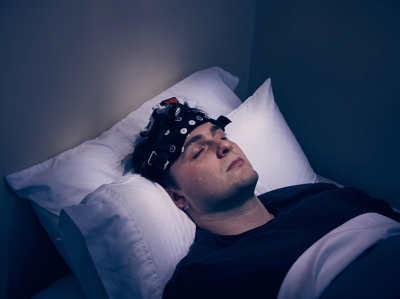
Technology-enhanced sleep could improve rest but compromise privacy
Wearable technology can produce vast and sometimes daunting amounts of data. In some clinical trials, however, those data could help save lives. Desai says artificial intelligence tools can “quickly identify data from wearables that are outside of a safe range and generate alerts so patients can receive emergency treatment.”
Wearables might also reduce trial costs and encourage volunteers to remain involved. The cost of conducting a clinical trial at a research centre varies according to the treatment area, location and size. An analysis of 101 vaccine and drug-intervention trials conducted in 2025 found that facility costs accounted for 34% of total costs.5
Phase III trials cost around US$10 million to conduct. The researchers say wearable devices could therefore generate significant savings, despite the added expense of supplying devices and training participants to use them.
“One of the most expensive parts of a clinical trial is organizing participant visits and follow-up,” Koteka says.
Challenges facing wearable technology in research
Despite their potential benefits, wearable devices face significant obstacles before they can become standard tools in clinical research. Mizzi experienced one such challenge while working on a study of anti-seizure drugs given alongside primary treatment for epilepsy.4
The study aimed to assess whether a wrist-worn device could detect seizures more effectively than the participant diaries doctors traditionally use to plan treatment. An unexpected firmware update at the beginning of the trial caused the app that recorded seizure data to crash. The researchers had to recall the devices and provide individual technical support to participants.
“It was a nightmare,” Mizzi says. “Recruiting patients into clinical trials is already difficult, and technical failures can lead to patient loss and increase costs.”
Technical simplicity and round-the-clock support are not the only requirements. To use wearable data in the development of treatments, researchers must also meet requirements set by regulators such as the US Food and Drug Administration (FDA) and the European Medicines Agency (EMA).
That means demonstrating that a device measures physiological parameters accurately and reliably, is suitable for the target population and supports measurable trial goals known as clinical endpoints, such as pain relief.

A device’s sensors define how the device is used.
Credit: Gado/Getty
Source: www.nature.com