


NASA Develops Biodegradable Material Made With Lunar and Martian Dust
NASA researchers have developed a colorful, kaleidoscope-like crystalline material that could one day help manufacture equipment for future missions to the Moon and Mars. The material can potentially be produced directly on lunar or Martian surfaces, allowing missions to carry fewer supplies, reduce spacecraft weight, and lower launch costs.
A Space-Built Material Made From Plastic and Simulated Planetary Dust
Research chemical engineer Alison Christie and NASA Glenn Research Center summer interns Tyler Clinch, Ethan Bilodeau, and Emma Levenson created the material by mixing a special plastic with simulated lunar and Martian dust.
The plastic is biodegradable and can be produced by bacteria fed with crew waste and carbon dioxide.
“Plastic literally grows inside the tiny bodies of bacteria,” Christie says. “It’s really cool.”
Simulated Moon and Mars Dust Makes the Material Stronger
The researchers found that adding simulated lunar and Martian dust particles to the plastic made the material stronger and easier to process. By using different types and amounts of dust, the team was able to tune the material’s properties.
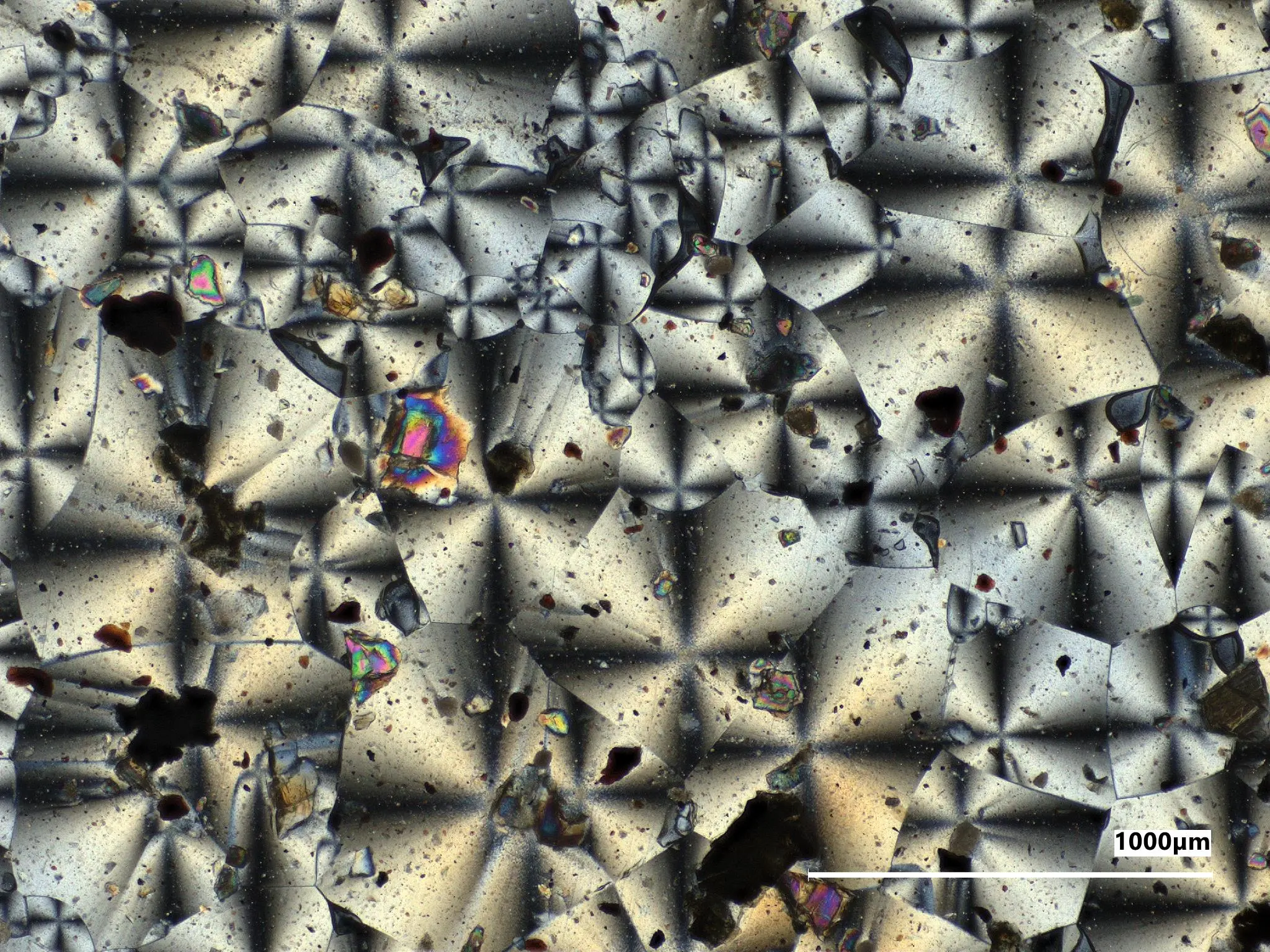
The gray microscope image shows material made with simulated lunar dust, while the reddish image shows material made with simulated Martian dust. The images reveal the material’s colorful, crystalline structure.
Potential Uses for Future Lunar and Martian Habitats
The material could potentially be used to manufacture equipment such as structural brackets, wrenches, and chairs for future lunar and Martian habitats.
On-demand, fully recyclable manufacturing using local lunar or Martian materials could reduce the need for resupply. It could also allow crews to build and repair critical equipment in the field, supporting NASA’s goal of establishing a permanent lunar base.
“You can’t take everything to the moon or Mars,” Christie said. “If something breaks, you have to find a way to fix it with what you have. It’s a very versatile material, which is a big advantage.”
NASA Tests the Material in Extreme Space Environments
The research team now hopes to determine whether the material can be used outdoors in the harsh environments found on the Moon and Mars.
The material is currently being tested at Glenn’s Lunar Environmental Structural Testing Facility to evaluate how it withstands extreme temperatures. Some samples will also be launched on the upcoming Materials International Space Station Experiment 23 (MISSE-23) mission, where they will be exposed to harsh conditions outside the International Space Station.
This research is funded through NASA Glenn’s 2026 Center Innovation Fund and managed by NASA’s Research and Technology Mission Directorate.
Learn more about the NASA program.
Source: www.nasa.gov