


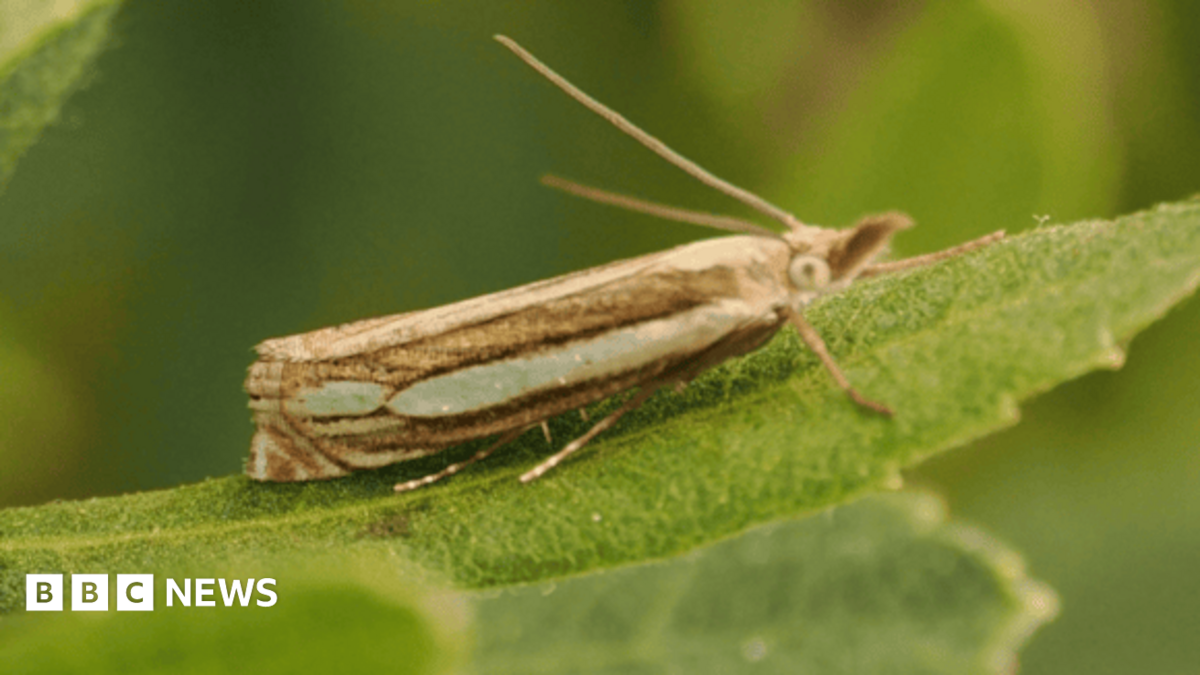
Rare Bog Grass Moth Discovered in North Wales for the First Time
Conservationists have discovered a rare bog grass moth in north Wales, marking the first recorded sighting of the species in the area.
The bog grass moth was found at Cors Gaihi National Nature Reserve on the Llŷn Peninsula in Gwynedd while conservationists were surveying the wetland for wildlife.
Experts described finding the “incredibly sparse moth” in its natural habitat as a “special surprise”.
First bog grass moths recorded at the reserve
The exact number of bog grass moths in the UK is unknown, but the species has been recorded in only a small number of counties, including Dorset.
The low-lying, flat wetland is monitored by the Natur am Bis’ Llyn and Ynys Mon project, which aims to protect some of North Wales’ most at-risk species.
Conservation project experts gathered at the site to set up insect traps. In a single night, they collected 446 moths representing 91 different species, including 19 bog grass moths.
These were the first bog grass moths recorded in the area.
Rare moth depends on wetland habitat
Natural Resources Wales said the habitat allows moist sedge to grow. The plant is the only food source for bog grass moth larvae.
Carexes are one of the world’s largest plant families and are most common in moist habitats.
Other rare species recorded at the site included the spotted crane fly and the black night runner carabid beetle.
“You never know what’s going to show up”
Steve Palin and Charles Aaron, lepidopterists who specialise in moth research, said the beauty of moth hunting is that “you never know what’s going to show up”.
“This is an important addition to our knowledge of winged insects in this region and demonstrates the value of recording moth targets in these specialised marsh habitats, where there is clearly much more to discover,” the researchers said in a statement.
RSPB Cymru project manager Claire Sampson said the work of staff, contractors and volunteers had helped clear up the wetland, which is “a habitat for these rare invertebrates”.
Source: www.bbc.co.uk