


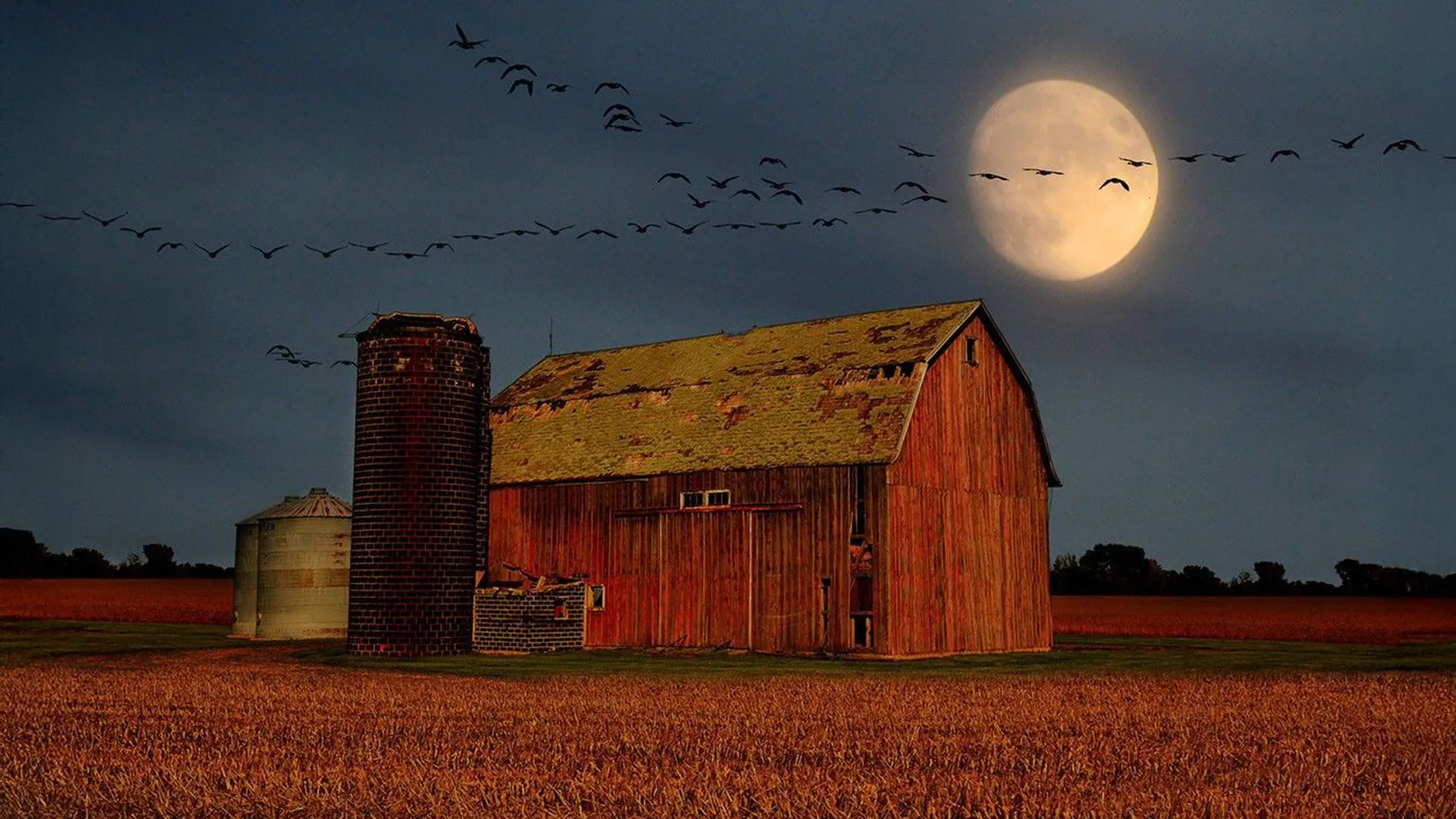
September offers an exciting lineup of skywatching events, including brilliant Venus at peak brightness, the Harvest Moon near Saturn and Neptune, the September equinox, and opportunities to use the Moon as a guide to Antares, Sagittarius, and the center of the Milky Way.
September skywatching highlights
- September 14th–20th: Follow the Moon to Antares and the Teapot in Sagittarius. From a dark-sky location, you may even spot the center of the Milky Way.
- September 18th: Venus reaches peak brightness during its evening appearance.
- September 22nd: The September equinox marks the beginning of autumn in the Northern Hemisphere and spring in the Southern Hemisphere.
- September 26th: The Harvest Moon rises near Saturn and Neptune.
September brings a little of everything to the evening sky. The Moon guides observers toward the celestial Teapot, Venus shines at its brightest, the seasons officially change, and the Harvest Moon appears alongside two planets.
[See Video Link After Article.]
Follow the Moon to Antares and Sagittarius
From September 14th through 20th, the Moon will help guide skywatchers to several well-known sights in the night sky. About an hour after sunset, look toward the southern sky to find the Moon.
The Moon’s position will shift each evening as it moves past different background stars. Along the way, it will pass near Antares, one of the brightest stars in the constellation Scorpius.
Antares is a bright, reddish star that marks the heart of Scorpius and is often associated with the scorpion’s center.
Nearby Sagittarius features another easy-to-recognize star pattern known as the Teapot. Its stars outline the shape of a teapot, complete with a handle, lid, and spout.
From a location far from city lights, you may see a faint, cloudy band of light rising from the Teapot’s spout like steam.
Follow that hazy glow toward its darkest and densest region, and you will be looking in the direction of the center of the Milky Way galaxy.
Venus reaches peak brilliance
On September 18th, look toward the western horizon after sunset to see Venus at its brightest during this evening appearance.
Venus should be easy to identify. Shortly after sunset, the planet will appear as an exceptionally bright point of light in the western sky, shining more brightly than the surrounding stars. An unobstructed view of the horizon will improve your chances of seeing Venus before it sets.
International Moonlit Night Observation
September 19th is International Moonlit Night Observation.
People around the world are encouraged to observe Earth’s closest celestial neighbor while exploring the Moon’s influence on culture through science, exploration, and history. Find an event near you and learn how to participate from anywhere at go.nasa.gov/ObserveTheMoon.
The September equinox changes the seasons
On September 22nd, autumn officially begins in the Northern Hemisphere, while spring begins in the Southern Hemisphere.
This date marks the September equinox, when the Sun is directly above Earth’s equator and day and night are approximately equal in length across much of the world.
After the September equinox, daylight hours continue to decrease in the Northern Hemisphere and increase in the Southern Hemisphere.
The Harvest Moon rises near Saturn and Neptune
On September 26th, the Harvest Moon will be a highlight as it rises in the eastern sky shortly after sunset.
Bright Saturn will appear nearby, while the much fainter Neptune forms a wide triangle with Saturn and the Moon.
Saturn is bright enough to see without optical aid. Neptune, however, is much more difficult to observe. At approximately magnitude 8, the distant planet is too faint to see with the unaided eye, so binoculars or a telescope are required. Dark skies and favorable viewing conditions will improve your chances of finding it.
See the Moon phases in September here.
Source: www.sciencedaily.com