


NASA’s $500 Million Attempt to Save Swift Observatory Failed—but the Rescue Mission Was Still a Remarkable Achievement
NASA’s $500 million effort to save the Neil Gehrels Swift Observatory from deorbit ultimately failed. However, government and commercial space officials say the complex work required to make the rescue attempt possible deserves recognition.
How NASA’s Swift rescue mission was supposed to work
The rescue mission was developed by Katalyst Space Technologies under a $30 million contract awarded by NASA last September. NASA gave the company nine months to build and launch a spacecraft capable of capturing Swift as it orbited roughly 320 miles above Earth and moving it into a higher orbit.
The rescue spacecraft, known as LINK, launched successfully on July 3. It completed several initial checkouts before a malfunction caused it to lose control several weeks later. NASA announced in August that LINK could no longer reach Swift in time, and the rescue mission was called off.
Building a complex spacecraft in just nine months
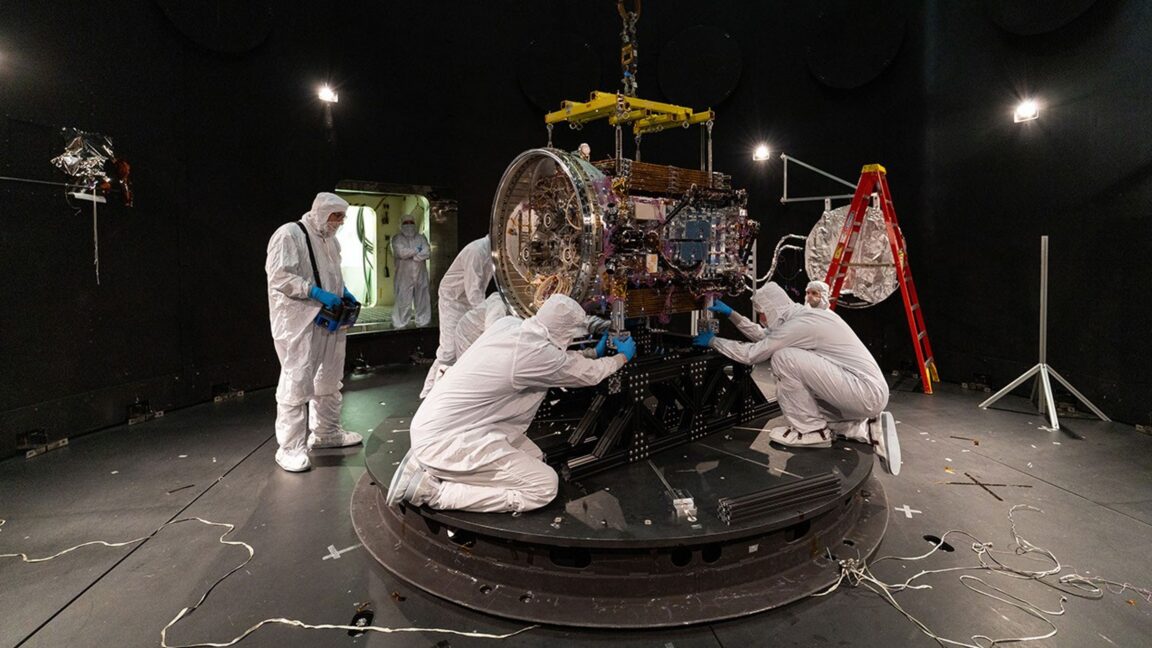
Although LINK never reached Swift Observatory, designing and building the spacecraft on such an accelerated schedule was a significant accomplishment. A satellite of LINK’s size and complexity would typically take several years to design, build, and test from scratch.
LINK was equipped with electric thrusters, a robotic arm, and a large deployable solar array. It weighed approximately half a ton at launch and had to be tested for operation in the harsh environment of space.
Why Swift Observatory matters
The failure was bad news for scientists who rely on Swift’s data. The observatory combines sensitivity to gamma rays, X-rays, and visible light with the ability to quickly point toward astronomical targets.
These capabilities have made Swift a leading observatory for detecting gamma-ray bursts, the most powerful explosions in the universe.
Swift’s aging orbit made rescue urgent
Swift was launched in 2004 and has operated far beyond its original design life. The spacecraft has no propulsion system of its own, so it cannot raise its orbit without assistance. Its future has therefore been left to aerodynamic drag in low Earth orbit.
Increasing solar activity in recent years has intensified atmospheric drag at Swift’s altitude, accelerating the spacecraft’s eventual decline and hastening its demise.
Source: arstechnica.com