


More Than 108,000 People Could Face Flooding From Nepal’s Glacial Lakes
Researchers found that about 108,000 people live downstream from a glacial lake where a break in the ice could send powerful flood waves downstream.
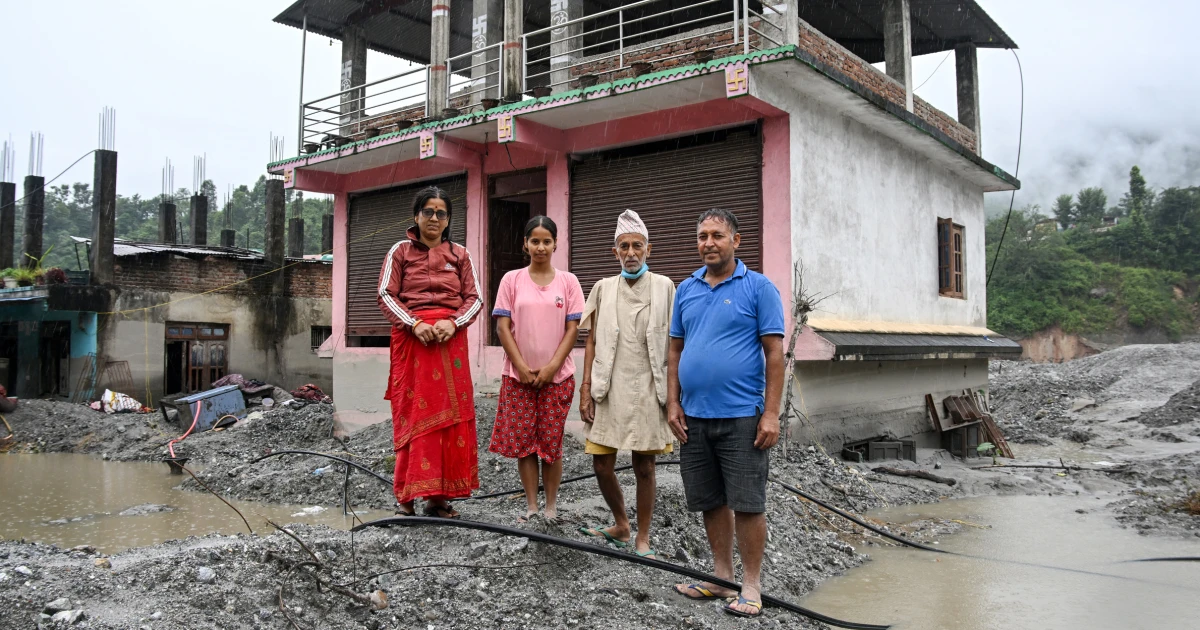
Recent Nepal floods show the scale of the risk
A flood reaching 164 feet in height and traveling 31 miles may sound unusual. But flooding in the Bhote Kosi River and its tributaries in August traveled about 190 miles downstream, raising water levels by about 330 feet in some areas, said Dipesh Chapagain, a senior scientist at the United Nations University Institute for Environment and Human Security.
Chapagain, a Nepali scientist who studies climate change and flooding, said “the risks could be even higher” than the research suggests. “This event has set a new level, a new threshold.”
New research could guide flood hazard mapping
Unlike the United States, large parts of Nepal do not have detailed flood hazard maps. Watson said previous efforts to determine which portions of Nepal’s population are exposed to dangerous flooding from alpine sources had included only a 1-kilometre (0.62-mile) buffer around alpine rivers.
Watson said the new research could help identify where flood hazard maps should be prioritized.
“We’re collecting very high-resolution elevation models to do some of our detailed flood hazard mapping, so we can focus on the hotspots that are most at risk,” Watson said. “To look at that level of detail, we needed this screening tool to know where the hotspots were.”
Nepal ends search for people missing after Bhote Kosi floods
After more than a month of searching for people missing in the Bhote Kosi floods, Nepal has called off the search. Chapagain said the immediate focus is building temporary settlements for thousands of flood victims.
There are no concrete plans yet for permanent resettlement, but Chapagain said new construction in safe areas must be prioritized.
“Future planning needs to consider all these risks when planning new infrastructure projects, new settlements and even flood recovery projects,” Chapagain said. He added that flood early-warning systems should be prioritized in areas identified as high risk in the study.
Development is expanding near Nepal’s rivers
Watson said the study shows that too much construction and development in Nepal is unregulated. The country is experiencing a boom in hydropower investment and tourism, along with the construction of paved roads in its alpine catchments.
According to the study, the amount of built-up area within 50 vertical meters of a riverbank increased by about 46% from 2016 to 2023.
“When these communities start forming, they quickly start to have schools, health facilities and other amenities. They can actually grow very quickly in areas that are very close to river channels,” Watson said.
Climate change is creating more glacial lake flood risks
As glaciers disappear and permafrost thaws because of climate change, thousands of glacial lakes are forming upstream. Many could send waves of flooding downstream with little notice or warning.
Source: www.nbcnews.com