


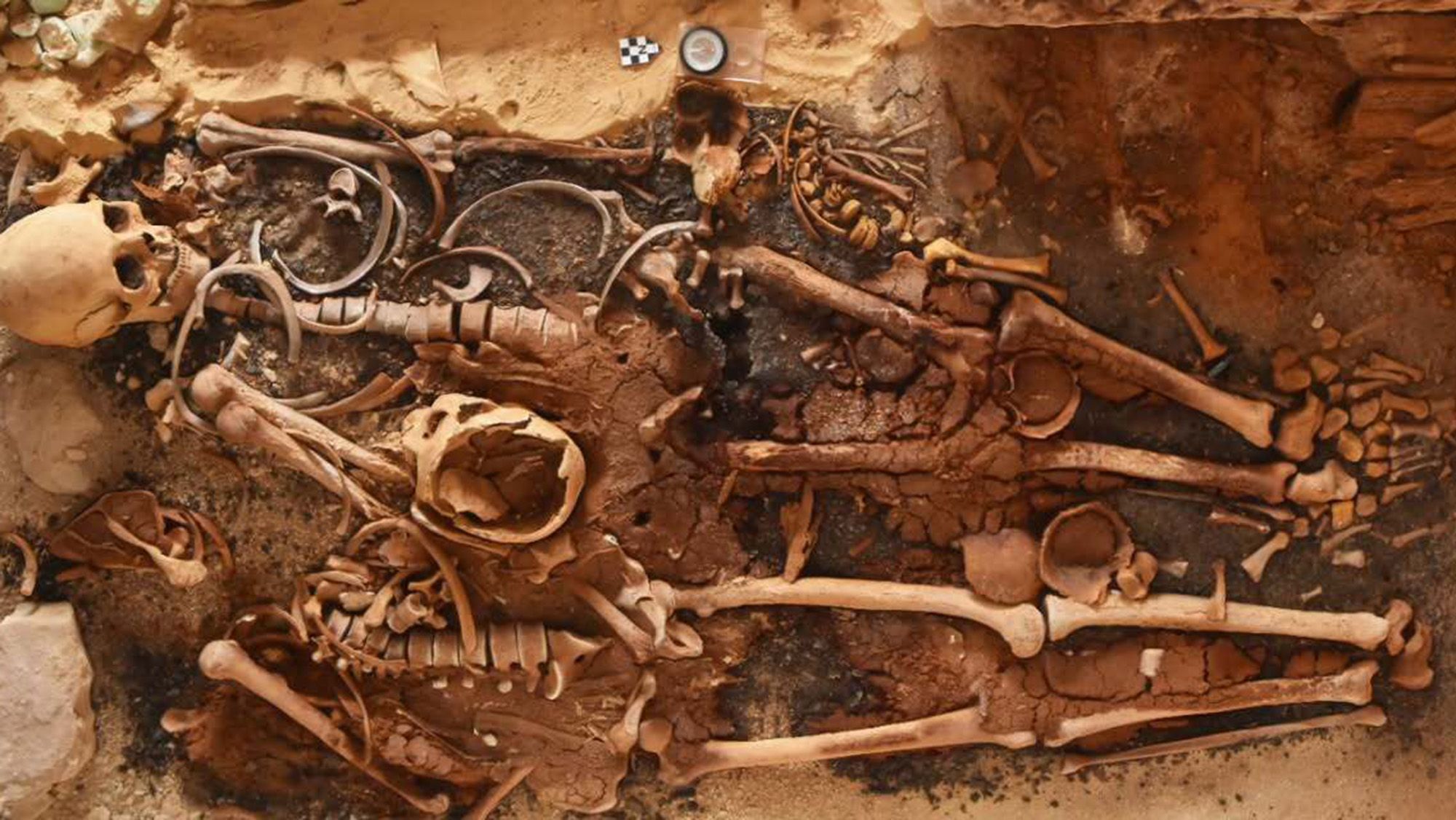
Exciting archaeological discoveries have revealed 18 ancient tombs in a Mediterranean town in Egypt.
The tombs, unearthed at Marina el Alamein (also known as Alamin), situated approximately 100 kilometers (60 miles) west of Alexandria, date back to the Ptolemaic (322 BC to 30 BC) or Roman (30 BC to 395 AD) periods, as confirmed by Egypt’s Ministry of Tourism and Antiquities in a statement.
During the Ptolemaic period, Egypt was under the rule of the descendants of Alexander the Great. The Roman era began after the death of Cleopatra VII, marking Egypt’s incorporation into the Roman Empire as a province.
Researchers noted that 11 of the graves were located deep underground, while the remaining seven rested closer to the surface. Among the artifacts unearthed, 24 “golden tongues,” believed to be placed in the mummies’ mouths, and an offering altar designed to resemble a false door, stood out as notable findings.

Entrance to one of the tombs in Marina El Alamein.
(Image credit: Provided by the Egyptian Ministry of Tourism and Antiquities)
“False doors are significant elements of ancient Egyptian funerary architecture, symbolizing the boundary between the living and the dead, allowing the deceased to receive offerings from the living,” stated Hesham Hussein, Undersecretary for Archeology at Egypt’s Ministry of Tourism and Antiquities.
The design of the offering altar engraved with a false door “suggests the continued symbolic importance of the false door, even as its architectural function evolved,” Hussein remarked.
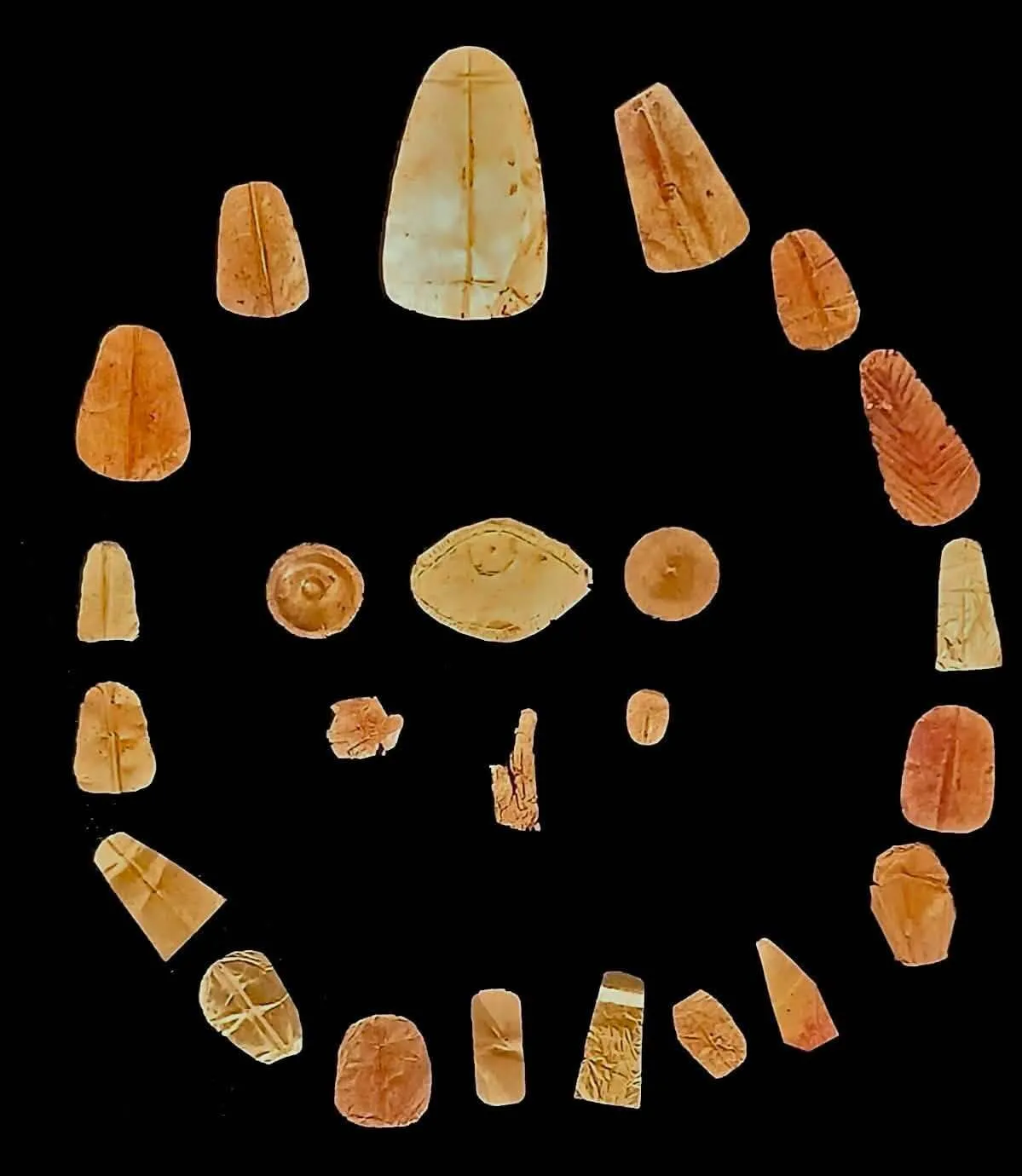
A golden tongue artifact from a tomb. Ancient Egyptians believed these tongues helped the deceased communicate in the afterlife.
(Image credit: Provided by the Egyptian Ministry of Tourism and Antiquities)
Golden Tongues of Ancient Egypt
Gold tongues were found in various ancient Egyptian tombs. Ancient Egyptians regarded gold as the food of the gods and believed these golden tongues enabled the deceased to communicate in the afterlife.
Receive the world’s most fascinating discoveries straight to your inbox.
“Golden tongues are well-documented in burials dating back to Ptolemaic and Roman times. They serve as symbolic amulets intended to assist the dead in speaking during the afterlife, particularly during the judgment before Osiris, enabling them to recite sacred formulas,” Hussein explained.
Interestingly, one of the recently discovered gold tongues is shaped like an Eye of Horus, known for its association with protection and good fortune.
Despite the intriguing nature of these artifacts, it remains uncertain whether all of them are indeed golden tongues. Attilio Mastrocinque, a former professor of archaeology at the University of Verona, remarked that some artifacts resemble silver wheat ears, traditionally linked to fertility and often found across the ancient world.
According to Mastrocinque, distinguishing between these artifacts is vital, as he noted the wheat ears are reminiscent of silver artifacts found in Roman sanctuaries.

An offering altar with a pedestal that resembles a false door.
(Image credit: Provided by the Egyptian Ministry of Tourism and Antiquities)
An Altar with a False Door?
False doors are a prevalent feature in ancient Egyptian tombs, often accompanied by offering altars. In this case, the base of the altar bears resemblance to a false door.
Krzysztof Jakubiak, a professor of archaeology at the University of Warsaw, who has previously excavated at Marina el Alamein but was not part of this recent excavation, mentioned that this finding may require further analysis.
“Care should be taken when making direct comparisons between the motifs identified on the discovered altar and those on known false doors,” Jakubiak cautioned via email. He noted that the structure appears unfinished and may not intentionally replicate a false door.
Hala Mostafa, an archaeology professor at Ain Shams University, indicated through email that he suspects the altar features hieroglyphics representing “offerings” rather than resembling a false door.

An incomplete statue of Aphrodite, the goddess of love and beauty.
(Image credit: Provided by the Egyptian Ministry of Tourism and Antiquities)
Excavated Items: Statues of Goddesses
One tomb featured an 8.2-foot-long (2.5 meter) granite coffin, which was still sealed upon discovery. The team is currently analyzing skeletal remains found within.
Among other artifacts was a partially finished statue of Aphrodite, the Greek goddess associated with love and beauty. As ancient Egyptian culture was influenced by Ptolemaic Greek traditions, Mastrocinque noted the interest in possible Aphrodite-themed shrines nearby.
“Understanding the statue’s context is essential,” Mastrocinque emphasized via email. “Did a sect of Aphrodite worship exist in this burial ground?”
Dorota Rzezbicka, head of the Polish-Egyptian Archaeological Mission at Marina el Alamein, stated that these findings suggest a “culturally diverse community” where Egyptian and Greco-Roman traditions merged in both daily life and funerary practices. She highlighted that these discoveries were made by Egyptian archaeologists at the site.
Test your knowledge about mummies with our Mummy Quiz!
Source: www.livescience.com