


Indigenous Burning Practices May Have Helped Prevent Australia’s Catastrophic Bushfires
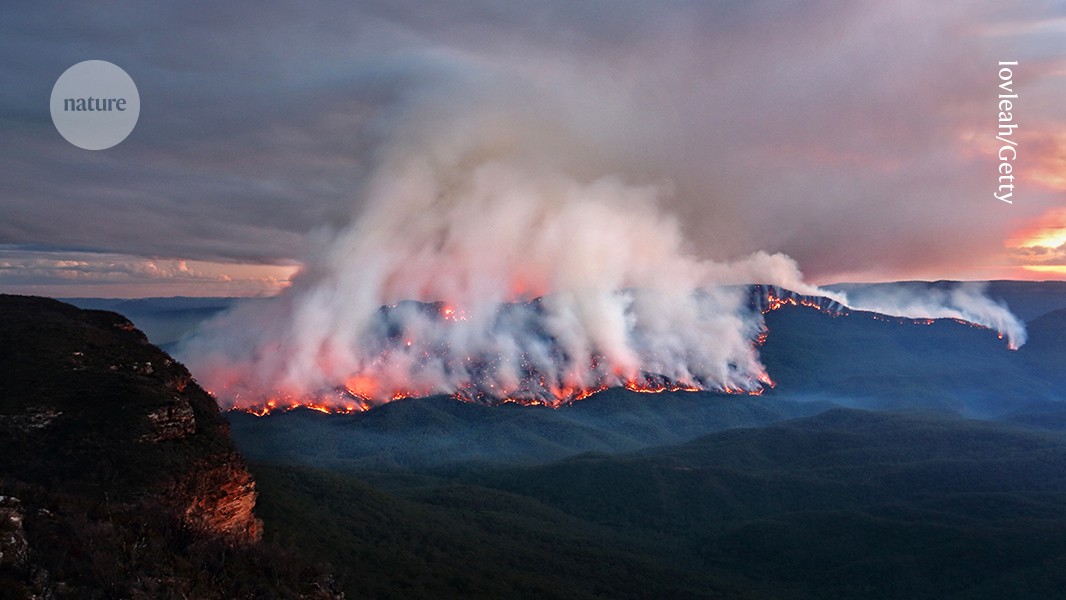
In 2018, a controlled fire broke out at Mount Solitary in Australia’s Blue Mountains.
Credit: lovleah/Getty
The suppression of Indigenous burning practices in Australia after British colonization likely transformed large areas of southeastern Australia into dense, highly flammable forests. That change may have contributed to the larger and hotter bushfires seen today, according to a reconstruction of the region’s fires over the past 1,000 years published in Nature.1
The researchers suggest that restoring Indigenous approaches to forest management could help reduce the risk of catastrophic wildfires, particularly as the climate warms. “It gives you another variable when you try to approach this problem rather than just focusing on climate change,” said Michael Sean Fletcher, a Wiradjuri scholar and paleoecologist at the University of Melbourne in Australia.
Why southeastern Australia’s bushfires are becoming more destructive
The research team investigated why larger and more destructive fires are occurring in southeastern Australia, including the unprecedented Black Summer fires of 2019–2020. Those fires burned more than 8 million hectares of forest in the region.
In 2022, a research team that included Fletcher used pollen records to show that southeastern Australia’s forests were generally more open and grassy before British colonization began at the end of the 18th century.2 The forests changed soon after colonization. “Overall, we see an increase in wood fuels after the British invasion,” Fletcher said.
A 1,000-year record of wildfires
To examine the pattern in greater detail, Fletcher and his colleagues collected sediment cores from a lake in Croajingolong National Park at Australia’s southeastern tip. The area is part of the traditional lands of the Gunaikurnai people.
Landscape reconstructions and historical evidence show that the Gunaikurnai regularly burned the land until British forces violently removed them in the mid-19th century.
As in the 2022 study, the researchers analyzed pollen in the sediment to reconstruct the plant species and forest structure around the lake over the past 1,000 years. The record shows about 800 years of open woodland with thick grass and relatively few trees. Around 1840, however, eucalyptus (Eucalyptus spp.) increased twofold, while woody shrubs spread across the area.
How vegetation changes intensified fires
The researchers also analyzed charcoal preserved in the sediment to estimate fire temperatures during the study period. In laboratory experiments, they identified molecules produced when plants burn at different temperatures, then searched for those molecules in the sediment samples.
The proportion of charcoal produced by hotter fires increased after the mid-19th century, suggesting that fires were becoming more intense.
The researchers link the vegetation changes to worsening fire conditions. Hotter fires encourage the growth of more flammable vegetation, which provides additional fuel and increases forest canopy density. The result is what the researchers describe as a “catastrophic wildfire loop.” Fletcher said eucalyptus trees sprout quickly after fires eliminate competing plants.
The authors attribute the shift partly to the end of the small, regular fires that Indigenous peoples used to protect particular areas from wildfire and to encourage plants that provided food for animals.
Could Indigenous fire management reduce wildfire risk?
The findings suggest that restoring Indigenous burning practices could be one part of a broader strategy to reduce wildfire intensity in southeastern Australia. Such approaches would provide an additional tool for managing forests alongside efforts to address climate change.
Source: www.nature.com