


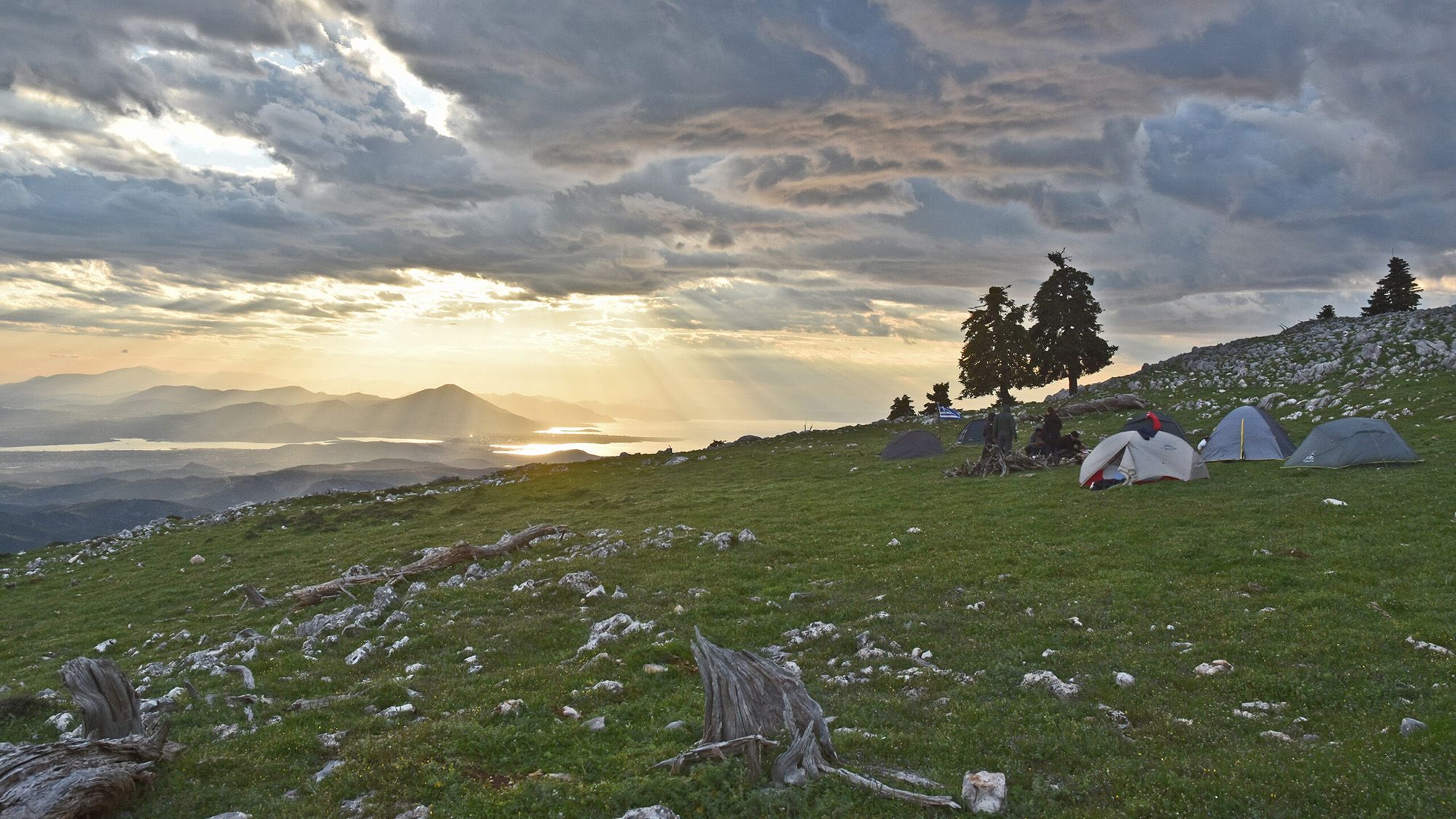
Archaeologists have discovered a 2,900-year-old mountaintop sanctuary on the Greek island of Euboea, offering evidence of ancient Greece’s reverence for high mountains and their associations with the gods. The sanctuary, found near the summit of Mount Eratias, appears to have been a place where worshipers made offerings and held feasts for centuries, from around the ninth century B.C. until the first or second century A.D.
Euboea is a large island about 30 miles (50 kilometers) northeast of Athens. The sanctuary contained no temple or other substantial buildings. Instead, archaeologists believe people visited the site to leave offerings and take part in religious meals.
A mountain sanctuary with centuries of use
“We know that in the ancient Greek world, religious life was not confined to large temples and urban sanctuaries,” excavation leader Chloé Chezeaux, an archaeologist with the Swiss School of Archeology in Greece, told Live Science in an email. “There were also many places of worship in the countryside and in the mountains.”
Chezeaux led an excavation earlier this year near the summit of Eratias, one of the highest peaks on Euboea’s Mount Olympus. This mountain is distinct from the mainland’s Mount Olympus, which ancient Greek tradition describes as the home of the gods.
The team first identified traces of the sanctuary during an archaeological survey in 2025. Excavations began in 2026.
“It’s not uncommon to find sanctuaries on mountain peaks,” Chezeaux said. “The problem is that these sanctuaries leave little archaeological evidence and sometimes have no visible structures at all, making them particularly difficult to identify.”
What distinguishes the Euboian Olympus sanctuary is “an exceptional concentration of pottery,” Chezeaux said. The oldest pieces date to at least the ninth century B.C., during the Early Greek Geometric Period, which is named for the characteristic patterns found on pottery from the era.
“This means that people have been coming to this summit for centuries, perhaps more than a thousand years,” Chezeaux said.
The sanctuary was used primarily by people from the nearby city of Eretria, although visitors may also have come from other places. Reaching the site remains physically demanding. The final section of the climb is about 3 kilometers (1.8 miles), with an elevation gain of roughly 650 meters (2,130 feet).
Researchers can now reach the summit in about an hour from the nearest mountain pass, but the journey would likely have taken a different amount of time in antiquity.
“It’s difficult to estimate how long that journey would have taken in ancient times,” Chezeaux said. “Travel conditions are different, we don’t know what routes people took, and … not everyone who visits the sanctuary necessarily comes from the city of Eretria.”
Why worship on a mountaintop?
The effort required to reach the sanctuary may have been part of the religious experience. Worshipers appear to have spent considerable time and energy reaching the summit, and they may have done so for generations.
“People were willing to spend considerable time and energy to get to these places, and in our case they seem to have been doing so for generations,” Chezeaux said. The discovery raises questions about what the mountain meant to its worshipers and why this particular peak remained important for so long.
In Greek mythology, the immortal gods were said to watch over mortals from another Mount Olympus, located in the mountains between Thessaly and Macedonia in northern Greece. That mountain is the highest in Greece, rising more than 9,500 feet (2,900 meters) above sea level.
Euboean Olympus is much lower, reaching almost 3,800 feet (1,100 meters). Its upper peak, Mount Eratias, is about 100 feet (30 meters) lower than the island’s highest summit.
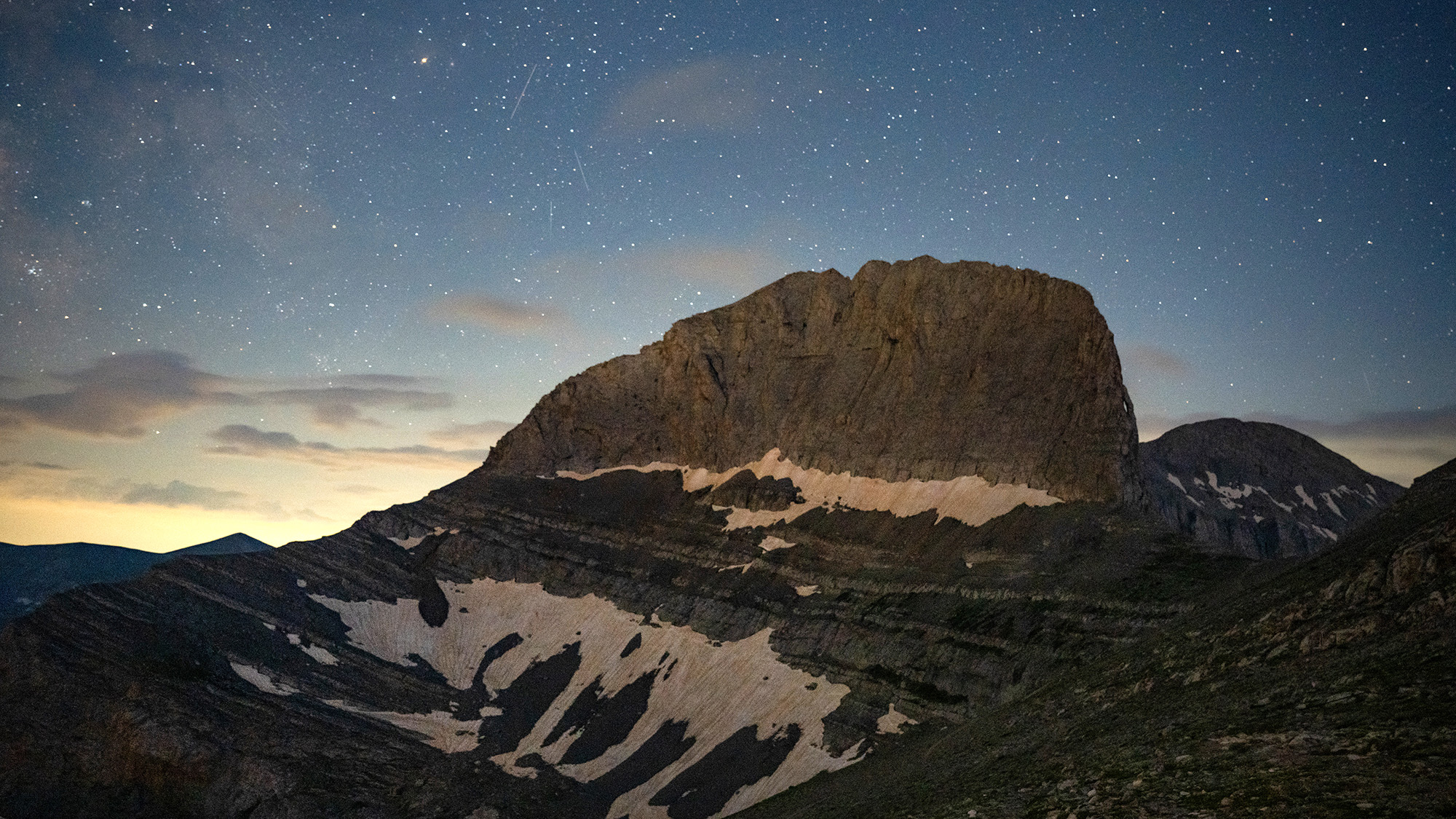
The tradition associating Mount Olympus in northern Greece with the gods appears in the poems of Homer and Hesiod, written around the eighth century B.C. However, the name Olympus was already widely used for high mountains, and modern Greece has several mountains with that name.
High sanctuaries were also common elsewhere on Euboea. Chezeaux said that religious rituals were frequently held on the island’s mountains.
“In ancient times, Eretria had a very rich religious life, with sanctuaries throughout the city and its territory,” she said. “Mount Olympus dominates much of the surrounding area, and its prominent position probably influenced the choice of this site.”
Offerings, sacrifice and ritual meals
The excavation team has not yet found an altar at the sanctuary. Zeus, the chief Greek god, is traditionally associated with mountain peaks. However, inscriptions from the ancient site of Eretria refer to “Artemis Olympia,” an epithet suggesting that Artemis, the goddess of wild nature, may have been worshiped at a mountaintop sanctuary.
The researchers found remains of offerings in crevices at the site, including sheep and goat bones.
“Some of them are showing signs of burning, sometimes at very high temperatures,” Chezeaux said. “These discoveries naturally point to practices around animal sacrifice and ritual eating that played an important role in ancient Greek religion.”
Source: www.livescience.com