


Inuit Figurine May Be the Earliest Indigenous Depiction of a European in the Americas
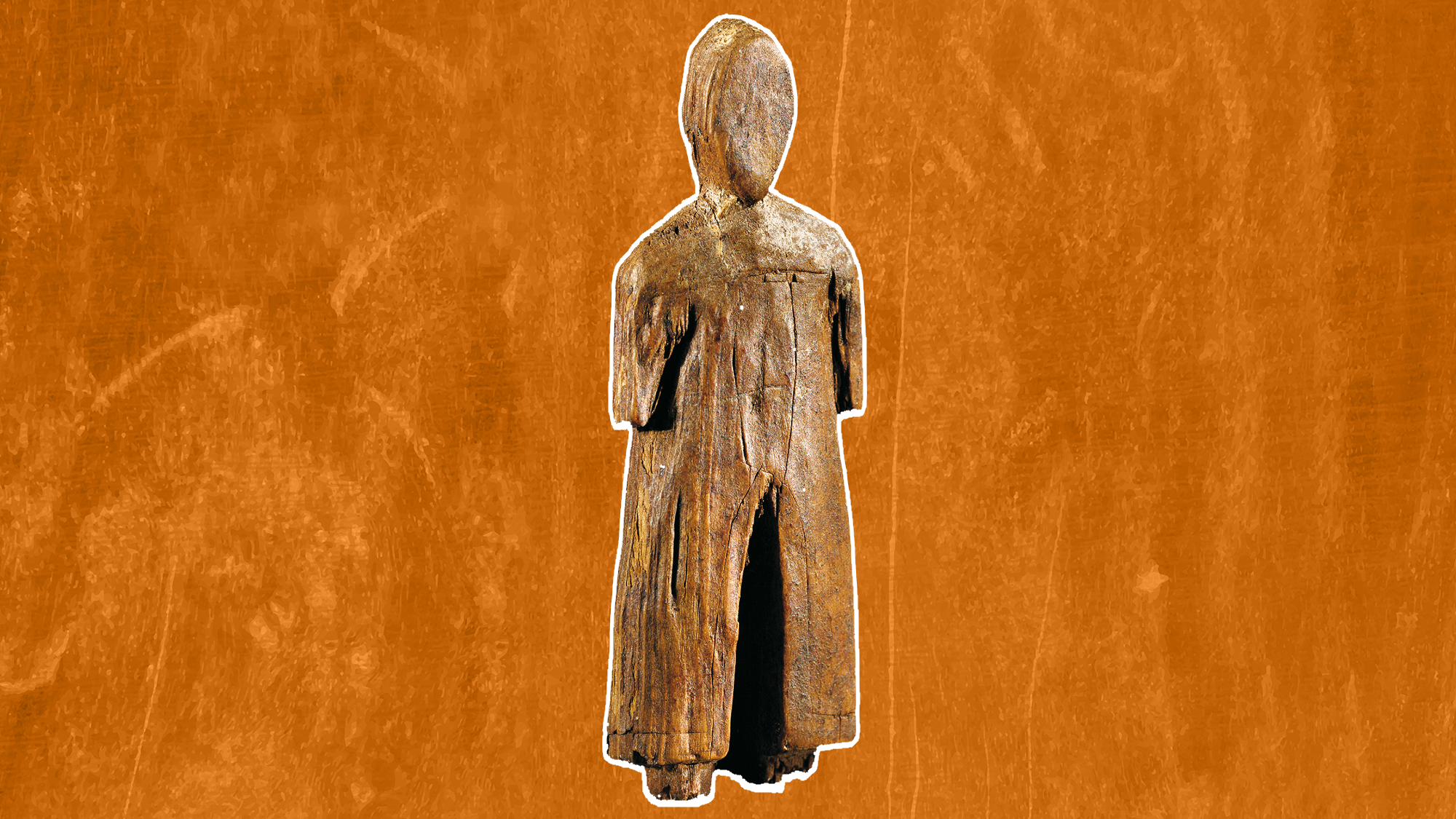
The earliest known Indigenous depiction of a European in the Western Hemisphere may be this Inuit carving, created around A.D. 1350.
Image credit: Canadian Museum of History, IMG2009-0063-0154-Dm
Quick facts
Name: Inuit figurine
What it is: Carved wooden figurine
Where it was found: Baffin Island, Nunavut, Canada
When it was created: Around A.D. 1350
A small wooden figurine discovered on Baffin Island may preserve the earliest Indigenous depiction of a European in the Western Hemisphere. The carving was found in 1977 inside an early home built by Inuit ancestors in northern Canada.
Created around A.D. 1350, the 2.1-inch (5.4-centimeter) driftwood sculpture shows a figure wearing European-style clothing and a pectoral cross. The Canadian Museum of History describes it as probably depicting a Norseman, possibly a Christian from Greenland.
The Canadian Museum of History notes that the figurine’s featureless face and stubby arms are typical of 14th-century Inuit carvings. However, the depiction of a non-Inuit person appears to be unique.
What does the Inuit carving depict?
The mysterious figure wears a long robe or tunic with a cross on the front. The clothing resembles styles worn between the 11th and 13th centuries, supporting the possibility that the figure represents a Norse visitor.
Norse sagas refer to a place called Helluland, visited by Leif Erikson in the early 11th century. Helluland is often identified with Baffin Island.
Norse contact with North America
Around A.D. 1000, the Norse explorer Leif Erikson reached what is now Newfoundland and established a settlement at a place known as Anse aux Meadows. Archaeologists have found wooden buildings and ironwork there, which remain the clearest evidence of an early European settlement in the Americas.
Norsemen may have made repeated journeys from Greenland to Canada over the centuries, trading metals and cloth with Inuit ancestors. European artifacts have also been found in early Inuit homes on Baffin Island, including sites associated with the Thule people.
These exchange networks may eventually have ended because of Indigenous resistance, the long distances involved or the abandonment of Norse trade routes to the west.
Why the figurine matters
The wooden carving is significant because it may commemorate an encounter between Inuit communities and Scandinavians. According to the museum, it was made before sustained contact began in the late 15th century.
More importantly, the figurine offers an Indigenous perspective on European visitors. Its maker appears to have observed and represented distinctive Norse characteristics, making the carving a rare record of how Inuit craftspeople viewed people arriving from the East.
For more archaeological discoveries and remarkable artifacts, explore the Canadian Museum of History’s collection.
Topics
Source: www.livescience.com