


NASA Space Station Research to Study Brain Health, Space Crops and Antibiotic-Resistant Bacteria
NASA experiments focused on human health, plant health and drug-resistant organisms will travel from Cape Canaveral Space Force Station in Florida to the International Space Station aboard SpaceX’s Commercial Logistics Service Mission 35. The research could benefit life on Earth and support future space exploration.
The mission includes four investigations by NASA’s Biophysical Sciences Division. The studies will examine 3D models of the human brain, crop diseases, faster ways to assess astronaut health and antibiotic-resistant bacteria on the space station.
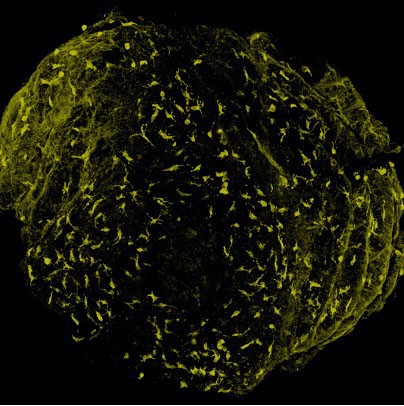
3D Brain Models Could Reveal How Spaceflight Affects the Human Brain
A new health study aims to answer an important question: What happens to the human brain in space?
The experiment will send a miniature human brain model created in a laboratory to the International Space Station for five weeks. Researchers will compare tissue models that traveled to space with identical models stored on Earth to determine how short-term spaceflight affects the brain at the cellular level.
The findings could improve scientists’ understanding of how the human brain responds to stress and lay the foundation for strategies to counter brain health risks astronauts may face during future missions to the Moon and beyond.
Studying Disease-Resistant Crops for Future Space Farming
Another investigation will test whether crop diseases develop faster or become more severe in microgravity.
Researchers will compare molecular and structural changes in plants grown on Earth with changes in plants grown on the space station and infected with disease-causing fungi. The results could guide plant breeding on Earth to produce disease-resistant crops and help reduce yield losses in future space farming systems.
Plants grown in space can provide nutrition, increase dietary diversity and offer psychological benefits to astronauts during long-duration missions. They also absorb carbon dioxide, produce oxygen and recycle water—functions that will become increasingly important as human missions travel farther from Earth.
Rapid Health Analysis for Astronauts in Space
The spacecraft will also carry the first test of a compact microplate reader that arrived at the space station earlier this year.
Experiments in the Commercially Enabled Rapid Space Science initiative will test the device’s ability to detect and measure specific biomarkers, including antibodies, antigens and proteins.
Microplate readers allow scientists to analyze samples on the space station and obtain data quickly, without waiting for the samples to return to Earth.
Ultimately, the research aims to support the timely detection of infectious diseases and other health issues in astronauts. It could also expand scientific capabilities at remote exploration locations where resupply is more difficult.
Tracking Antibiotic-Resistant Bacteria on the Space Station
Precision Health Research has returned for its fourth and final planned mission to the space station. The investigation will study how antibiotic-resistant bacteria survive and evolve in microgravity.
As part of the study, astronauts will repeatedly sample surfaces throughout the space station to monitor for drug-resistant organisms.
The research could help scientists develop ways to protect astronauts from bacterial infections during long-duration missions. On Earth, the findings could provide insight into how superbugs arise from the overuse of antibiotics.
NASA Biological and Physical Research in Space
Learn more about NASA’s biological and physical research in space below.
Source: science.nasa.gov