


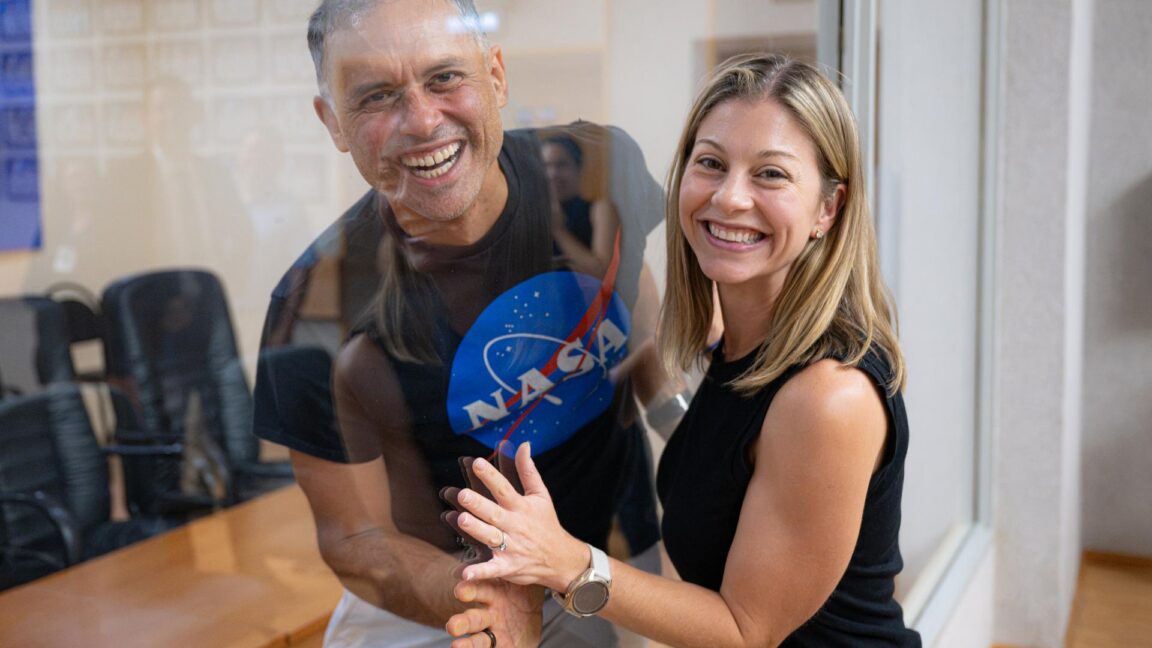
Nine years ago, NASA flight surgeon Anil Menon faced a challenging moment as his aspirations crumbled around him.
With a lifelong dream of becoming an astronaut, he applied for the U.S. Space Agency’s program for the fourth time. Although he made it to the finalist stage, NASA ultimately rejected his application again.
“I was very sad and accepted defeat,” Menon reflected. “At that point, I believed there was zero chance of becoming an astronaut.”
At 39 years old, Menon found himself significantly older than the average astronaut candidate. He took time to reflect on his future, feeling doors close and seeking new opportunities.
While his past was filled with remarkable experiences, including serving as a trained emergency physician on Mount Everest, providing aid in Port-au-Prince after Haiti’s devastating 2010 earthquake, and participating in military search and rescue missions in Afghanistan, he knew he wanted to focus on his next steps.
During this time of introspection, Menon daily wrote about his passions, purpose, and principles in a diary. Ultimately, he chose to focus on space medicine. He thought, “If I can’t go to space myself, I will help others go there. Collectively, humanity will progress.”
This reflection became crucial as Menon and his wife, Anna, faced a pivotal decision about their futures—one that would shape their lives profoundly.
Making a Pivotal Decision
After growing up in the Midwest, Menon studied neurobiology at Harvard University, then transitioned to Stanford University for a degree in mechanical engineering followed by a medical degree in 2006. He practiced as an emergency physician in Los Angeles, enlisted in the Air National Guard, became a pilot, and served as a medic on a search and rescue helicopter in Afghanistan.
This rewritten content incorporates SEO techniques such as strong tags for key terms, optimized language, and maintains the HTML formatting while enhancing readability and relevance.
Source: arstechnica.com