


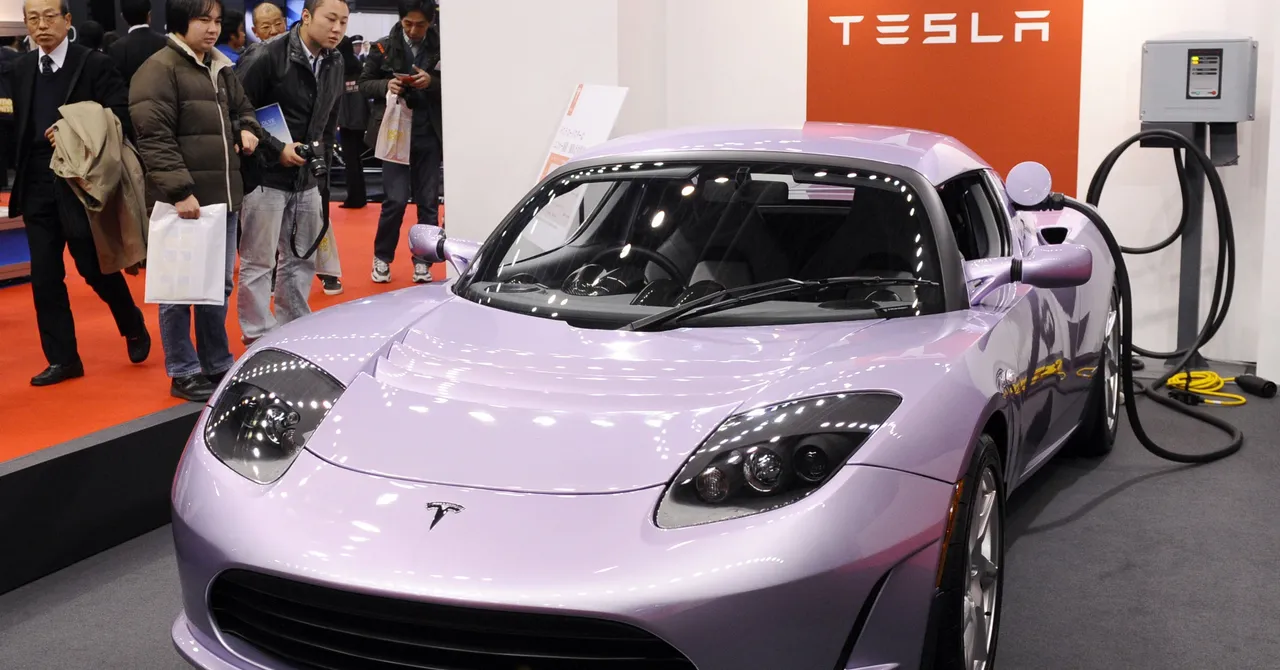
Tesla Roadster 2 Finally Arrives After Nearly Nine Years of Delays
Nearly 9 years later, Tesla’s long-delayed Roadster 2 is finally set to be unveiled. When Elon Musk announced the electric sports car in 2017, he promised it would be “the fastest sports car ever” and deliver “a huge blow” to gas-powered vehicles.
The automotive landscape has changed dramatically since then. Mr. Musk ended subsidies for buying electric cars last year and last month became a major donor to his political party. Adjusted fuel-efficiency standards are making it easier for automakers to avoid expanding EV production. Musk has also said he is no longer even in the car-manufacturing business and has urged investors to think of Tesla as a robotics and self-driving company.
On Thursday night, Tesla will hold an event billed as the final unveiling of its human-driven vehicle. Six years after it was scheduled to roll into customers’ driveways, the Roadster 2 is finally here. Tesla plans to begin deliveries next year.
The Tesla Roadster Enters a Very Different EV Market
“Today’s EVs exist in a much different environment than when the Roadster was introduced,” said Ed Kim, president of automotive research firm AutoPacific. When Tesla introduced the Roadster in 2017, the electric vehicle was “a toy for early adopters,” he said.
By 2020, other automakers had seen Tesla’s soaring valuation and lawmakers’ plans to transition vehicles to battery power. They made major electric-vehicle commitments and invested heavily in the shift. China has since begun to dominate EV manufacturing. Now that the Trump administration has changed America’s policy on powertrains, EV sales are shrinking instead of growing.
Consumers also have far more electric vehicles to choose from. In 2017, U.S. customers had 15 EVs available, according to research firm Cox Automotive. Today, that number has climbed to nearly 90.
Potential EV buyers are increasingly regular consumers with practical needs. “People are looking for range, performance, charging ability and resale value,” said Stephanie Valdez Streeti, director of industry insights at Cox.
What Would Make the Roadster 2 a Success?
Defining success for the Roadster 2 is complicated. This is a hypercar aimed at buyers who want to stand out and drive very fast. Some also want the power and roar associated with a gasoline engine.
That helps explain why some luxury automakers have struggled to recreate the sound of a V-8 engine. Porsche and Ferrari have said they will continue developing gas engines. Lamborghini announced earlier this year that it would completely shelve electric products. Even Bugatti CEO Mate Rimac, who founded his own electric hypercar company, expects loud internal-combustion cars to become status symbols among the wealthiest buyers.
“EVs in this space need to surprise shoppers with more than practicality,” Kim said. “None of that matters because it has great range, it’s very quiet, and you can charge it at home.”
Price, Deposits and Performance Expectations
In 2017, Tesla announced that the Roadster 2 would start at $200,000. Some reservation holders paid a $50,000 deposit.
Musk also promised a 0-to-60-mph time of less than two seconds, a figure that would have shattered the record in 2017. Since a few other mass-produced cars have now broken through that barrier, Tesla faces a higher performance hurdle.
One possibility is that the new Roadster could fly. Musk has hinted several times over the years that the next Roadster would take flight. One report suggests that Tesla will receive help from Musk’s rocket company, SpaceX. In 2018, SpaceX launched Musk’s first-generation Roadster into space using a Falcon Heavy rocket.
Can Tesla Make Extreme Speed Practical?
Driving at such speeds is “not very comfortable,” said Shea Burns, an automotive and industrial partner at AlixPartners. “Outside of the rocket fragments, the laws of physics are catching up to them.”
That challenge could make the Roadster 2 more than a showcase for acceleration. It could also offer an unusual way for electric-vehicle manufacturers to move away from human driving.
Source: www.wired.com