


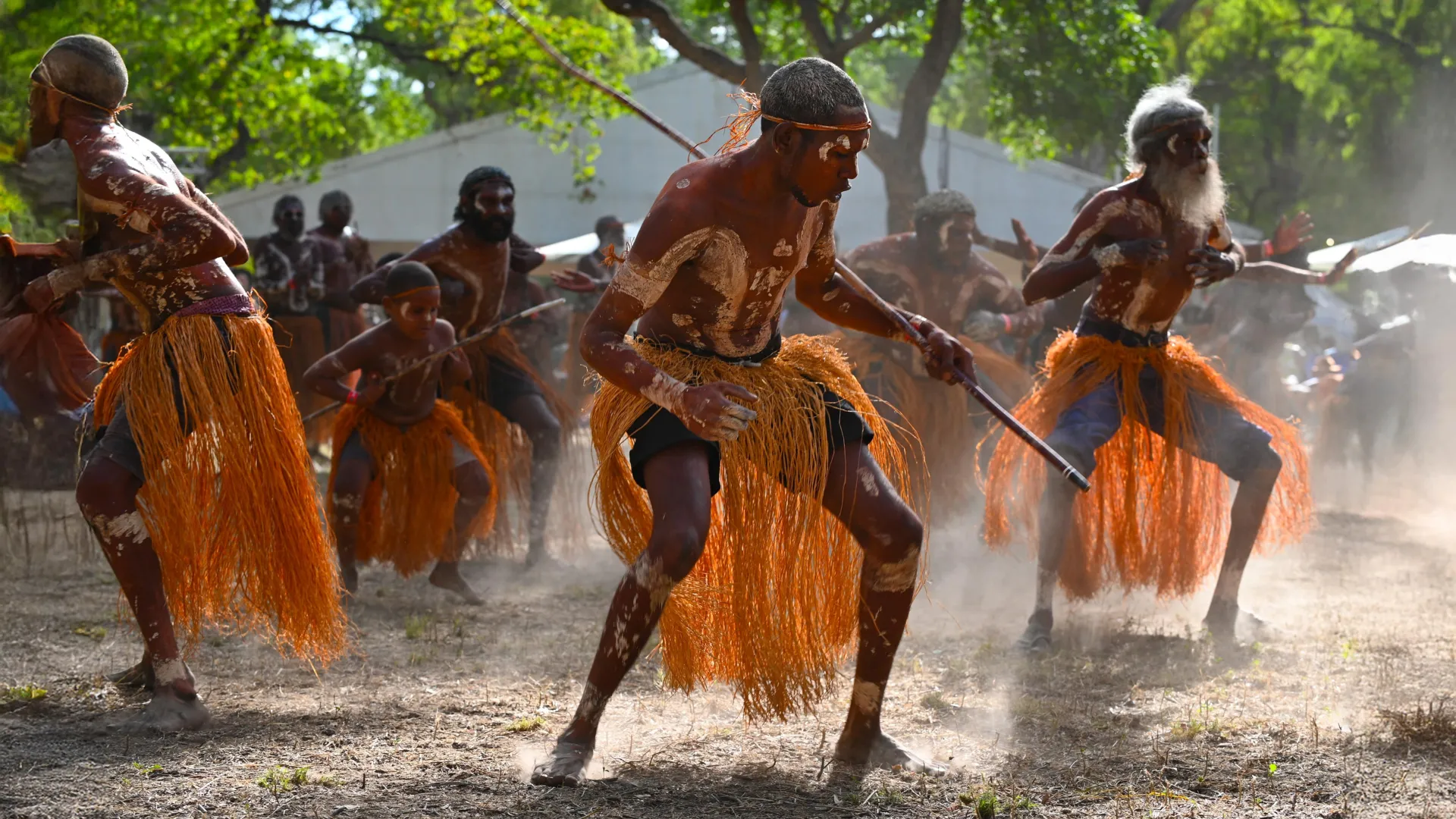
New Research Estimates 2.22 Million Indigenous Australians Lived in Australia in 1788
New research suggests Australia’s Indigenous population before European colonization was far larger than historical estimates indicated. Scientists now estimate that approximately 2.22 million Indigenous people lived across the continent when the First Fleet arrived in 1788—potentially up to seven times more than previous calculations suggested.
The findings also reveal the devastating scale of population decline associated with colonization. Researchers estimate that 93% of Australia’s Indigenous population was lost within 80 years of European arrival, representing a larger decline than previously recognized.
Professor Corey Bradshaw, Professor of Global Ecology at Flinders University and Principal Research Fellow at the Australian Research Council Centre of Excellence for the History and Future of Indigenous Peoples and the Environment (CIEHF), contributed to the national research effort. The team is working with Indigenous partners to examine how Indigenous populations changed throughout Australia’s history.
By combining computer models with historical and scientific evidence, researchers developed new population estimates that challenge long-standing assumptions about Australia’s pre-colonial demographics.
“Understanding the size of Australia’s Indigenous population before the European invasion of 1788 is essential for truth-telling and reconciliation,” Professor Bradshaw said.
New evidence suggests millions of Indigenous Australians lived before colonization
Researchers combined ethnographic observations, archaeological discoveries, genetic reconstructions and computer models to reconstruct the population of Indigenous peoples across Australia before European settlement. They also assessed how many people different environments across the continent could support.
Previous population estimates often relied heavily on calculations made in the 1930s by anthropologist Alfred Radcliffe-Brown. His influential assessment placed Australia’s pre-colonial Aboriginal population at approximately 250,000 people.
Radcliffe-Brown recognized that his estimates did not fully account for the effects of deadly disease, violence along the colonial frontier and broader structural violence. Subsequent research has shown that these forces were more influential than historically acknowledged, suggesting that early demographic estimates were already significantly underestimated.
Using genetics-based population models supported by, but not dependent on, historical and ethnographic descriptions, the research team calculated a median pre-colonization Indigenous population of 2.22 million people. This represents approximately 0.29 people per square kilometre across Australia.
The estimate is significantly higher than previous historical figures, which generally ranged from 250,000 to 1 million people.
Researchers believe the lower estimates were influenced by widespread population declines caused by disease, frontier violence and systematic oppression before Australia’s earliest censuses were conducted.
Australia’s Indigenous population declined by 93% after 1788
The revised population estimates also enabled scientists to calculate the scale of the demographic catastrophe associated with European colonization.
Using early census records and population models, researchers estimated that approximately 2.06 million excess deaths occurred between 1788 and 1861. That equates to an average of about 28,200 excess deaths per year over the 73-year period.
By 1861, the Indigenous population had fallen to an estimated 7% of its pre-colonial size, representing a 93% decline.
“These devastating discoveries highlight the profound impact of invasions experienced by Indigenous Australians and demonstrate their remarkable survival and resilience over the past century,” said lead author Associate Professor Alan Williams. Williams is a partner researcher at CIEHF, representing EMM Consulting, and a part-time research fellow at James Cook University.
Australia’s Indigenous population has increased since the 1950s but has not yet returned to its estimated size before European arrival.
According to the 2021 Australian Census, the Indigenous population was approximately 37% of the estimated median population in 1788.
If population growth continues at current rates, researchers predict that Indigenous population numbers may not return to their estimated pre-colonial level until around 2047.
What the findings mean for Australian history
In addition to revising historical population estimates, the research highlights the long-term effects of colonization on Indigenous Australians.
Researchers say the scale of the population collapse has important implications for understanding intergenerational trauma, persistent disadvantage and the development of policies that better support Indigenous communities.
“The findings highlight the scale of the demographic catastrophe experienced by Indigenous Australians due to colonization. The implications are to improve our understanding of intergenerational trauma and inform future policies that support Indigenous peoples. In addition to recognizing this intergenerational trauma and disadvantage, it is also time to recognize intergenerational privilege,” said co-author Lynette Russell, Distinguished Professor at Monash University’s Centre for Indigenous Studies and CIEHF.
The findings also demonstrate why scientists must use several independent methods when reconstructing population history, particularly when written records are incomplete, unreliable or shaped by historical bias.
By combining genetic research, archaeological evidence, environmental modelling and historical information, the team developed a more comprehensive picture of Australia’s Indigenous peoples before and after European colonization.
Distinguished Professor Larissa Behrendt AO, Chair of the CIEHF Centre Advisory Board, said the findings recognized the extraordinary perseverance of Indigenous Australians while calling for a fundamental reassessment of the country’s history.
“These findings challenge us to reconsider the scale of what has happened since 1788. We are not talking about a small consequence of colonization, but a demographic catastrophe at the heart of Australia’s history. But this study also tells us something surprising: our survival is one of the most remarkable stories in Australian history,” said Distinguished Professor Larissa Behrendt, CIEHF Centre Advisory Board AO Chair.
Study details
The study, “Size of Australia’s Indigenous population before large-scale declines following colonial invasion,” was published in Nature Human Behaviour.
Authors include Alan Williams, Raymond Tobler, Billy Griffiths, Sean Ulm, Matthew Nitsche, Michael Bird, Shane Ingley, Frederic Sartre, Kirsty Beller, Ian McNiven, Nicholas Pitt, Lynette Russell, Alistair Patterson, Christopher Wilson and Corey Bradshaw.
The research was co-funded by the Australian Research Council Centre of Excellence for Indigenous and Environmental History and Futures (CE230100009) and the Australian Research Council Centre of Excellence for Australian Biodiversity and Heritage (CE17010001).
Source: www.sciencedaily.com