



Orexin Agonists Could Be the Next Breakthrough After GLP-1 Drugs
When U.S. regulators approved a treatment for narcolepsy in August, some researchers immediately predicted a bright future for a class of compounds known as orexin agonists. Like blockbuster GLP-1 drugs such as Ozempic—which were initially approved for diabetes but later became popular for other conditions—these new medicines could have applications beyond sleep disorders.
First-ever drug to treat narcolepsy opens the door to new brain treatments
“Diabetes was the tip of the iceberg with GLP-1, and we’re confident the same thing will play out with orexin,” says Andrew Plump, president of research and development at Takeda Pharmaceutical, the Tokyo-based company that developed the newly approved drug, Orzeiful (ovepolextone). “Our goal now is to unravel the science and understand what lies beneath the surface.”
The excitement follows decades of research into orexin, a peptide produced by the brain that helps regulate metabolism, mood, appetite, memory and, most notably, sleep-wake cycles. Scientists are now working to translate these discoveries into clinical treatments, including potential uses for orexin agonists in attention-deficit hyperactivity disorder (ADHD) and other conditions involving disrupted attention and arousal.
“Anyone who is sleep-deprived can tell you that it affects almost every aspect of their life,” says Luis de Recea, a psychiatrist at Stanford University in California who was one of the first researchers to identify orexin. “It’s very rewarding to be involved in developing medicines that help people.”
How scientists discovered orexin
De Recea was a budding scientist in a new laboratory at the Scripps Research Institute in San Diego, California, when, in the mid-1990s, he took on a difficult project: identifying proteins produced only in certain parts of the human brain. The institute divided the brain into regions for study, and de Lecea chose the hypothalamus, an almond-sized region deep inside the brain.
The research team created a list of messenger RNAs—small pieces of genetic material that carry instructions for making proteins—that were specific to the hypothalamus. Scientists examined the list and identified a pair of neuropeptides, which they named hypocretin 1 and hypocretin 2.1 Around the same time, researchers in Texas isolated equivalent peptides from rats and named them orexin A and orexin B.2
When the group first identified orexin, neuroscientist Takeshi Sakurai was working in the laboratory of molecular biologist Masashi Yanagisawa at the University of Texas Southwestern Medical Center in Dallas. The researchers suspected that the peptide might regulate feeding in rodents. The name comes from the Greek word orexis, meaning appetite. But when the scientists artificially blocked orexin signalling, they made an unexpected discovery.
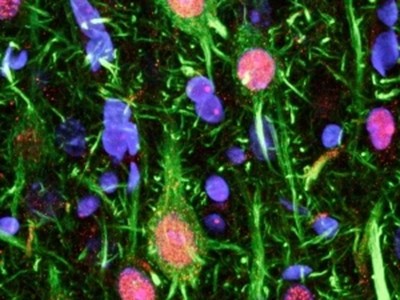
Narcolepsy confirmed to be an autoimmune disease
“The animals would sometimes collapse suddenly,” said Sakurai, now at the University of Tsukuba in Japan. The behaviour resembled cataplexy, the sudden and temporary loss of muscle control that is characteristic of human narcolepsy type 1. Further research helped the team understand orexin’s role. “Orexins don’t just wake us up; they stabilize our wakefulness,” he says.
Researchers in California were making similar discoveries. Emmanuel Mignot, a sleep-medicine expert at Stanford University, and his colleagues identified mutations in the gene encoding orexin receptor 2 as the cause of narcolepsy in dogs.3 In a study of deceased patients with narcolepsy type 1, neuroscientist Jerome Siegel of the University of California, Los Angeles, and his colleagues found that the patients’ brains had almost always lost a large number of orexin-producing neurons.4
It is a small group of neurons—only 70,000 among the hundreds of thousands of cells in the hypothalamus—but it appears to be crucial.
“When these neurons disappear, the brain can’t find a workaround,” Siegel says.
Turning orexin research into a narcolepsy treatment
From the moment they noticed the link between orexin and sleep, Sakurai says, he and his team recognized the treatment’s potential. A few years later, pharmaceutical companies did too.
Takeda’s initial research began as a special project in the late 2000s. One of the company’s engineers had a friend with narcolepsy type 1, so the team began searching for molecules that could bind to orexin receptors and restore normal sleep-wake cycles.
When Takeda engineers screened the company’s library for molecules that met the criteria, they found only one candidate: TAK-925. Moving forward with the project was risky, Plump says. “No chemist in their right mind would start a drug-discovery programme on the first try.”

First orexin agonist addresses root cause of narcolepsy
Nevertheless, the molecule worked well in animals. When the company launched its first human trial in 2017, engineers drove friends to the research centre to participate. One participant immediately contacted Plump and said the drug appeared to be working. “He knew that just by talking to her,” Plump says.
Orzeiful, which currently has approval in three countries, builds on the foundation established by TAK-925 and other earlier candidates. The drug is a significant improvement over existing treatments, which mask the symptoms of narcolepsy and can have serious side effects.
Mignotto, who led Takeda’s late-stage clinical trials, says people have reported that they “really understood what it was to suddenly wake up after taking this drug.”
Could orexin agonists follow the path of GLP-1 drugs?
With Orzeiful’s approval, competitors are racing to enter the global narcolepsy-drug market, which analysts predict could exceed US$6.4 billion by 2031. Narcolepsy types 1 and 2 affect about 3 million people worldwide. Type 2 does not involve the death of orexin-producing neurons, and many additional cases are thought to be unreported or misdiagnosed.
Researchers are now exploring whether the biology of orexin could support treatments for conditions beyond narcolepsy, including ADHD and other disorders in which attention and arousal are dysregulated. The next phase of research will determine whether orexin agonists can become a broader class of brain medicines, much as GLP-1 drugs have expanded beyond their original use in diabetes.
Source: www.nature.com