


Natural gas combustion turbines followed with 22 newly completed units, while natural gas internal combustion engines accounted for 21 units.
Onshore wind projects accounted for nine of the power plants brought online.
Only three combined-cycle natural gas projects began operating during the period, despite substantial new gas-generation capacity in development. The next major wave of new natural gas power plants is not expected for several more years.
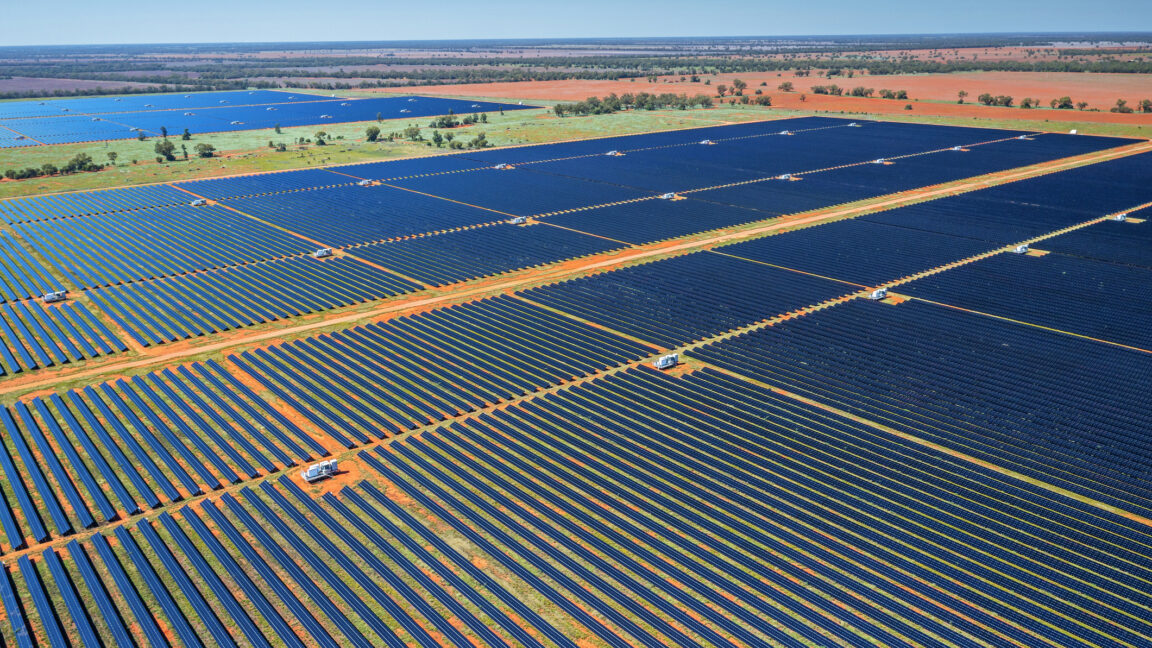
By generating capacity, utility-scale solar photovoltaic projects led all new power plants with 11,458 megawatts (MW). Battery storage followed with 8,207 MW, while onshore wind reached 5,473 MW, driven largely by the SunZia project.
Together, the three leading types of natural gas power plants added 2,707 MW of new generation capacity.
This database does not include small-scale solar installations, such as residential and commercial rooftop solar systems.
There is an important distinction to consider when comparing power plant capacity. Solar panels do not generate electricity at night, while many natural gas plants operate only for a few days or weeks each year to meet periods of peak electricity demand.
What do these figures reveal about the US energy transition? We asked Eric Guimon, a senior fellow at the San Francisco-based think tank Energy Innovation.
Guimon said most new projects are small- to medium-sized utility-scale solar installations. Although these facilities attract less attention than major power plants, they are being built across the country, often alongside battery energy storage systems.
“These types of small-scale projects are easier to build, and the potential sites are much more diverse and easier to find,” he said.
The geographic distribution of new power plants is also significant. Texas, New Mexico, and Arizona together account for roughly half of the nation’s new electricity-generation capacity.
Texas led the country, with new capacity coming primarily from battery storage, utility-scale solar, and natural gas generation. Batteries ranked first with 3,067 MW, followed by utility-scale solar with 2,311 MW and natural gas-fired turbines or internal combustion engines with 1,154 MW.
Source: arstechnica.com