


NVIDIA cuDSS Accelerates Large-Scale Engineering and Scientific Simulations
NVIDIA cuDSS is now generally available as part of the NVIDIA CUDA-X library. The solution moves key parts of engineering and scientific simulations to the GPU, helping teams reduce time to results and evaluate more designs.
Advanced chips, aircraft and industrial systems rely on simulation to predict how a design will perform before it is built. As designs become more complex, simulations can take longer to run, increasing computing demands and limiting the number of ideas engineering teams can test.
NVIDIA cuDSS uses GPUs to accelerate the solution of large-scale sparse systems. This computational step is repeated throughout many engineering and scientific simulations and can become a major performance bottleneck.
By accelerating sparse solves, cuDSS can help applications increase simulation throughput and reduce time to results. Engineers and researchers can explore larger, more realistic models, improve accuracy and evaluate more design options at lower cost.
Industry Leaders Adopt NVIDIA cuDSS
Industry leaders are integrating NVIDIA cuDSS into their software tools to improve engineering and scientific workflows for their customers.
- Applied Materials: Applied Materials used cuDSS to accelerate sparse solves in Ginestra, a physics-based, defect-centric simulation platform. The company achieved speedups of up to 10 times compared with CPU-only approaches, accelerating the exploration of reliability in semiconductor materials and devices.
- COMSOL: Using COMSOL Multiphysics and NVIDIA cuDSS with NVIDIA-accelerated computing, ZEISS SMT achieved a measured 4x speedup on an EUV lithography plasma simulation benchmark, completing a simulation in 6 days and 14 hours.
- Cadence: Cadence uses cuDSS with Celsius Software to accelerate thermal, structural stress and warpage simulations for advanced chip and 3D chip designs, helping customers analyze complex designs faster.
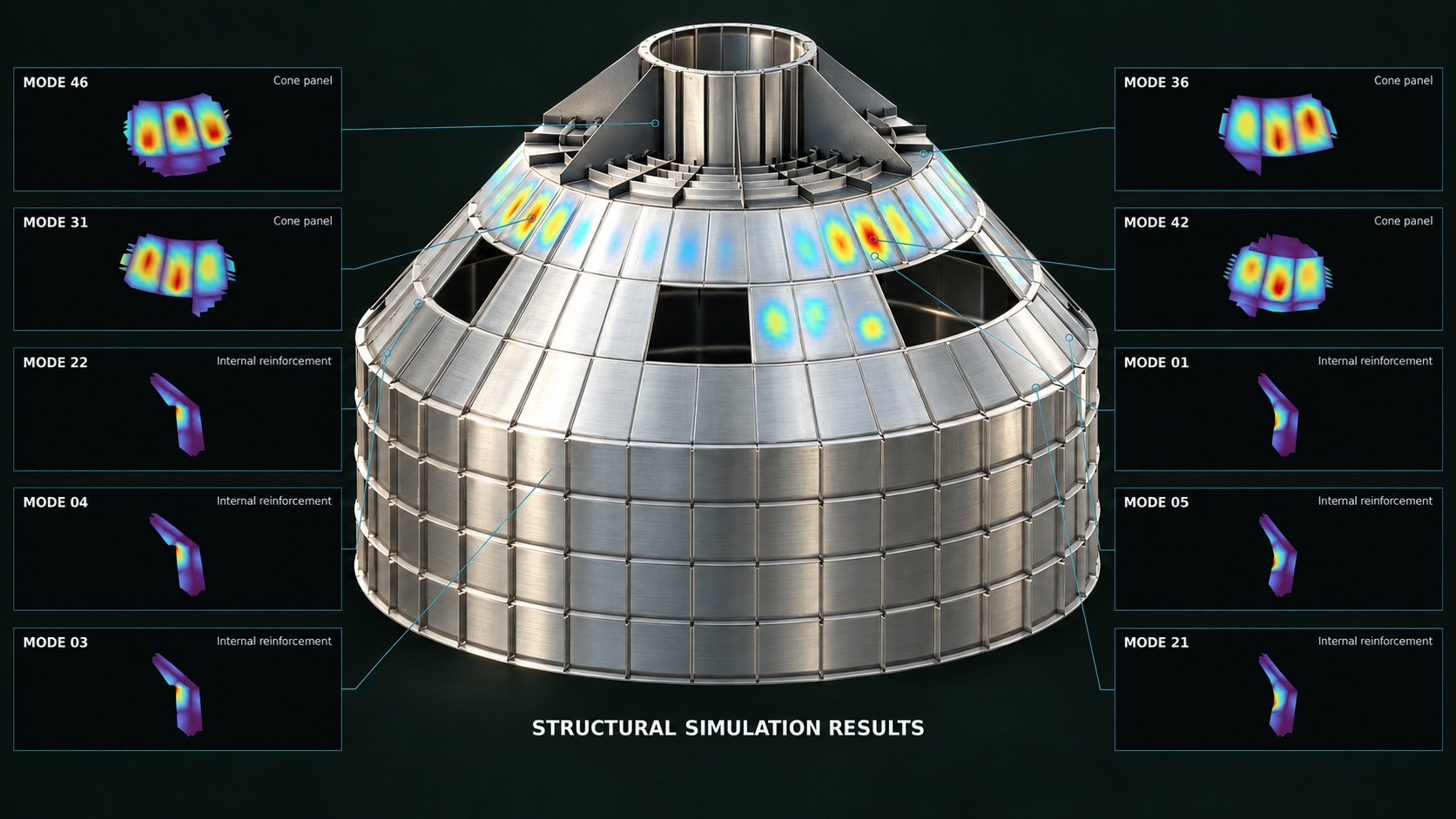
- Dassault Systèmes: Dassault Systèmes reports speedups of 8 to 10 times by using cuDSS within its Abaqus structural and computer simulation technology electromagnetic solver for performance-critical simulations across industries.
- Siemens: Siemens uses cuDSS in Simcenter STAR-CCM+ to accelerate the simulation of structures in fluid-structure interaction workflows.
- Synopsys: Synopsys uses cuDSS in its Sentaurus device simulator to accelerate simulations of advanced logic, memory and power chips, helping Infineon model increasingly complex devices faster.
Scaling GPU-Accelerated Simulations
As simulation workloads grow in size and complexity, cuDSS can scale from individual workstations to large computing clusters.
Developers can integrate cuDSS into existing engineering, scientific and optimization software, bringing GPU acceleration to the tools engineers and researchers already use. cuDSS is available through C, C++, Python and Fortran interfaces.
To learn more about cuDSS, visit the NVIDIA demo booth and the Dassault Systèmes GTC Berlin booth.
Featured image provided by Dassault Systèmes.
Source: blogs.nvidia.com