


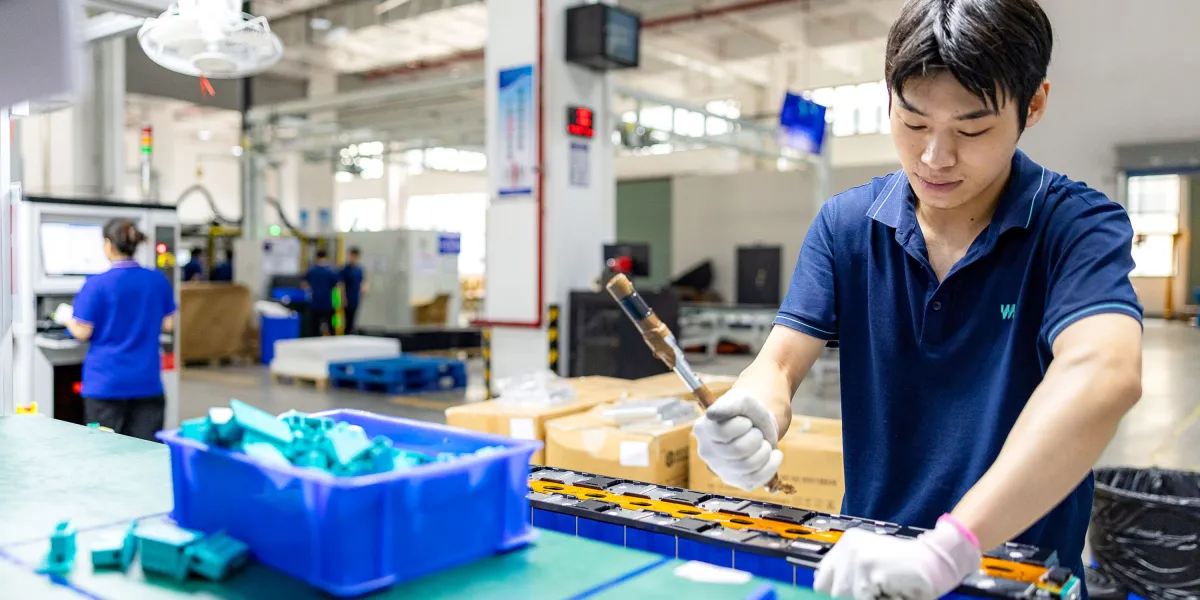
WeLion’s Semi-Solid Batteries Reach 824 Wh/kg in 2025 Testing
Lithium-based batteries use flammable liquids in their electrolytes to facilitate the movement of ions, creating a potential fire hazard. WeLion New Energy is working to address this challenge by developing batteries that use solid or semi-solid electrolytes.
WeLion’s Semi-Solid Battery Technology
Several companies are developing solid-state batteries that replace liquid electrolytes with solid materials. This technology could increase battery energy density while improving safety. However, manufacturing completely solid-state batteries remains extremely difficult.
For this reason, WeLion is currently focusing on semi-solid batteries, which use electrolytes that are partly liquid and partly solid. The company says it is making steady progress in developing and producing this technology.
A 1,000-Kilometer Battery Pack for Nio
In 2023, WeLion released a battery pack in partnership with Nio, a Shanghai-based electric vehicle manufacturer best known for its battery-swapping technology. The pack had an energy density of 360 watt-hours per kilogram (Wh/kg), significantly higher than the average 200 Wh/kg energy density of today’s lithium-ion battery packs.
The battery pack provided a driving distance of more than 1,000 kilometers (621 miles). However, high production costs limited manufacturing to about 200 packs. WeLion says the battery packs are still being used by Nio.
Battery Applications for Ships and Ferries
Through a subsidiary, WeLion has also produced batteries to power cargo ships and ferries. The company is developing batteries with even higher energy densities.
In testing conducted in 2025, WeLion engineers produced a semi-solid battery that achieved an energy density of 824 Wh/kg. That figure is more than three times the energy density of standard lithium-ion batteries available today. However, the company has not disclosed detailed results from the prototype test and says the technology is still far from practical use.
WeLion Battery Company: Key Facts
- Industry: Energy storage
- Established: 2016
- Headquarters: Beijing, China
- Notable fact: WeLion’s co-founders include Chen Liquan, a scientist at the Chinese Academy of Sciences who led the development of China’s first solid-state battery in 1988.
Potential Impact of Higher-Density Batteries
China emits more carbon dioxide than any other country, and the transportation sector accounts for about 10% of its total emissions. Expanding production of safer, higher-capacity batteries could help move more vehicles away from fossil fuels.
Batteries for electric ships could be particularly useful. Carbon dioxide emissions from ships transporting goods along China’s lakes, canals and rivers have increased by about 25% over the past decade. These emissions are projected to reach 18.7 million tonnes by 2030.
Challenges Facing WeLion’s Semi-Solid Batteries
One of WeLion’s biggest challenges is scaling up semi-solid battery production while competing on price in a crowded battery market. The company says its semi-solid batteries cost more than traditional lithium-ion batteries made by major Chinese battery manufacturers such as CATL.
Laboratory tests showing extremely high energy densities are impressive, but translating those results into reliable real-world performance can be difficult. WeLion has not revealed details about its 2025 prototype test and says the technology is not yet ready for practical use.
Important questions also remain unanswered, including how many times the cells can be charged and discharged and how their capacity will degrade over their operating life.
Source: www.technologyreview.com