


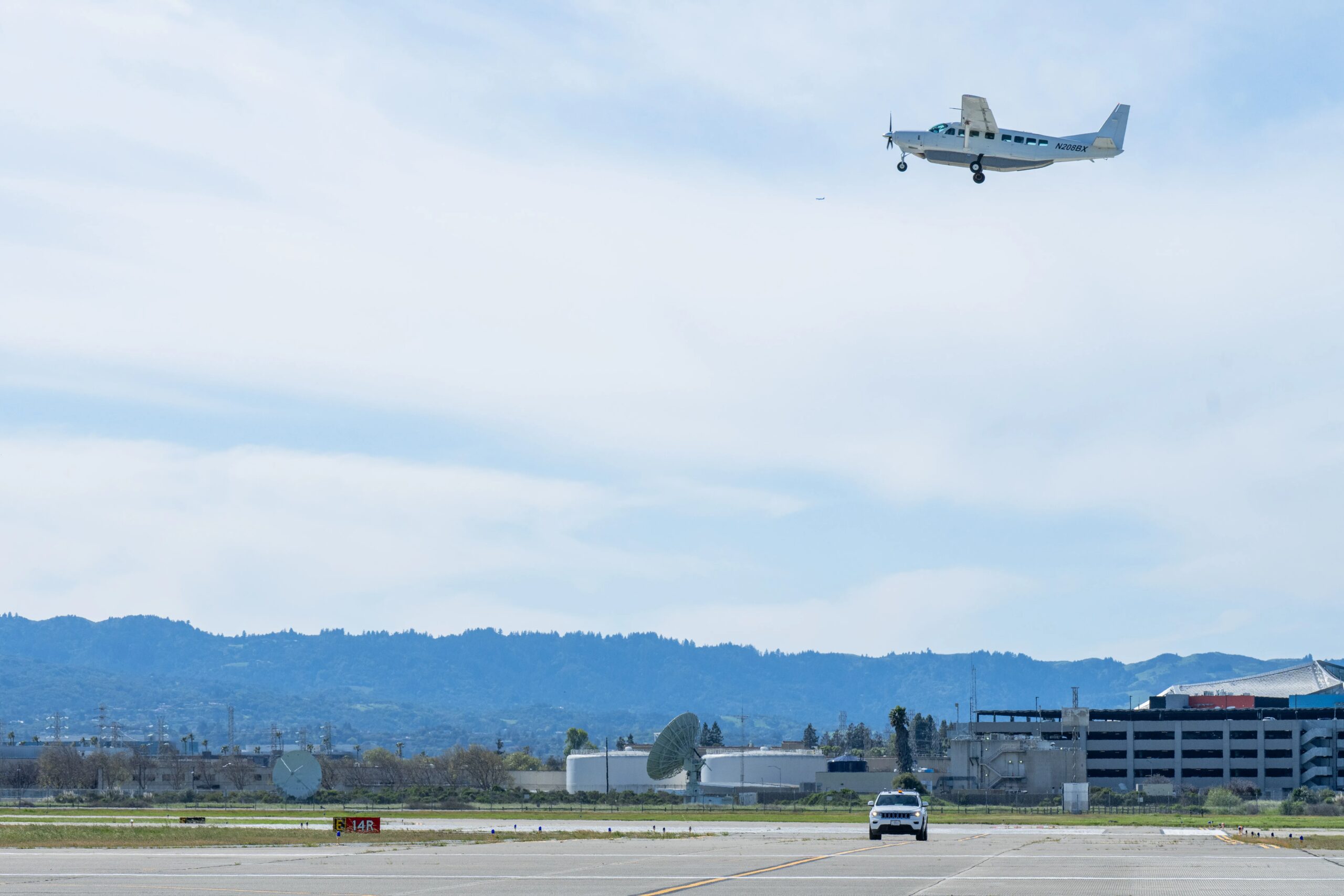
NASA and Boeing Test Digital Taxiing and Runway Safety Technology to Reduce Airport Delays
NASA researchers are testing new aviation technologies designed to make airport taxiing, runway operations, and air traffic management safer and more efficient. The systems could reduce communication errors, lower pilot and controller workload, improve situational awareness, and help keep flights moving smoothly.
Large airports are among the busiest and most complex environments in aviation. Aircraft, ground crews, and service vehicles must share crowded taxiways while air traffic controllers coordinate arrivals and departures. To address these challenges, NASA’s Ames Research Center in California’s Silicon Valley recently partnered with Boeing to test three types of information and technology: digital taxi guidance, safe taxiways, and safe runways.
NASA Tests Digital Taxi Guidance for Safer Airport Operations
During digital taxi tests, pilots received route guidance directly on cockpit displays or tablets instead of relying solely on verbal instructions from air traffic controllers. The aircraft followed a digital route while sensors monitored the taxiway and runway for vehicles or other aircraft that could obstruct its path.
This approach could reduce the workload for both pilots and air traffic controllers while lowering the risk of errors caused by verbal communication. Digital taxi guidance may also give flight crews more consistent information as they move through busy airport environments.
Runway Sensors Improve Awareness During Aircraft Landings
NASA also tested safe runway technology to improve awareness of potential hazards near approaching aircraft. During the tests, the same sensor system detected vehicles on the runway while a Boeing aircraft was preparing to land.
By providing an additional alert about runway activity, the technology could help pilots and controllers identify potential collision risks and respond more effectively during critical phases of flight.
Together, NASA’s digital taxi and runway safety capabilities are designed to reduce miscommunication, ease pilot workload, and help airport traffic flow more efficiently. Future tests will combine sensors and digital taxi systems in a simulated air traffic control environment to evaluate how the technology could support broader airspace management.
NASA Technology Targets Flight Delays and Holding Patterns
NASA’s efforts to modernize aviation extend beyond airport surfaces. Commercial flights must constantly adapt to changing weather, turbulence, and traffic conditions. Even small changes in direction or altitude can affect arrival times and contribute to holding patterns as controllers rebalance congested airspace.
NASA air traffic management researchers have worked for years to reduce these disruptions. In a 2025 collaboration with Boeing, United Airlines, and international partners, NASA evaluated real-time flight information sharing on domestic and transoceanic flights.
During the test, United’s Boeing 737 aircraft regularly shared flight data with the airline’s operations center and air traffic control. NASA analyzed how frequently the updates were sent and which details were most useful for producing accurate arrival predictions.
More accurate and timely information can help controllers sequence aircraft more effectively. For passengers, that could mean fewer holding patterns and more direct descents.
Digital Rerouting Could Reduce Fuel Use and Delays
NASA has also developed pre-departure rerouting technology and digital exchange tools that allow dispatchers and air traffic controllers to view the same digital picture of a flight before it takes off.
When a better route becomes available, controllers can coordinate changes digitally rather than depending entirely on verbal communication among pilots, controllers, and dispatchers. The technology has the potential to reduce delays, lower fuel consumption, and make airline operations more predictable for passengers.
NASA has transferred the routing technology to the Federal Aviation Administration, and airlines will continue testing it. The tools build on NASA’s decades of work to modernize the nation’s airspace and improve the management of aircraft arrivals and departures.
NASA’s Role in the Future of Air Travel
NASA has worked with the FAA to advance automation concepts, improve arrival and departure flows, and introduce data-driven software used by commercial airlines.
“Aviation safety is key to NASA research,” said Parimal Kopaldekar, director of NASA’s Airspace Operations Safety Project. “Technologies that can provide additional autonomy and support future airspace where multiple aircraft operate in harmony are key to moving the National Airspace System forward.”
By working with airlines, aircraft manufacturers, government agencies, and international partners, NASA continues to develop technologies that could improve every stage of a flight—from departure and taxiing to air traffic management and safe arrival.
Source: www.nasa.gov