


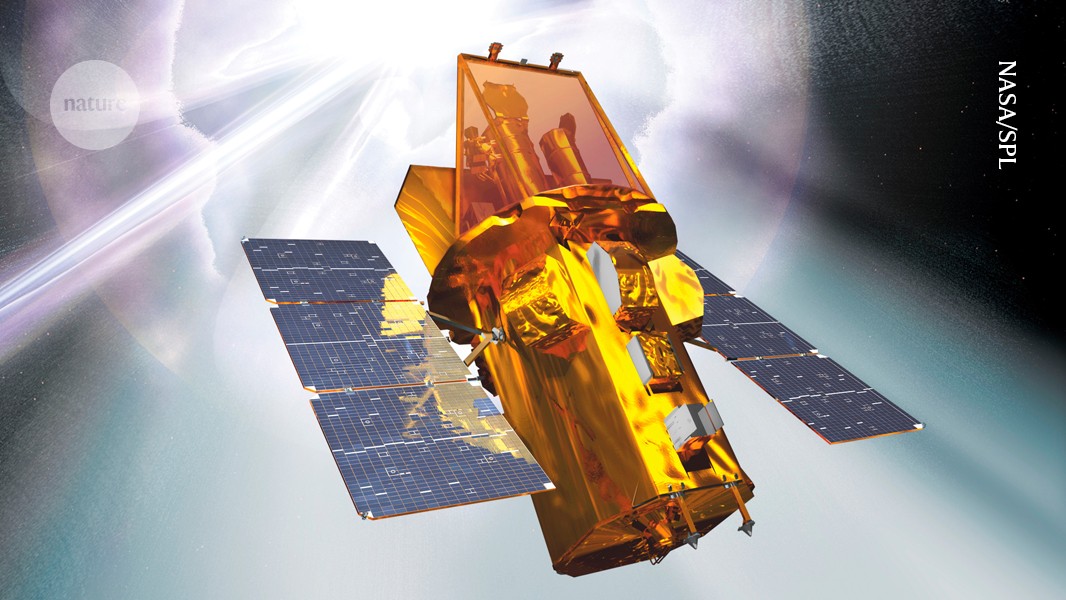
NASA’s Neil Gehrels Swift Observatory, a space telescope that has spent about 22 years studying gamma-ray bursts and a wide range of other cosmic phenomena, is expected to end its mission in a fiery re-entry into Earth’s atmosphere. A rescue spacecraft launched in July lost control before it could reach Swift, whose declining orbit eventually left it too low to track astronomical targets. NASA halted science operations last week ahead of the observatory’s expected descent.
Swift’s altitude has gradually decreased during its time in orbit, and the failed rescue attempt means the observatory must now meet its fate. Some researchers predict that it will re-enter the atmosphere on November 2nd. Most of the spacecraft is expected to burn up, although a small amount of debris will likely reach the ocean.
Astronomers are mourning a spacecraft whose work extended from black holes and supernovae to gamma-ray bursts, the most powerful explosions in the universe. “We’re all definitely very sad. There’s definitely some sadness,” says Caryl Gronwall, head of Swift’s science operations team at Penn State University in University Park. Hannah Earnshaw, an astronomer at the California Institute of Technology in Pasadena, described the end of Swift’s mission as particularly “dramatic and tragic.”
Studying stellar collisions
Swift was originally designed to observe gamma-ray bursts: extraordinarily bright, short-lived flashes of high-energy radiation. The observatory detected about 2,000 of these bursts and helped establish that some are produced when two neutron stars—the ultra-dense cores left behind by dead stars—collide.
In 2017, Swift also observed the aftermath of a particularly significant neutron-star merger. Its observations helped show that these events produce heavy elements, including gold and platinum.
A broader scientific legacy
Some of Swift’s most important contributions came beyond its original mission. Observations of supernovae and comets helped researchers investigate how black holes produce powerful jets as they consume stars.
The observatory’s “science portfolio has evolved and grown far beyond its original purpose,” said Brad Senko, Swift’s principal investigator at NASA’s Goddard Space Flight Center in Greenbelt, Maryland.
Source: www.nature.com