


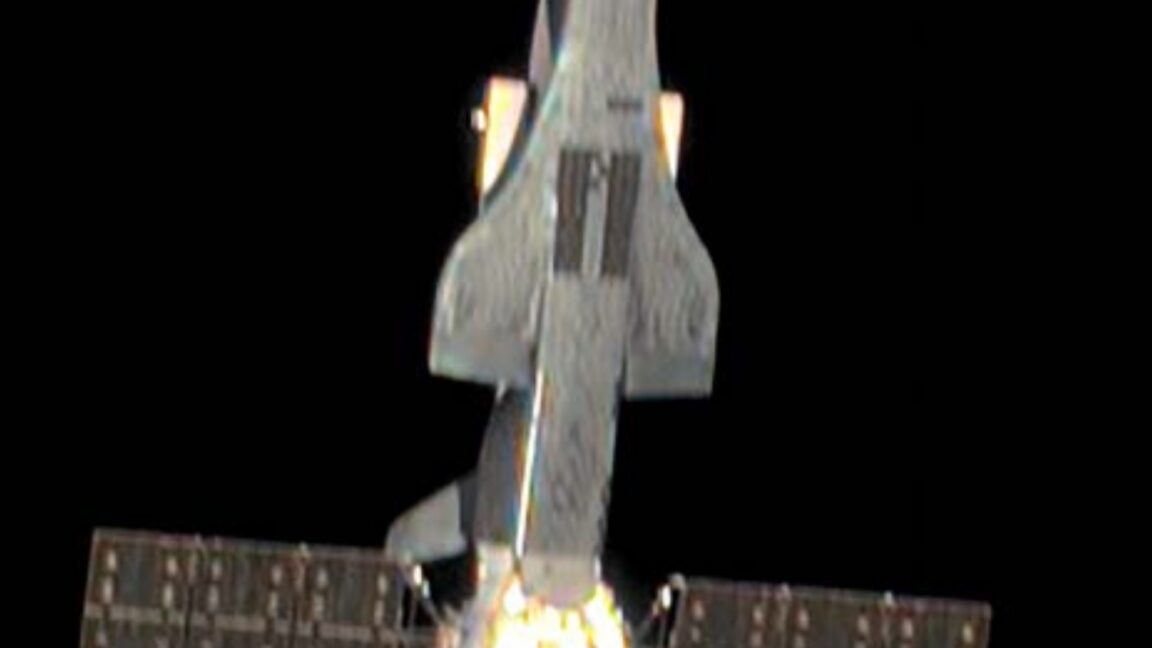
Maxar and other commercial companies are demonstrating capabilities in the NEI field as military spacecraft increasingly conduct deliberate close approaches and develop technologies that could disable satellites. Commercial NEI observations often result from chance encounters at very high speeds, unlike the intentional maneuvers attributed to Russian spacecraft such as Cosmos 2612 and another satellite that approached a U.S.-registered radar-imaging satellite earlier this month.
China advances directed-energy and counterspace capabilities
The Defense Intelligence Agency’s Space Threat Assessment includes updated information on China’s pursuit of anti-satellite, or “anti-space,” weapons. According to intelligence reports, the Chinese military likely views directed-energy weapons (DEWs) as an “ideal counterspace system” because they could permanently or temporarily disable satellites. Lasers could potentially be used to blind sensors on enemy spacecraft.
“China possesses multiple ground-based laser weapons with varying power levels to jam, degrade, and damage LEO satellites,” the DIA said. “By the late 2020s, China may have commercialized space-based directed energy systems that can threaten high-orbit satellites, as well as higher-power ground-based directed energy systems.”
The DIA also noted China’s ground-based anti-satellite missile tests and the country’s historic demonstration last year of satellite refueling in geostationary orbit, approximately 22,000 miles (36,000 kilometers) above the equator. No other country has accomplished satellite refueling above low Earth orbit.
China has also experimented with a robotic arm capable of hooking spacecraft out of orbit. It continues to operate a constellation of satellites known as TJS, which periodically fly near foreign spacecraft.
US and Russian orbital warfare programs
The U.S. Space Force operates a fleet of surveillance satellites in geostationary orbit and recently acquired additional spacecraft that can be refueled and overcome maneuverability limitations. Air Force Secretary Troy Meink announced last month that the Pentagon is deploying weapons in space, making the United States the first country to acknowledge that it has orbital weapons.
Russia is pursuing its own orbital warfare program, including ambitions to deploy nuclear weapons in space, according to U.S. intelligence officials.
A more conventional Russian weapons system, known as Niverir, is designed to fire a projectile from one satellite and crash into another. The Russian military simulated an attack using the Niverir system in 2020.
In April, Russia launched a group of small satellites into orbit near an ICEYE-owned commercial radar remote-sensing satellite that provides reconnaissance imagery to Ukraine. Earlier this month, one of the Russian satellites moved within “tens of meters” of the ICEYE spacecraft before retreating, U.S. officials said.
Source: arstechnica.com