


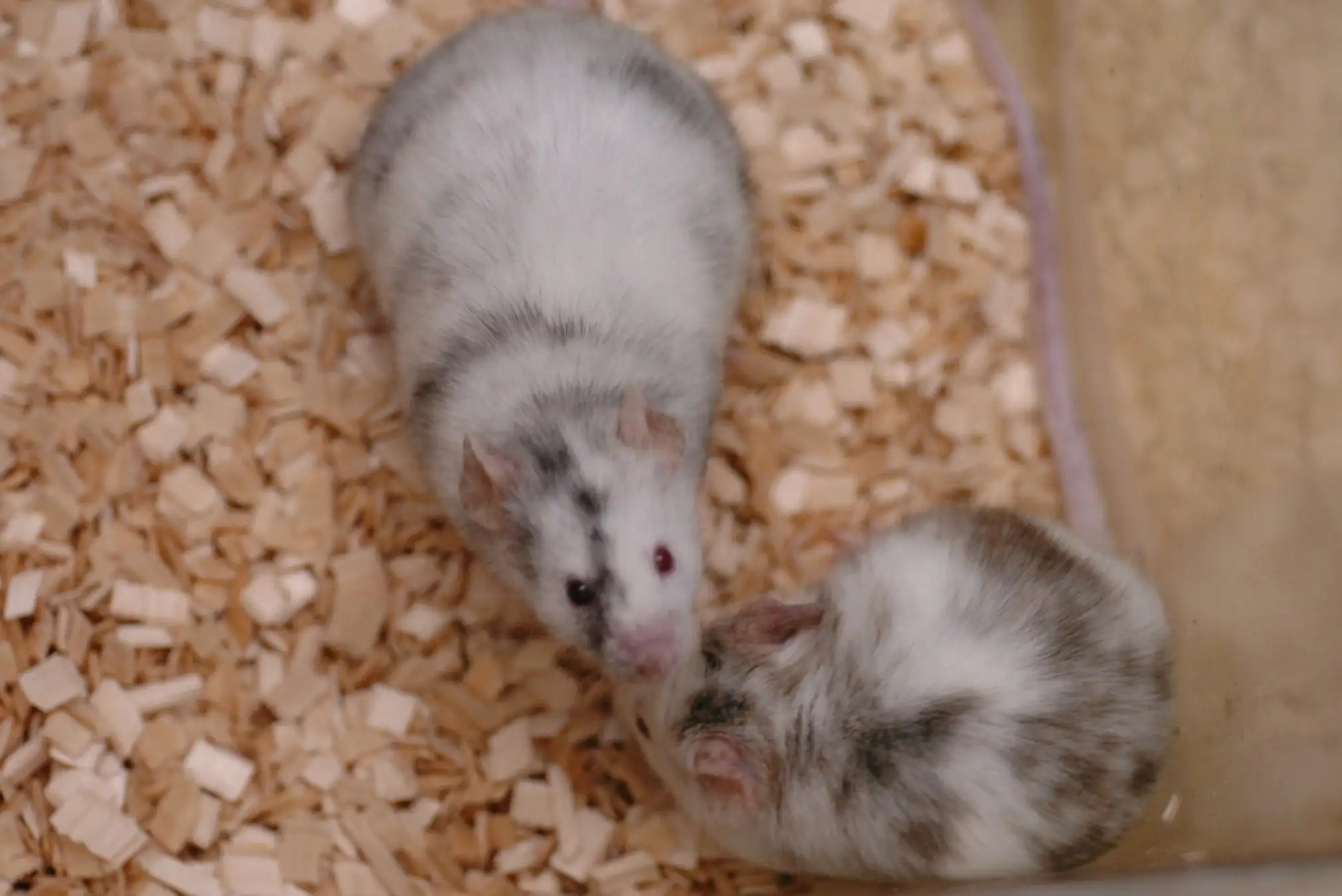

Chimeric Mice with Rat Chromosomes
Credit: University of Yamanashi
Colossal Biosciences, once a promising venture, may soon see a revival. Researchers have successfully transplanted rat chromosomes, preserved for over a year, into live mouse cells, opening a pathway to potentially resurrect mammoth chromosomes within living organisms. Their experiment culminated in the creation of a mouse containing rat chromosomes within some of its cells.
“Once we refine our techniques, we intend to explore this on elephant cells,” explains Teruhiko Wakayama from Yamanashi University. “If we succeed in incorporating elephant chromosomes into mouse embryonic stem cells, we aspire to apply the same to mammoths.”
The primary aim of the research team is to analyze gene activity from extinct species within contemporary animals, revealing insights beyond mere gene sequencing. This approach could significantly impact conservation and de-extinction initiatives. For instance, in 2004, tissues of an extinct bird, the Hawaiian pouri, were frozen. The peculiarities of biological systems necessitate chromosome transfer for any chance of reviving this species.
An animal’s genetic blueprint is divided into chromosomes. During cell division, long strands of DNA condense into the familiar cylindrical structures depicted in textbooks. These “condensed chromosomes” can be visualized in live cells without causing any damage, by employing dyes that attach to the proteins around the DNA.
Wakayama’s innovative technique involves extracting a cell’s nucleus and injecting it into an egg, prompting chromosome condensation, akin to cloning’s nuclear transfer methods. He first utilized this technique to clone a mouse shortly after the birth of Dolly the sheep.
Following the nucleus injection, the egg is treated with enzymes to aid chromosome separation. A singular chromosome is extracted with a fine needle and injected into a secondary egg. As the egg develops into an embryo, the chromosomes are integrated into every cell of the embryo, referred to as embryonic stem cells.
After perfecting the method with mouse chromosomes, Wakayama proceeded to experiment on genetically modified rats that emit green fluorescence. Extracting frozen blood cells from a rat’s tail, which had been preserved for over a year, he succeeded in generating mouse embryonic stem cells enriched with additional chromosomes from the genetically modified rat.
Subsequently, these cells were injected into healthy mouse embryos and implanted into female mice, resulting in chimeric animals with some cells containing rat chromosomes. While these animals resemble standard mice, specific cells emit a green fluorescence under UV light, mirroring the original rat cells.
The research team’s goal to create mice featuring an extra rat chromosome in all cells has yet to be realized. Currently, the method is effective only for chromosome 9 in rats, and attempts to add other chromosomes have resulted in non-viable embryos. “We’re exploring various methods to enhance the success rate,” stated Wakayama.

This baby mouse’s green cells contain rat chromosomes.
Credit: University of Yamanashi
The interference from other rat chromosome genes may hinder embryonic development. If so, researchers might need to deactivate these genes, akin to how one of the two X chromosomes is inactivated in female mammals. However, Wakayama remains hopeful that such measures may not be necessary.
His team has already acquired frozen elephant tissue samples from a zoo for further testing. Wakayama is also in discussions with a team that successfully extracted and analyzed cell nuclei. They have expressed interest in using chromosomes from a 28,000-year-old mammoth named Yuka for similar studies.
While attempts to clone mammoths from these frozen cells might fail due to significant DNA damage, Professor Wakayama is optimistic about possibly recovering individual chromosomes for study in living cells.
“Even a single successful transfer represents a significant milestone,” states Ben Novak from Revive & Restore, a U.S.-based wildlife conservation organization. “This research could greatly benefit passerine birds,” a broad category encompassing half of all bird species, where cells involved in forming body tissues like skin and muscle might lack chromosomes. These additional chromosomes are typically present only in reproductive cells that generate eggs and sperm.
For instance, reviving the Hawaiian pouri, a passerine bird, necessitates adding two chromosomes from a closely related species—one that exists solely in reproductive cells and a W chromosome specific to female birds. “This could lead to partial hybrids, facilitating the species’ resurgence,” explains Novak.
Wakayama is not the pioneer in generating a living organism with an additional chromosome. In 2022, the Japanese team created a rat with an extra human chromosome 21 to investigate Down syndrome. However, this method involves substantial genetic modification, rendering it impractical for conservation purposes.
The phenomenon of extra reproductive chromosomes may be more prevalent than previously understood, Novak added, implying that numerous tissues preserved by biobank initiatives may be lacking chromosomes.
Topics:
Source: www.newscientist.com