


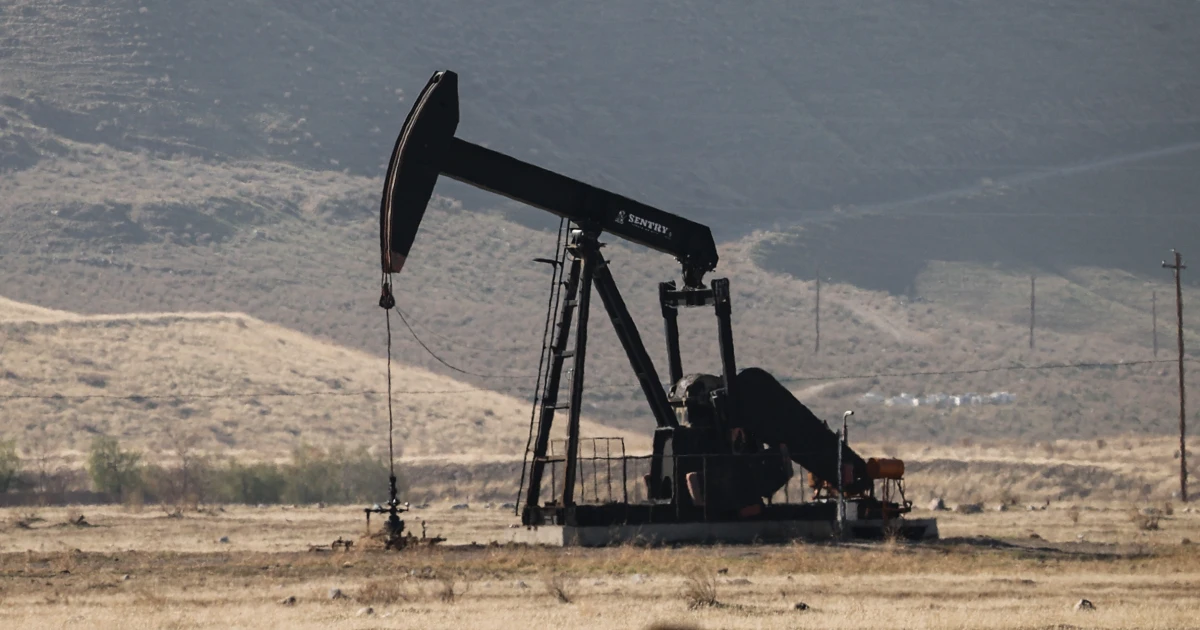
President Donald Trump said Tuesday that his administration plans to roll back regulations targeting methane emissions from oil and gas production, arguing that the rules impose unnecessary costs on energy producers. Environmental and health groups warn that weakening the regulations could increase air pollution and accelerate climate change, while industry representatives say the rules could make some low-producing wells uneconomical.
Trump made the announcement at a midterm campaign rally in Texas, saying his administration would reverse methane regulations finalized by the Biden administration in 2024.
“Tonight, we will formally end President Biden’s expensive and unnecessary methane regulations to save consumers and energy producers,” Trump said. He added that Democrats had “ruined small oil and gas companies” through overregulation.
Trump did not provide further details. The Environmental Protection Agency previewed the planned changes earlier this month, promising to relax regulations, particularly those concerning methane leaks from low-volume oil wells.
EPA Administrator Lee Zeldin said at the time, “Americans must be able to afford to heat their homes in the winter, put gas in their cars and get to work. They can’t do that if the people who produce energy are squeezed with unnecessary burdens.”
Trump announced the change one week before the midterm elections, as numerous polls showed that rising fuel costs were an important issue for many voters.
Methane’s climate impact
Methane, the main component of natural gas, traps more heat in the atmosphere than carbon dioxide, although it breaks down more quickly. Scientists estimate that methane is about 80 times more potent than carbon dioxide over a 20-year period.
Methane is released by natural sources such as wetlands and is largely responsible for about one-third of global warming.
The Biden administration viewed eliminating methane leaks from oil and gas production as a relatively quick way to reduce greenhouse gas emissions.
The low-producing wells, also known as stripper wells, that would be affected by the rollback produce about 7% to 8% of U.S. natural gas. Research suggests they may account for about 50% of the methane leaking into the atmosphere.
Many of those wells are nearing the end of their productive lives or are at risk of falling below profitability standards.
However, the National Stripper Well Association has called for the rollback. “The costs associated with complying with these regulations make operating the wells uneconomical,” the association said in a letter last month.
Planned end to methane leak reporting program
As part of the rollback, the EPA also plans to eliminate the Super Emitters Program. The program was designed to allow third-party organizations to report methane leaks from natural gas production.
Methane leaks are not always visible to the naked eye, but satellites and specialized thermal-imaging cameras can detect them. The Trump administration suspended implementation of the program last year and is now seeking to end it.
Environmental and health groups denounced the planned cuts, saying they would increase air pollution and worsen the effects of climate change.
Liz Scott, senior director of national advocacy at the American Lung Association, said rolling back methane regulations would also increase pollution from volatile organic compounds released alongside methane during oil and gas production.
“The pollution released with methane poses immediate health risks, especially to communities living near oil and gas extraction sites,” Scott told NBC News. “When we roll back protections against methane leaks and explosions, we also roll back protections against air pollutants that communities depend on.”
David Doniger, a senior attorney at the Natural Resources Defense Council, said methane leaks were among the “stupidest” forms of pollution because companies lose a product they could otherwise sell while also harming the planet.
“The industry really shouldn’t be paying attention to leaks,” Doniger told NBC News. “They’ll make more money capturing this and transporting it to the point of sale than if they lose it.”
Potential legal challenges
The rollback must go through the EPA’s rulemaking process before it can take effect, including a public comment period. If the final rule is enacted, the agency could face legal challenges from environmental groups, including a coalition involving the NRDC.
“I expect there will be another lawsuit,” Doniger said.
Reducing methane emissions is part of the Trump administration’s broader effort to eliminate regulations aimed at addressing climate change.
In February, the EPA repealed emissions regulations for motor vehicles, the nation’s largest source of carbon pollution. Last month, the agency announced that it would eliminate emissions limits for coal- and gas-fired power plants. The EPA also overturned its own endangerment finding, a legal determination that greenhouse gases are warming the planet in a way that threatens public health and welfare.
Zeldin described his work as an effort to “ram a dagger into the heart of the climate religion.”
The effects of climate change are becoming increasingly serious. Much of the planet experienced extreme heat this summer, and June through August were the warmest months on record in the continental United States.
Last year was the third-warmest year in modern history, according to Copernicus, the European Union’s climate-monitoring service. Copernicus data shows that the past 11 years have been the 11 warmest years on record.
Source: www.nbcnews.com