


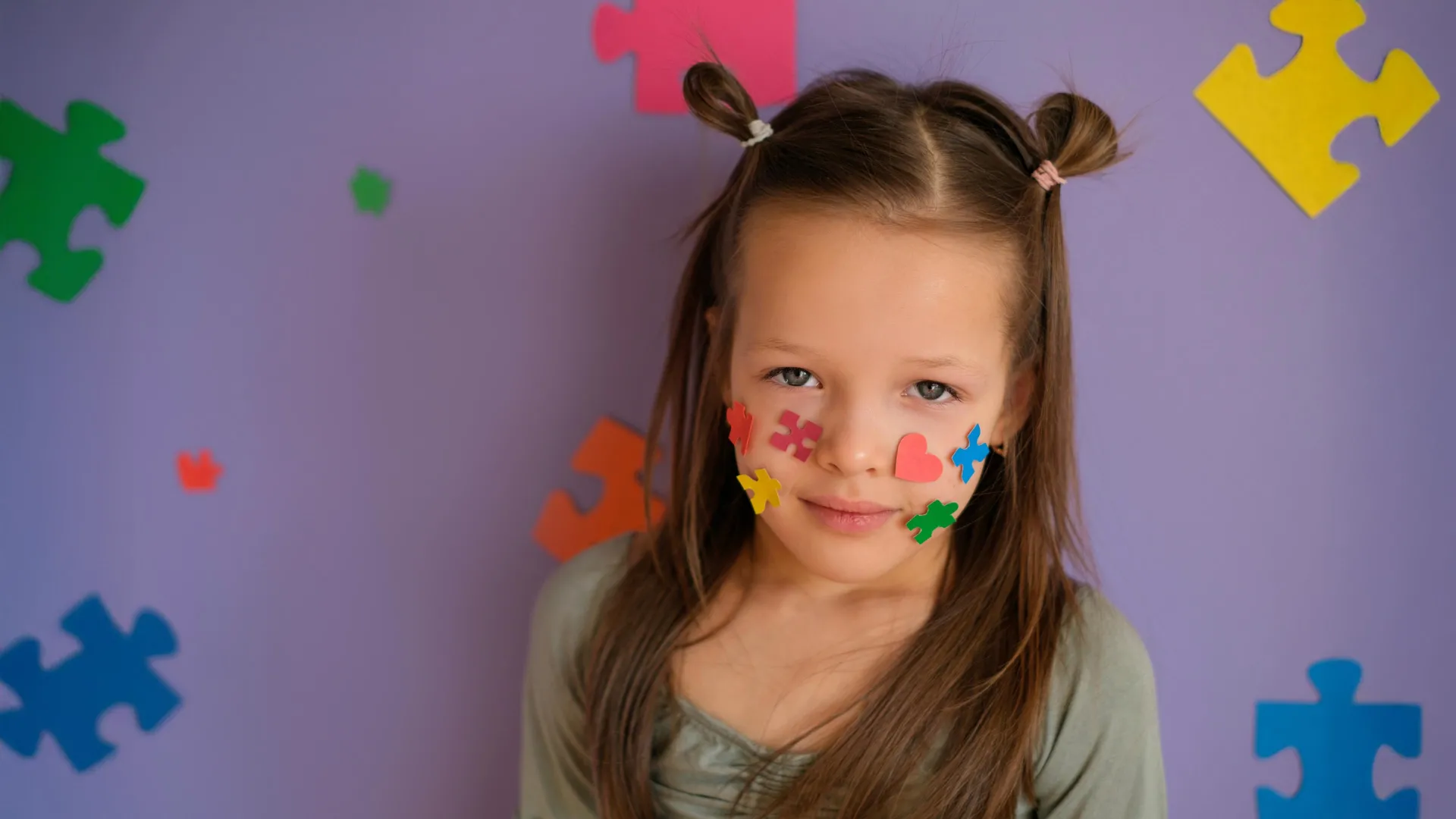
A study of about 400 children has identified differences in how the brains of autistic and neurotypical children respond to faces. Published in Nature Mental Health, the research used EEG recordings from 128 electrodes across the scalp and found that face-related brain activity was less distinct in autistic children. It also showed that, unlike in neurotypical children, face processing did not become more specialized with age in the autistic participants.
How researchers identified differences in brain activity
Some autistic people look at faces less often or make less eye contact. They may also have more difficulty remembering faces and interpreting facial expressions than neurotypical people. Scientists have spent decades studying the brain activity associated with these differences. In the early 2000s, for example, researchers at Yale University reported lower activity in a brain region involved in face processing among autistic people than among people without autism.
Dr. James McPartland, Harris Professor at the Children’s Research Center and director of the Center for Brain and Mental Health, uses electroencephalography (EEG) to study how autistic people process faces. EEG records the brain’s electrical activity. However, earlier EEG studies generally examined signals from a limited number of locations rather than analyzing activity across the entire scalp.
To obtain a more complete view, McPartland and his colleagues analyzed EEG data from about 400 autistic and neurotypical children across several age groups. The data came from the Autism Biomarker Clinical Trials Consortium (ABC-CT).
During the experiment, the children viewed pictures of faces and everyday objects while an EEG machine recorded their brain activity. Instead of focusing on a few recording sites, the researchers examined signals from all 128 electrodes placed around each participant’s scalp. They then used machine-learning techniques to determine whether the recorded patterns could reveal what each child was viewing.
The researchers found that the brain activity of neurotypical children more clearly indicated when they were looking at faces than did the activity of autistic children. In other words, the electrical signals associated with viewing faces were less distinguishable in the autism group.
“This is the first time that we have taken full advantage of the extremely rich information provided by EEG recordings to understand facial perception and autism,” McPartland said.
McPartland compares traditional studies of facial recognition with trying to understand traffic across an entire city by monitoring a single downtown street.
“Most of the research on face processing to date has been successful in this way,” McPartland said.
The new approach offers a broader perspective, more like using satellite imagery to observe traffic throughout a city.
“The neural activity that we measure at the scalp is less clear in children with autism,” said lead author Dr. Jason Griffin, an assistant professor of psychology at the University of Houston. Griffin previously worked as a postdoctoral researcher in McPartland’s lab.
The study also found age-related differences. In neurotypical children, the ability to determine from brain activity whether they were viewing a face improved with age. The researchers did not observe the same pattern in autistic children, suggesting that neural responses to faces develop along different trajectories.
“Face-specific processing doesn’t follow the same trajectory,” Griffin said.
Differences may appear earlier than the N170 signal
Recognizing a person involves multiple stages of neural processing. The sequence begins when visual information enters the eye and continues as the brain interprets that information until it identifies a face.
Much previous research on autism and facial perception has focused on a brain signal known as the N170. This measurable change in electrical activity typically occurs about 170 milliseconds after a person looks at a face. Earlier studies have found that autistic people tend to have slower N170 responses.
By examining a wider range of brain activity, the researchers found evidence that differences in face processing begin before the N170 appears. This suggests that autism-related differences may arise during earlier stages of visual processing than previously established.
“But if we look at face processing with a more comprehensive approach across the temporal range, we find that autism differences occur even earlier,” McPartland said.
Implications for support and diagnosis
The findings could influence future research into autism diagnosis and supportive interventions. Historically, some clinicians attempted to address difficulties with facial recognition by requiring autistic people to maintain eye contact. Subsequent research has shown that forcing eye contact is not an effective solution. A clearer understanding of how face processing develops in the brain could help researchers identify more appropriate approaches.
A continuing challenge in autism research is distinguishing neurological differences associated with autism itself from changes that may result from living with autism. The researchers said the patterns in this study suggest that differences in facial processing are linked to underlying developmental characteristics of autism rather than simply reflecting accumulated life experiences.
“If we see the sophistication and specialization that we would expect from non-autistic people, we see reduced developmental variation in autistic people,” McPartland explained.
Because these differences emerge during development, the findings raise the possibility that support to help autistic children interpret facial emotions could be especially beneficial when introduced early in childhood. However, the researchers emphasized that autism does not necessarily cause difficulties requiring intervention. Many neurodivergent people experience little or no disability associated with autism and may not need or want additional support.
Difficulty recognizing faces and understanding facial expressions can nevertheless complicate everyday social interactions for some autistic people.
“Imagine life when you have difficulty recognizing information in other people’s faces, from navigating around the playground to navigating a job interview,” McPartland said. “This is one of the key areas that causes difficulty for many autistic people.”
Another potential application is the development of more objective ways to assess autism. Clinicians currently diagnose autism primarily by evaluating behavior because reliable biological tests are not yet available for routine diagnosis.
Scientists are investigating several potential biomarkers, or measurable biological characteristics, that could improve diagnostic evaluations or help distinguish between groups within the autism spectrum.
The newly identified patterns of face-related brain activity could contribute to that effort. By examining how these neural signals vary between individuals, researchers may eventually develop additional diagnostic tools or better identify autistic people who are likely to benefit from particular forms of support, such as social skills therapy.
Further research is needed before the findings can be applied in clinical practice. The study nevertheless provides a new way to investigate how the autistic brain processes faces and how those responses change throughout childhood.
“This is the first step in introducing new biomarkers,” McPartland said.
Source: www.sciencedaily.com