


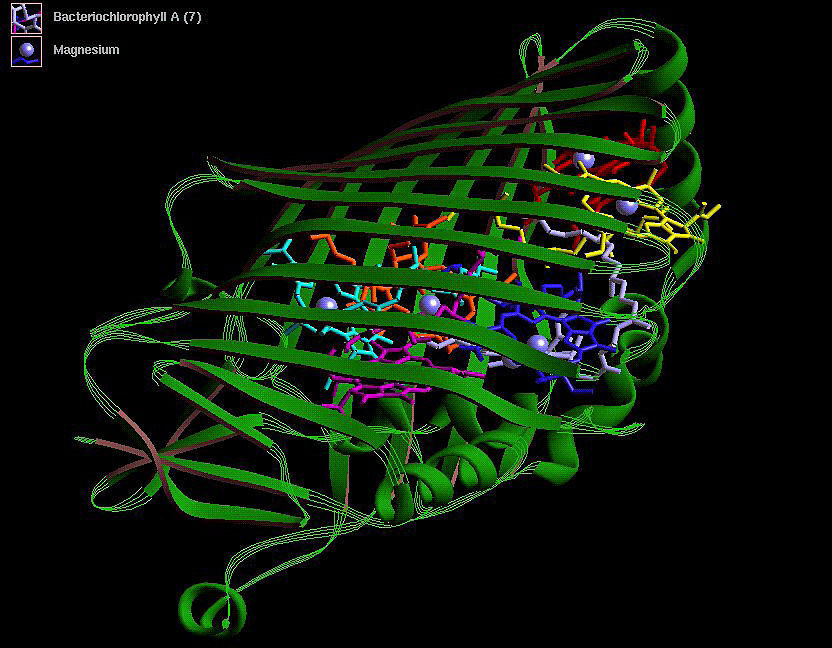
Researchers tested Pinal by asking it to design four very different functional proteins, including a fluorescent protein, two enzymes, and a protein involved in a large multiprotein complex. In the fluorescent-protein test, Pinal generated 50,000 candidates, which were narrowed computationally to 29 designs; only one fluoresced when tested in Escherichia coli. Although that success rate may seem low, the filtering process excluded many candidates that resembled known fluorescent proteins or lacked features associated with GFP.
Testing Pinal with functional proteins
The researchers asked Pinal to design four completely different proteins to test its capabilities. The set included a fluorescent protein, two enzymes, and a protein that participates in a large multiprotein complex. The details varied between the projects, but each followed a similar process. The fluorescent-protein experiment illustrates the approach.
A classic example of a fluorescent protein is GFP, or green fluorescent protein, whose discovery earned its discoverer a Nobel Prize. The researchers asked Pinal to produce 50,000 proteins that would fluoresce like GFP.
They then filtered this large set using several criteria. First, they rejected sequences that were similar to known fluorescent proteins. At the same time, they selected for key features found in GFP, including the ability to form barrel-like structures and the presence of amino acids that can be chemically modified to produce fluorescence.
The goal was to create proteins that were broadly similar to GFP while avoiding close similarity in their specific amino acid sequences. This filtering produced a prioritized list of just 29 candidate proteins. The researchers tested the candidates in Escherichia coli, and one of them fluoresced.
The other examples followed a similar pattern: the researchers began with a large list of designs, narrowed it computationally, and then tested dozens of candidates. Only a few of the tested designs worked.
Why the success rate may be misleading
It may be tempting to view this as a very low success rate. However, many of the proposals most likely to work would also have been very similar to known GFP proteins and were therefore excluded. The researchers also did not test candidates that failed to form structures resembling GFP, meaning that a potentially large range of alternative fluorescent proteins may have been rejected before testing.
Source: arstechnica.com