


Ford’s Fathom introduces bidirectional electric-vehicle charging designed to let the vehicle draw power when electricity is inexpensive and supply energy to a home when prices rise or the grid fails. The system uses Ford’s Home Power Station and, for outage backup, a new Home Backup Panel that the automaker says will cost substantially less than earlier hardware.
Fathom’s charging system
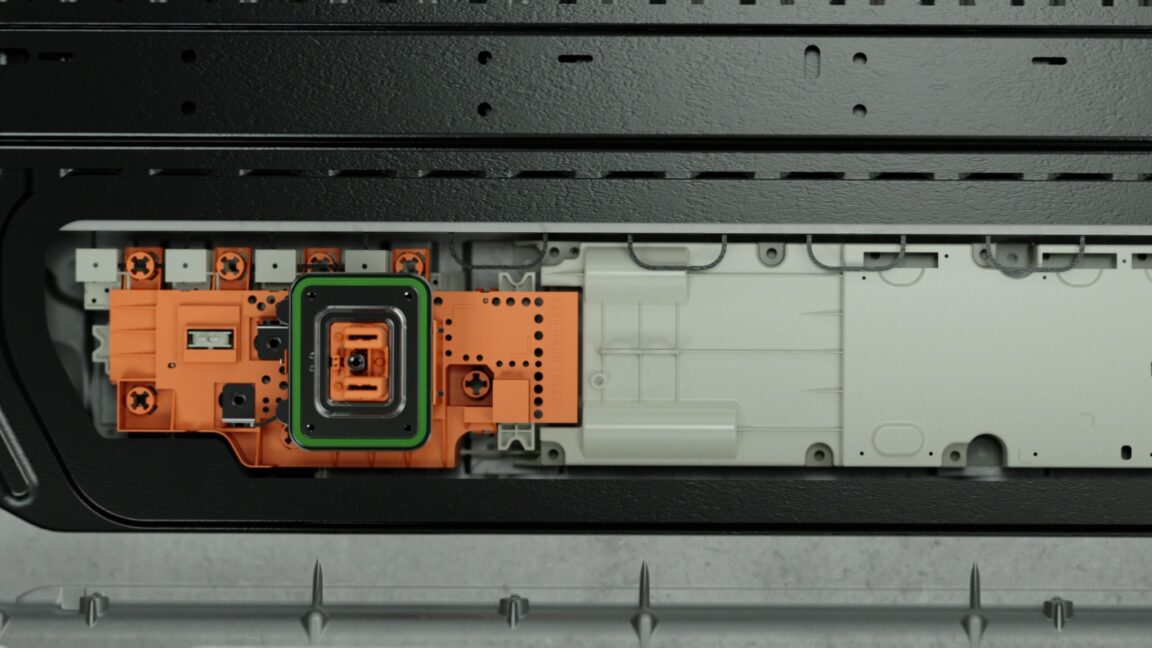
The new approach to bidirectional EV charging began when Ford acquired Auto Motive Power three years ago. The result is Fathom’s charging module, one of five powerful computers that each manage a different part of the vehicle’s functionality.
This small number of domain controllers is part of the software-defined vehicle approach, replacing the dozens of individual electronic control units (ECUs) used in older vehicle designs.
Fathom does not currently require a wallbox with a built-in inverter, such as the 80-amp unit required by the Ford F-150 Lightning. However, Ford’s Home Power Station is still necessary. Ford says it should cost about half as much as the $1,310 device required for older heavy-duty trucks.
The system’s management software can charge the vehicle when electricity prices are low and use the vehicle to power a home when prices are high.
Lower-cost home backup
Customers who want to use Fathom as an emergency battery during a power outage will also need Ford’s new Home Backup Panel. The automaker says the panel should cost 60 percent less than its first-generation panel, which cost about $5,000.
Adding vehicle-to-home (V2H) capability to a house is therefore not free, but Ford says the new equipment should make it considerably less expensive than before. Fathom is also the first two-way EV priced below $30,000.
Vehicle-to-grid testing
Ford is working with numerous utility companies in the United States and Canada to finalize the details required to begin Fathom’s vehicle-to-grid testing program.
The company also says the system meets existing standards, including UL 1741 for chargers, IEEE 1547 for connecting vehicles to the power grid, and SAE J3068 for communications.
Source: arstechnica.com