


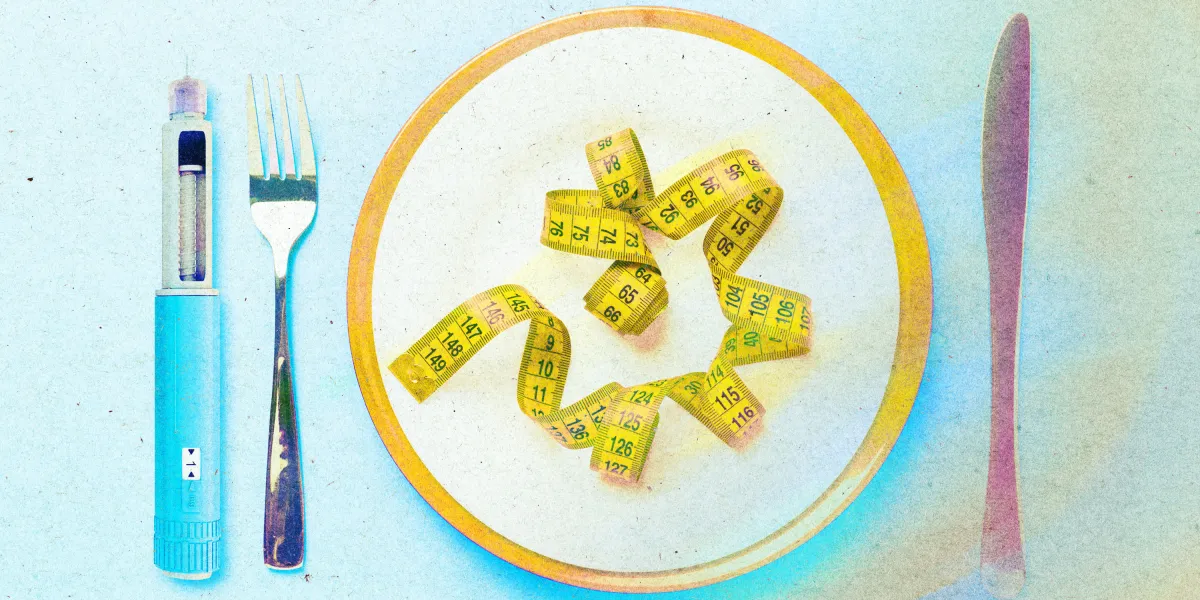
Eating disorders appear to have become significantly more common worldwide, with the estimated incidence of anorexia nervosa and bulimia nervosa rising 71% between 1990 and 2023. Researchers also estimate that these conditions accounted for the equivalent of about 3.83 million years of healthy life lost in 2023. Clinicians warn that misuse of GLP-1 weight-loss drugs may be worsening the problem for some patients.
Clinicians report increasingly severe cases
Cheri Levinson, a clinical psychologist at the University of Louisville in Kentucky who has specialized in eating disorders for nearly 20 years, says she is now seeing the most severely ill patients of her career. Many of them are misusing GLP-1 drugs.
“This is the worst thing I’ve ever seen,” Levinson says.
Eating disorders are mental health conditions in which eating behaviors affect a person’s health. They include anorexia nervosa, which is associated with a fear of gaining weight, and bulimia nervosa.
Some people may have a genetic predisposition to developing an eating disorder, but researchers believe external factors can trigger the conditions. These factors may include stress or social pressure to lose weight. In many cases, simply restricting food intake can trigger an eating disorder, Levinson says.
Global study tracks eating disorders over three decades
Eating disorders were already prevalent in the 1990s, when social pressure to appear thin was widespread. The “heroin chic” era is one example of that period’s beauty ideals.
To examine how the situation has changed, Luhai Bai and colleagues at China’s Nanjing Medical University Children’s Hospital collected data from studies and surveys conducted in populations around the world. The researchers used statistical models to fill gaps in the available data.
The team estimated the annual incidence of anorexia nervosa and bulimia nervosa in each of 204 countries and territories from 1990 to 2023. They also assessed the conditions’ effects on global health by calculating disability-adjusted life years, a measure of healthy life lost because of illness or disability. The World Health Organization describes a disability-adjusted life year as one year of healthy life lost.
The results were published in JAMA Psychiatry. The researchers found that the incidence of the two eating disorders increased by 71% between 1990 and 2023.
“In 2023, they will cost the world the equivalent of about 3.83 million years of healthy life,” Bai says.
Source: www.technologyreview.com