


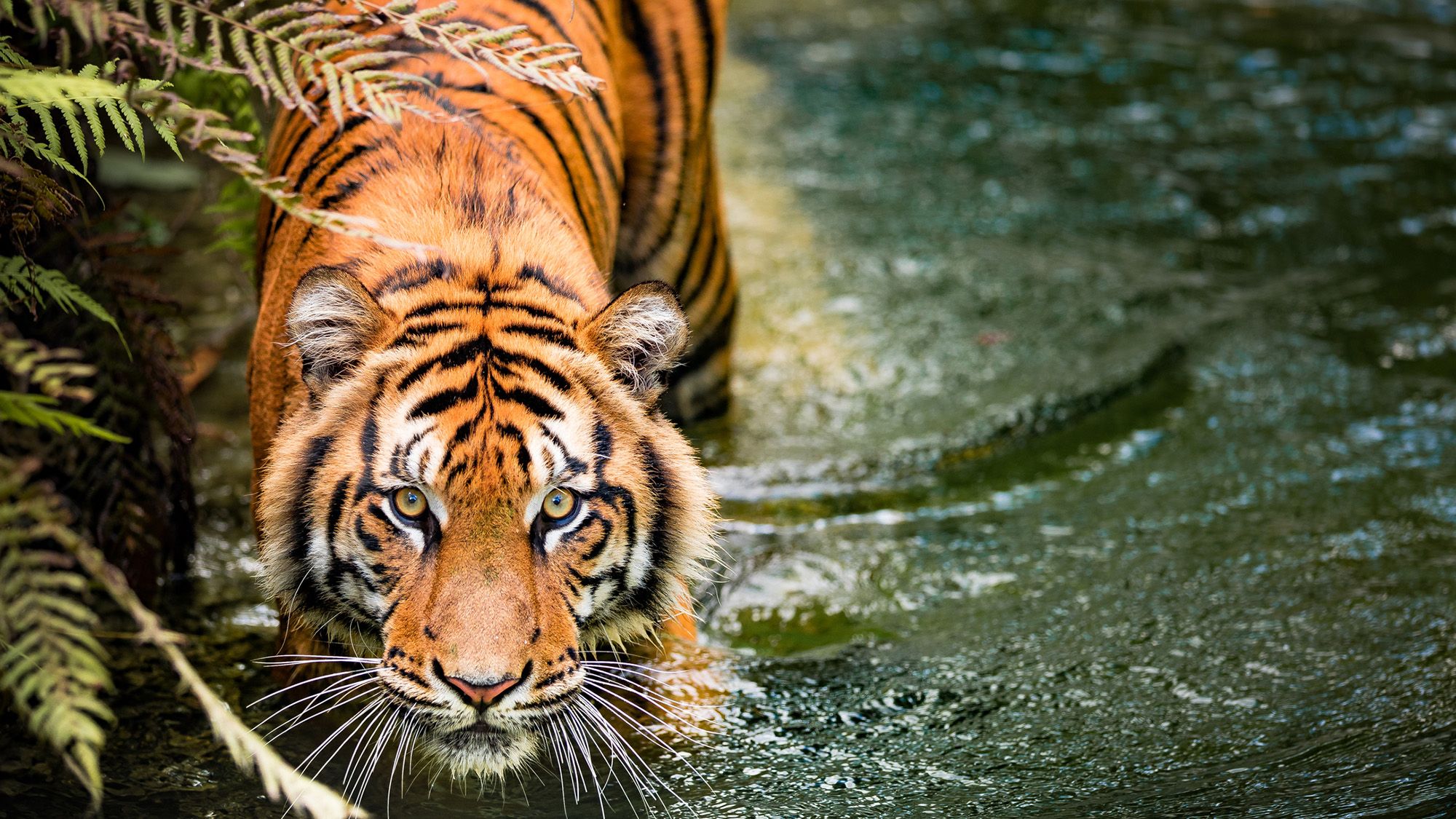
New footage from the PBS Nature documentary “Tiger Island” shows a male tiger approaching and greeting a cub while its mother rests nearby, as well as a female caring for another tiger’s cubs. The scenes, filmed in Nepal, offer an unusual look at social behavior in an animal generally considered solitary and may challenge assumptions about how tigers interact with young.
Unusual scenes of tiger family life
“Tiger Island” is a two-part series that follows two big-cat families from across Nepal. The footage is reportedly the first time a “family” of tigers has been recorded spending time together, according to Dan O’Neill, a wildlife biologist and filmmaker who contributed to the documentary.
Tiger mothers typically raise their cubs for up to two years without help from a male tiger. In one scene, however, a male approaches a cub and greets it with a shake of his head while the cub’s mother rests nearby.
“This just shows that we really don’t know anything about them,” O’Neill told Live Science. “And they’re much more complex than people think.”
The documentary also shows a female tiger caring for cubs that are not her own. “We have very rigid ideas about how these animals live,” O’Neill said. But the natural world is “diverse and ever-changing,” and tigers are no exception.
Some female tigers have previously been observed helping one another raise cubs, although the behavior appears to be rare. The footage could provide clues about how tiger mothers protect their young.
Male tigers may kill cubs, particularly when a new male takes over a territory. This behavior, known as infanticide, can reduce the number of cubs that survive. O’Neill suggested that another female caring for the cubs could help more of them reach adulthood.
Filming tigers without disturbing them
To capture the scenes, the production crews used drones equipped with powerful optical-zoom lenses and silent propellers. The drones allowed them to observe tigers in difficult-to-access areas without disturbing the animals.
Traditional camera traps often photograph animals as they move along trails, leaving much of their private behavior unrecorded. O’Neill said the drone’s propeller was quieter than the local bees where the footage was filmed, giving the crew a candid view of the tigers’ lives.
Tigers and people share the same landscape
Although tigers (Panthera tigris) are generally solitary, they often live near or share habitat with human communities. Tigers can attack people and kill livestock, O’Neill said, so it would be “completely naive and wrong” to suggest that encounters with them are harmless.
He said conservation efforts must consider the circumstances in which people and big cats encounter one another, rather than treating human communities as separate from wildlife.
The same challenge affects other big cats. O’Neill, a researcher with the wildcat conservation group Panthera, has spent years studying jaguars, pumas and snow leopards. Popular images of animals living in remote wilderness can obscure how closely their habitats overlap with human communities.
For O’Neill, conservation involves more than studying animal behavior or protecting habitat. It also means helping the people who bear the costs of living alongside apex predators.
“By helping those people, you are contributing to tiger conservation,” he said.
In the United States, part two of “Tiger Island” was scheduled to broadcast on Wednesday, Oct. 28, at 12:30 a.m. on PBS.
Source: www.livescience.com