


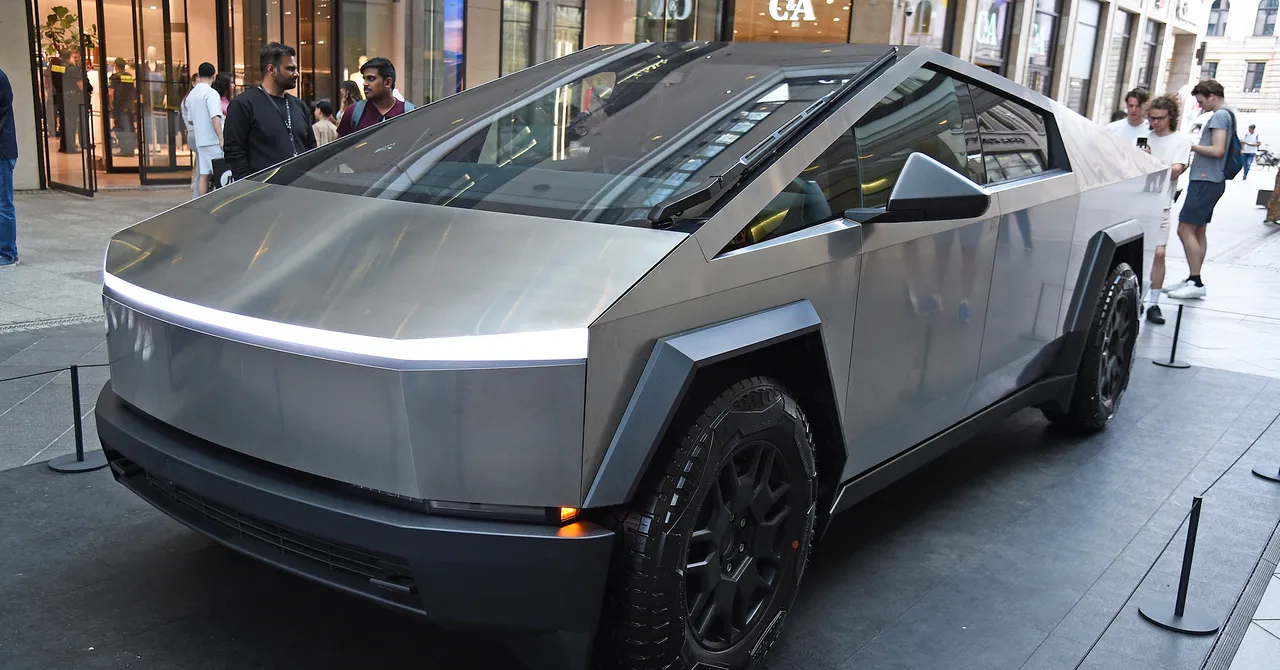
The Cybertruck is scheduled to enter production next year at Tesla’s Gigafactory in Texas, but its reported demise would signal a broader shift away from large electric vehicles (EVs), particularly full-size electric pickups. The truck’s divisive design, Elon Musk’s endorsement and numerous recalls have contributed to below-par sales, while its large battery highlights the material and safety costs associated with oversized EVs.
Large electric trucks face mounting challenges
The Cybertruck has been described as a uniquely toxic electric car, both because of its divisive design and its association with Elon Musk. Those factors, along with numerous recalls, have contributed to weak sales.
Its possible demise would also suggest that the era of large EVs, especially large electric trucks, may be coming to an end. Smaller vehicles could benefit pedestrian and cyclist safety while reducing demand for the large batteries required by full-size electric pickups.
The Cybertruck uses a high-capacity 123-kilowatt-hour battery and weighs about 1,600 pounds, or roughly a quarter of the vehicle’s weight. That is comparable to the battery used in Ford’s F-150 Lightning, another electric truck that was canceled late last year. Ford’s large batteries ranged from 98 kilowatt-hours to 131 kilowatt-hours, and the company also discontinued three-row EVs in 2024.
Automakers are turning to smaller EVs
The cancellation of both trucks within a year suggests that the market may be changing, even as automakers continue to introduce smaller EVs and gas-powered vehicles equipped with electric motors that can extend their range.
Ford plans to launch the Fathom next year. The sub-$30,000 electric pickup is expected to be about the same size as the automaker’s compact, gas-powered Maverick pickup. Ford has not announced battery sizes for the various trims, but they are expected to be far smaller than the batteries in the F-150 Lightning or Cybertruck. The company also plans to relaunch the Lightning as a long-range model.
Startup Slate sells small electric pickups that can be converted into SUVs, with bare-bones base models starting below $25,000. The vehicle also has a sturdy battery, helping drive a major spike in pre-orders. However, the Cybertruck also generated substantial pre-orders before its market performance became clear.
Rivian’s R2, released this year, is another example of the move toward smaller EVs. Although the SUV is neither as small nor as inexpensive as Ford’s or Slate’s vehicles, its 88-kilowatt-hour battery and approximately 1,200-pound weight make it smaller than Rivian’s flagship R1S. Rivian is also teasing an even slimmer SUV, the R3, for the coming years.
Large EVs still have a market
Large EVs are not necessarily dead. The Kia EV9 is among the 10 best-selling EVs in the United States, alongside the Rivian R1S. There is also an intense resale market for the F-150 Lightning.
However, the rest of the top 10 new-vehicle sales are crossovers, sedans or midsize SUVs with medium-sized batteries. Many recently introduced EVs are also smaller or use extended-range powertrains, suggesting that automakers may increasingly prioritize efficiency and affordability over vehicle size.
Source: www.wired.com