


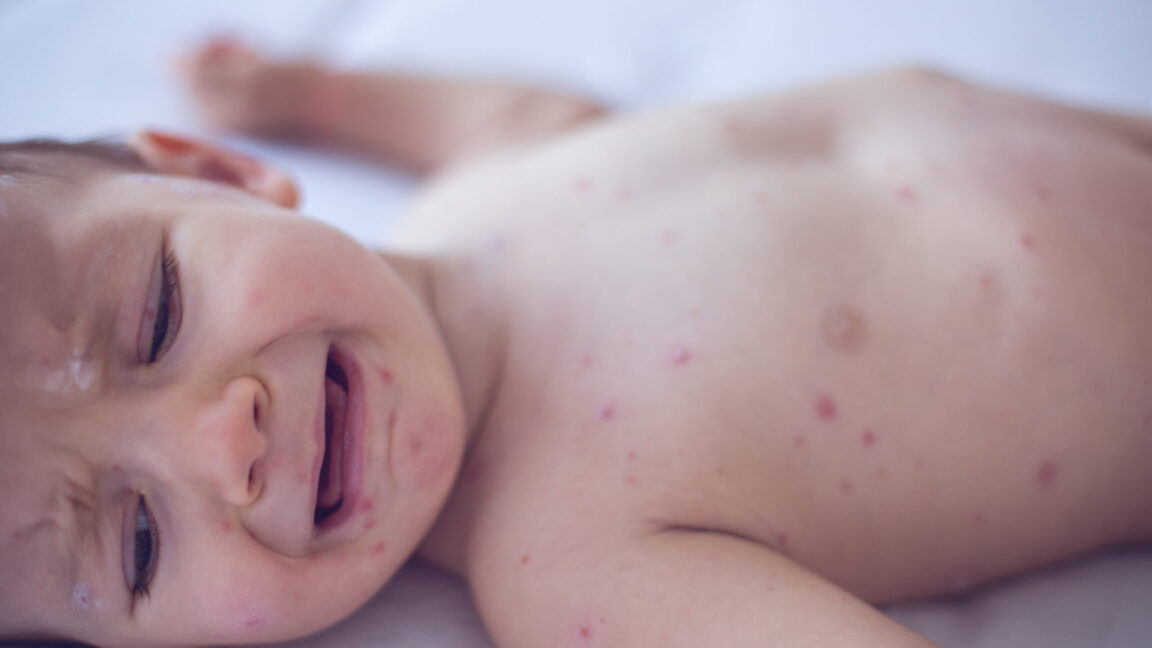
Pennsylvania Measles Outbreak: Cases During Pregnancy and Congenital Measles Rise
Cases of measles during pregnancy—and cases of congenital measles in newborns—are continuing to rise in Pennsylvania, according to a health warning issued by the Pennsylvania Department of Health on Monday.
Before the current outbreak, which is continuing to spread across the state, congenital measles had not been seen in Pennsylvania for decades, the department noted in its advisory.
The alert includes clinical guidance for managing measles exposure and infection during pregnancy, as well as cases involving newborns. Because the measles, mumps and rubella (MMR) vaccine has been used successfully for decades, many doctors have never encountered measles during pregnancy or congenital measles in their careers.
However, declining vaccination rates across the country have increased the possibility that measles—a highly contagious virus—could regain a foothold in communities and spread rapidly through undervaccinated areas, as it is doing in Pennsylvania.
Pennsylvania reports 1,286 measles cases in 42 counties
As of October 19, Pennsylvania had reported 1,286 measles cases in 42 counties this year. Of those patients, 247 were reportedly hospitalized and six died. The latest reported deaths are pending investigation by the state health department before they are added to the state’s official tally.
The Pennsylvania Department of Health did not immediately respond to a request for information from Ars Technica. However, The 19th reported earlier this month that 53 people had been infected with measles during pregnancy.
At least one case of congenital measles resulted in death. The first reported death in the outbreak was a newborn baby boy whose mother was critically ill with measles and died shortly after giving birth.
Why measles is especially dangerous during pregnancy
Pregnant people who have not been vaccinated against measles or who have not previously had the disease are more susceptible to infection. Measles during pregnancy increases the risk of hospitalization, pneumonia, the need for supplemental oxygen or a ventilator, and death.
The infection also raises the risk of miscarriage, stillbirth, low birth weight and premature birth.
MMR vaccine and measles exposure during pregnancy
The MMR vaccine is not recommended during pregnancy because it is a live, attenuated vaccine and carries a theoretical risk of transmitting infection to the fetus.
If a pregnant person is exposed to measles, health guidance recommends intravenous immune globulin to help prevent infection. It must be administered within six days of exposure.
Source: arstechnica.com