


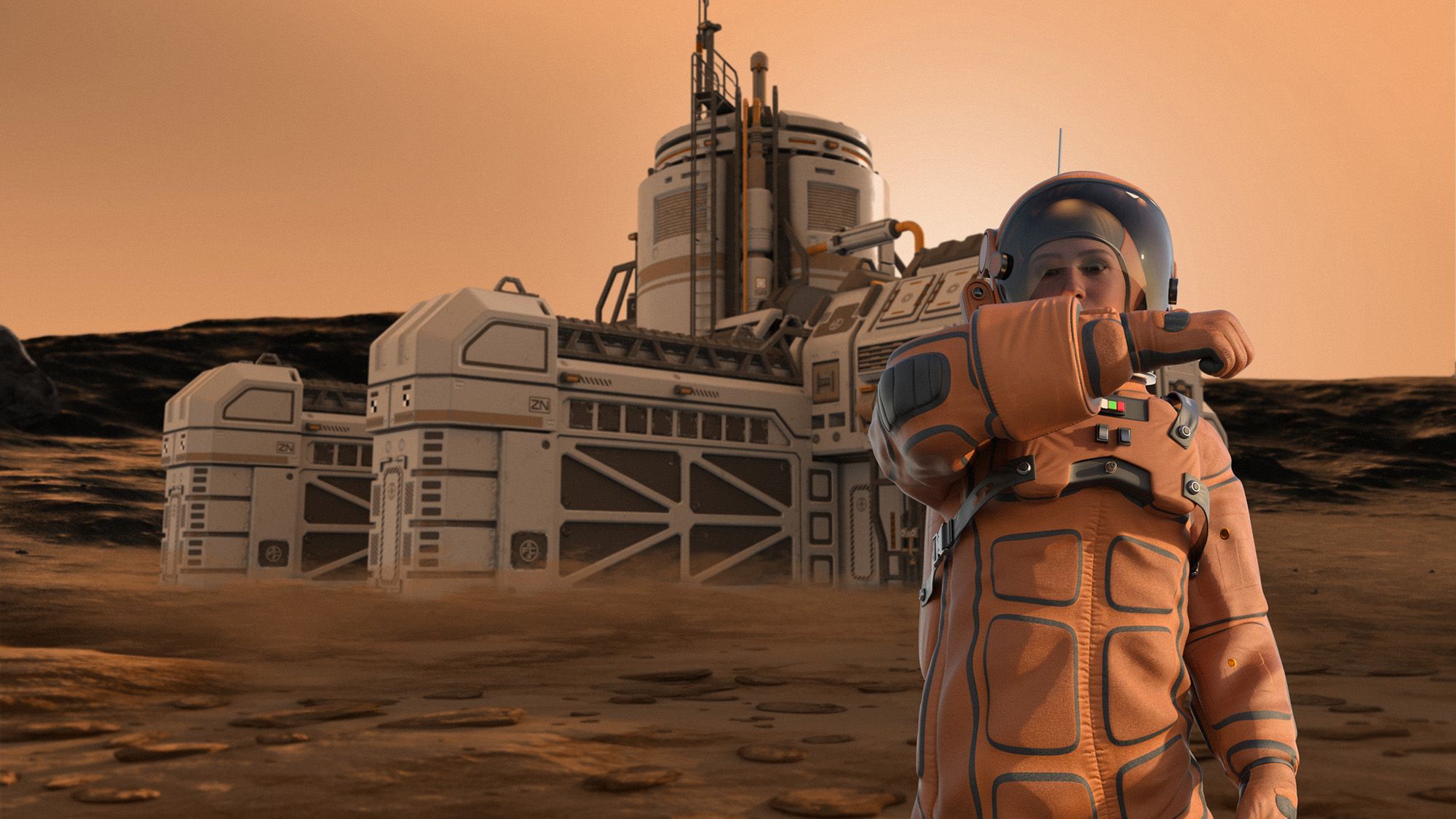
Mars has long been considered a potential destination for human settlement, but reaching and living on the Red Planet would expose astronauts to serious health risks, including cosmic radiation and microgravity. A new study found that rats exposed to radiation similar to what astronauts might encounter during a Mars mission developed more scar tissue around the heart’s small blood vessels than animals in a control group. The finding has not been confirmed in humans, but it adds to concerns about the health effects of long-duration spaceflight.
The research examined the effects of spaceflight-like radiation on rats. The results suggest that exposure could contribute to changes in the cardiovascular system, including increased scar tissue around small blood vessels in the heart.
Because the study involved rats, it is not yet known whether the same changes would occur in astronauts. However, the results contribute to growing research into the potential health consequences of long-distance space missions.
Would people accept the risks of a Mars mission?
In response to the findings, Live Science asked its readers whether they would risk their health to travel to Mars despite the potential dangers. More than 240 readers responded, and 65% said, “No, we don’t think it’s worth the risk.”
Some comments reflected a different view. One reader wrote: “Pioneers who travel to Mars face the prospect of death and never return. Even if they do return, they could face any number of health problems. These risks have not deterred exploration throughout human history. The bigger question is who to send.”
Another reader echoed that perspective: “Explorators in the past have always been exposed to extraordinary risks. We would still believe that if there were no risk takers. The world is flat.”
The costs of sending people to Mars
Other readers focused on the financial and scientific costs of human missions. One wrote: “Sending meat-water balloons to Mars is ridiculous. For the cost of one human being on Mars, we could literally explore the entire solar system and map/sample/explore every planet and every major moon.”
Some commenters also highlighted the mental and emotional costs of leaving Earth. One reader wrote: “As an avid science fiction fan for decades, I’ve always wanted to go to space.” The reader added, “Now that I’m 77 years old, I find myself missing the outdoors. It would be a devastating loss to lose the wind, the trees, the chirping birds, and the sweet grass beneath our feet. Let the intrepid explorers go in their place. Life is too short to leave this planet for the uncertainties and dangers of space travel.”
Whether the potential scientific benefits of sending people to Mars outweigh the medical, emotional and financial risks remains an open question.
Source: www.livescience.com