


Scientific publishers are taking too long to retract or correct flawed research papers, and journals are applying inconsistent standards when deciding how to address errors, according to a report from the National Academies of Sciences, Engineering, and Medicine (NASEM). The report recommends that most editorial reviews of concerns about a single paper be completed within 12 weeks and rarely take more than six months.
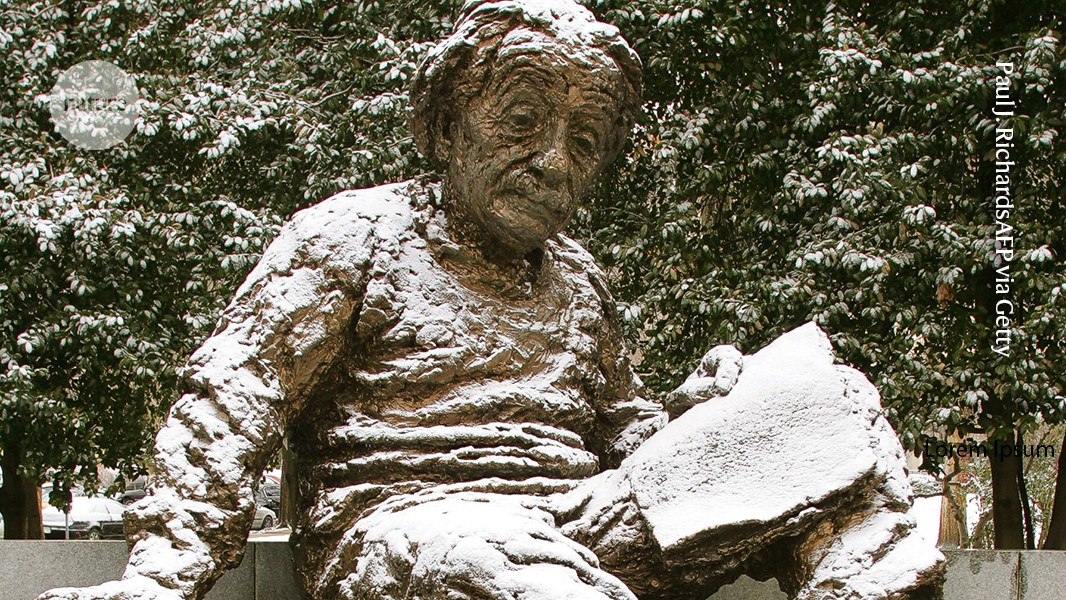
A statue of Albert Einstein holding a scientific manuscript stands outside the National Academy of Sciences building in Washington, DC. Credit: Paul J. Richards/AFP via Getty
Journals typically do not disclose when they flag problems with a paper, so there are currently no comprehensive data on how long retractions or corrections take. According to the Retraction Watch database, retractions occur an average of approximately 2.4 years after publication.
“The big picture is that the process is too slow,” says Randy Shekman, a cell biologist at the University of California, Berkeley, who chairs the 14-person committee that wrote the NASEM report. A faster and more transparent process would strengthen the credibility of the scientific record, he says.
The report was scheduled to be published online on November 19th, but publication was delayed after a Science journalist noticed several references containing fabricated author names. The references suggested that a language model had been used to write or edit the material and that the content might not have been checked carefully.
“It’s unfortunate that there were such flawed references in the literature-correction report,” said Jennifer Byrne, a cancer researcher and research-integrity examiner at the University of Sydney who first raised the concerns. She noticed the problems while reviewing reports shared with media outlets before publication.
Correcting the literature
The report had two main purposes, Shekman said: to speed up the process of retracting or correcting papers and to reduce the “tremendous emotional barrier” that authors face when correcting honest mistakes in their records. “Part of the problem is that papers are too rarely retracted,” he added.
The report also recommends that journals “take proactive steps” to identify errors and integrity issues instead of waiting for complaints. These steps could include journal-wide audits and regular monitoring of social media and online platforms where post-publication concerns have been raised.
Existing publisher guidelines, such as those from the Committee on Publication Ethics (COPE) in London, encourage a “timely” response to concerns but do not set an expected timeline. They also do not require journals to investigate complaints posted on online platforms.
“A key theme running through this report is that we must distinguish between retractions and corrections and research misconduct,” says Dorothy Bishop, a member of the NASEM committee and a research-integrity examiner at Oxford, UK. Authors should not associate the retraction of a paper with the stigma of misconduct, she says.
Bishop added that journal editors sometimes wait for universities to investigate possible research misconduct before revising papers, but that they should not do so.
Calls to change these attitudes are not new. The journal has long emphasized that retractions can result from honest mistakes. In a 2022 editorial, Science urged publishers to separate the decision to issue a correction or retraction from the determination of whether misconduct occurred. COPE’s guidelines already emphasize that distinction.
But “there are still many people who view corrections and retractions as allegations of wrongdoing,” said Thorp, who was also a member of the NASEM committee. “We hope this report will accelerate recognition of this difference,” he says.
Source: www.nature.com