


Neanderthal Buried 75,000 Years Ago Was Killed by a Wooden Spear, Study Finds
A shoulder-blade wound at Iraq’s Shanidar Cave suggests the Neanderthal man suffered a violent chest injury, while his damaged teeth point to years of care from other members of his group.
Archaeologists have found evidence that a Neanderthal man buried about 75,000 years ago in Iraq’s Shanidar Cave died after being pierced through the chest by a wooden spear.
Researchers cannot determine exactly what happened. The injury may have resulted from a targeted attack, an accident or a hunting incident. However, the location and shape of the wound indicate that the spear entered the chest from the front at high speed and pierced the shoulder blade.
“The body shows signs of a deliberate shot to the heart,” said study lead author Emma Pomeroy, a paleoanthropologist at the University of Cambridge. The researchers emphasized that the evidence reveals a violent death but does not establish who caused the injury or why.
A fatal wound from a wooden spear
In a study published Thursday, Oct. 15, in Scientific Reports, Pomeroy and her co-authors analyzed the remains of a Neanderthal identified as Shanidar A. He was about 45 years old when he died and was later buried in Shanidar Cave.
Shanidar A’s skeleton was incomplete when it was discovered in 2019. The remains included a nearly complete right hand, three ribs, six teeth and a left shoulder blade, or scapula.
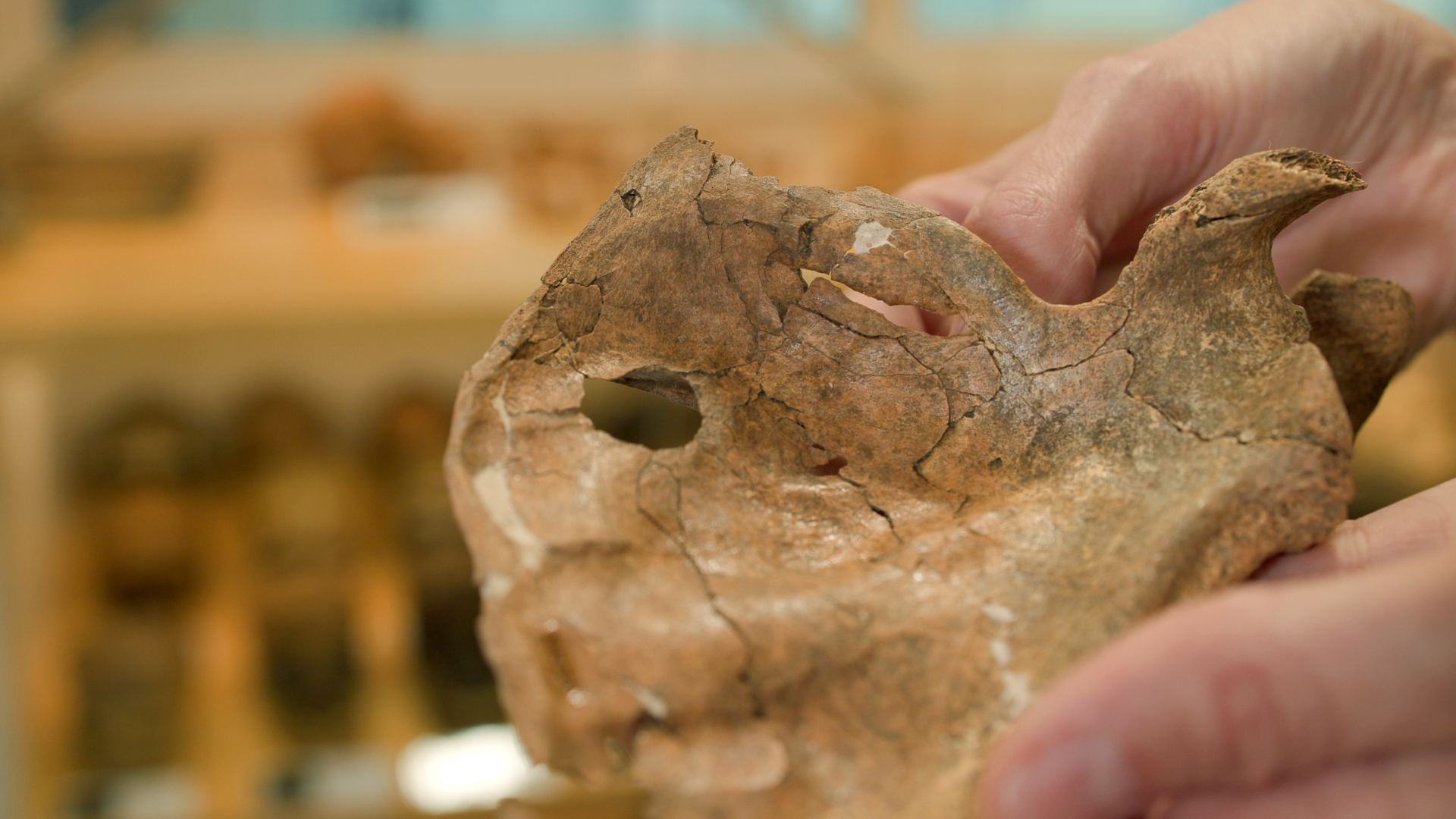
Near the end of the shoulder blade, archaeologists found a round hole approximately 1.5 centimeters in diameter, along with a circular piece of bone punched out of the scapula. The researchers ruled out damage that occurred after death, including animal bites and insect burrowing.
“The perforation is best explained as occurring antemortem,” meaning around the time of death, the researchers wrote. The wound’s shape is consistent with experimental injuries caused by wooden spears rather than stone-tipped weapons.
Neanderthals may have used wooden spears for both thrusting and throwing. Still, the researchers cannot say whether Shanidar A was attacked by another Neanderthal or injured accidentally during a hunt.
Image credit: Dirk Leder et al., Weapons, Tools and Technology (2026)
“All we can know about the end of this Neanderthal’s life is that it was violent and occurred at the tip of a wooden spear,” study co-author Graham Barker, an archaeologist at the University of Cambridge, said in a statement.
Shanidar Cave was a meaningful site for Neanderthals
Shanidar Cave is famous for evidence that Neanderthals deliberately buried their dead. The site contains evidence of repeated Neanderthal burials, suggesting that the cave held a particular meaning for the extinct hominins.
Earlier claims that the cave contained evidence of “flower burials” have since been challenged. Regardless, the repeated burials at Shanidar indicate that Neanderthals returned to the site over long periods and intentionally placed their dead there.
Researchers say Neanderthals used Shanidar repeatedly about 75,000 years ago and again between roughly 45,000 and 50,000 years ago, occupying the cave for short periods and leaving their dead behind.
Evidence that other Neanderthals cared for him
Although Shanidar A died prematurely, evidence from his teeth suggests that he received care during his lifetime.
His six teeth were severely worn in an unusual way. One front tooth, covered in tartar, had split in half while he was alive, yet he continued using the damaged tooth for a considerable period.
The dental evidence also suggests that Shanidar A may have suffered serious facial trauma. His lower front teeth were broken, and his jaw may have been damaged as well.
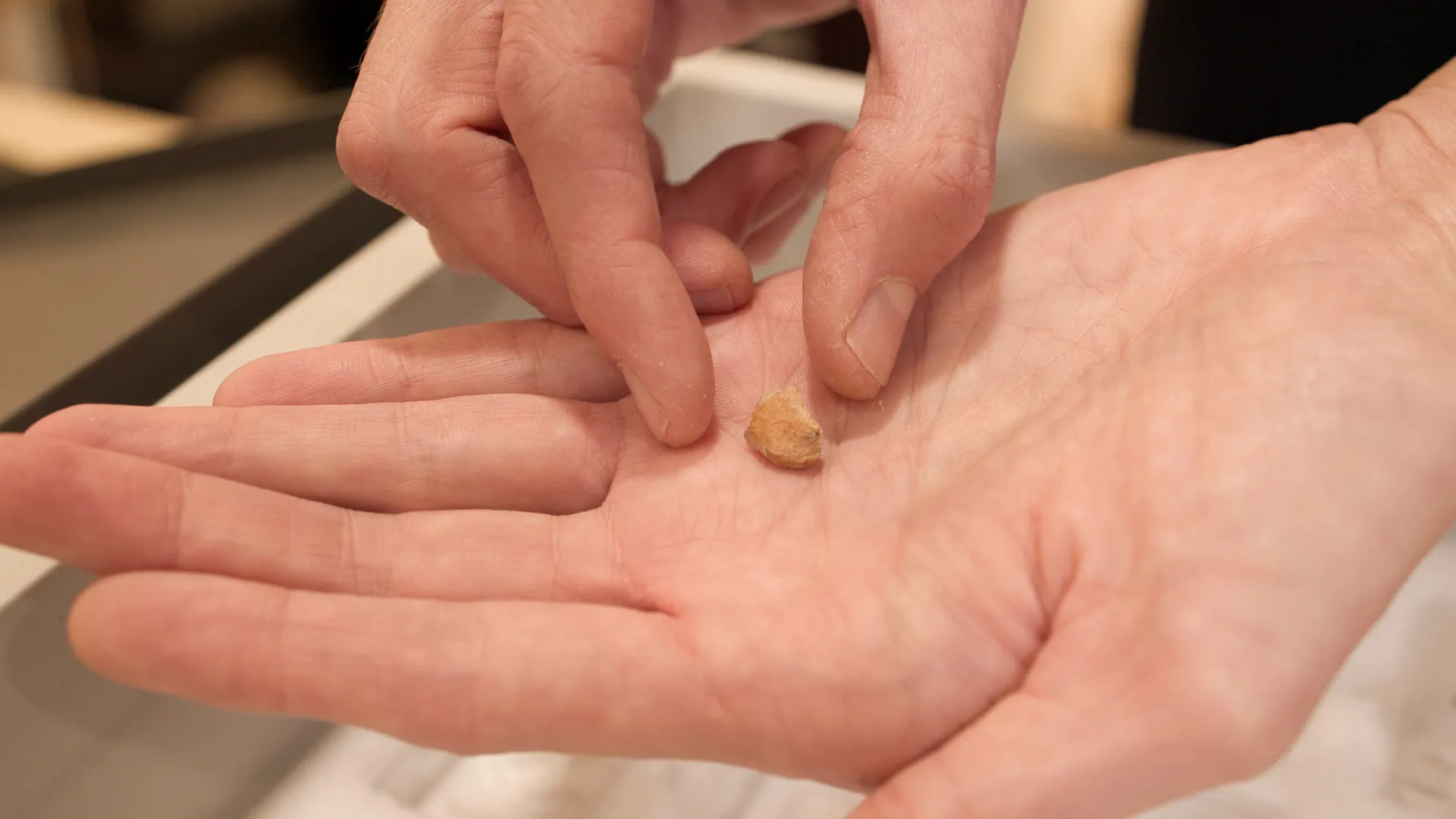
Image credit: University of Cambridge
“There is no question that Shanidar A had difficulty communicating and was in extreme pain for an extended period of time,” Pomeroy said in a statement. “To survive such a tooth-cracking blow and then continue to live and eat for at least a year, and possibly longer, it would have needed care and support from other Neanderthals.”
Archaeologist and author Rebecca Wragg Sykes, who was not involved in the study, said the fatal chest injury adds to scientists’ understanding of Neanderthal life. She noted that a wooden spear is a plausible explanation, but suggested researchers could also compare the injury with wounds caused by the horns of wild goats, one of the most heavily hunted animals at Shanidar.
Another Neanderthal at Shanidar suffered a fatal injury
Shanidar A was not the first Neanderthal found at the site with evidence of a potentially fatal injury. In 2009, researchers analyzed Shanidar 3, an older adult male who died about 50,000 years ago and had a deep cut in one of his ribs.
Researchers suggested that Shanidar 3 may have been killed by a stone-tipped spear used by modern humans. Modern humans first arrived in Europe about 54,000 years ago, but experts do not know exactly how they interacted with Neanderthals.
The discovery of two injured Neanderthals at Shanidar, separated by roughly 25,000 years, is notable but may simply be a coincidence, Pomeroy told Live Science.
What the discovery reveals about Neanderthals
Evidence of trauma, intentional burial and wooden spear technology shows that Neanderthal lives and deaths were complex. The remains from Shanidar suggest that these extinct hominins experienced violence, survived serious injuries with help from their communities and repeatedly returned to a place where they buried their dead.
How much do you know about our closest relatives? Find out with our Neanderthal quiz.
Source: www.livescience.com