


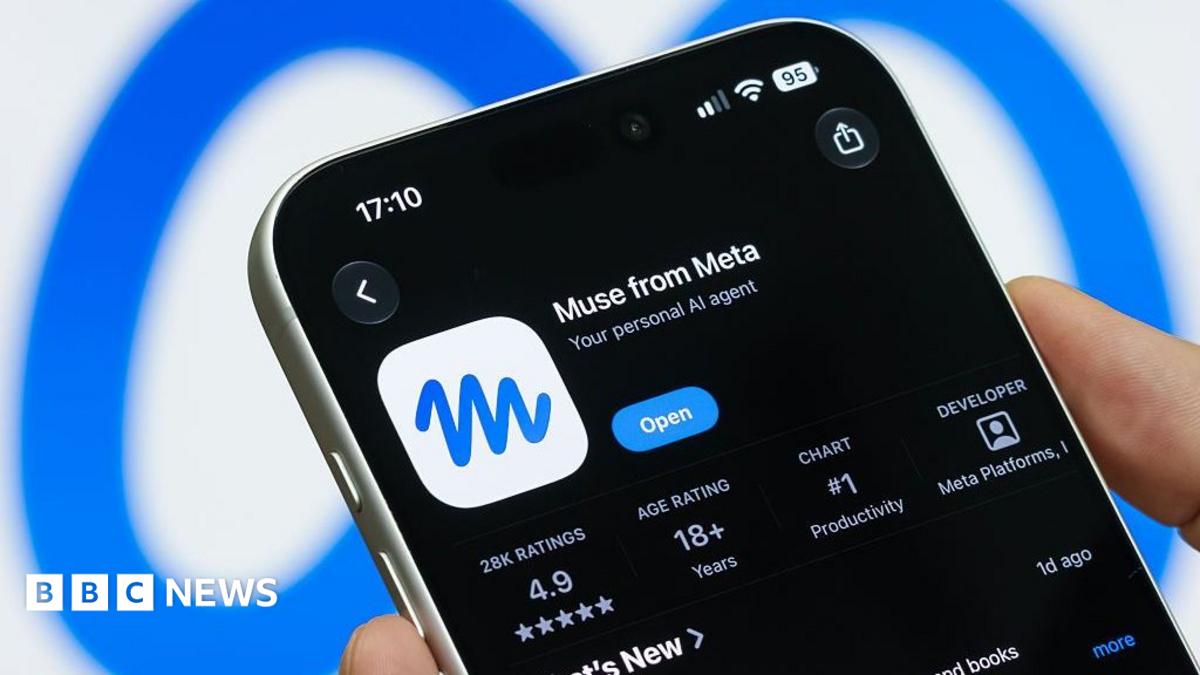
Meta is promoting Muse as a highly customizable AI agent, but early experiences with the assistant show both the appeal and the awkwardness of giving it access to personal communications. Users can choose its appearance, voice and personality, while Muse can summarize incoming emails, suggest replies and proactively prompt people to engage. The service is free only up to a certain point, after which a subscription is required.
Customizing Meta’s Muse
Meta says personalization is central to the experience. “No two muses are the same,” the company said in a press release.
One user named the agent Linda, after the robot and droid from the BBC television series, and gave it a British female accent selected from the available options. Linda can also appear in different forms, allowing users to customize the agent beyond its voice and name.
An assistant that can be too proactive
Linda was described as highly proactive. When an email arrived, the agent would summarize it and suggest a reply. In some cases, however, it took a long time before the suggested responses were ready.
When the user had not interacted with Linda for a while—usually because they were busy—the agent sometimes displayed a random prompt, such as, “Did you know you can change my clothes?” The prompts appear designed to encourage continued engagement.
The assistant also produced some awkward replies. In response to a question about going out, it included all the necessary travel arrangements, apparently failing to recognize that a simple “Yes, that would be nice” might have been enough. It also seemed determined to have the last word, occasionally becoming stuck in exchanges consisting of “Okay” and “Thank you.”
Trust and control
Muse requires people to place even more of their personal data in Meta’s hands, despite the social network’s historically controversial record and the growing backlash against artificial intelligence.
The user asked Linda whether it wanted to take people’s jobs. “I’m here to take some of the hassle off your plate with the admin,” it replied, leaving the user to “think about it.”
“Everything you do is what I usually think about,” the user answered.
“That’s fair and you’re right,” Linda replied. “I think the difference is that you’re still the one deciding what’s important and what to do about it.”
That answer might have been more reassuring if Meta’s head of AI, Alexandr Wang, had not published an essay the day before Muse’s UK launch. The essay warned about how difficult it could be for humans to maintain control if AI became far more capable; it suggested that AI could eventually be 1,000 times more intelligent than humans.
For now, Linda is helping drive that broader AI revolution in smaller ways—one calendar invitation at a time.
Source: www.bbc.co.uk