


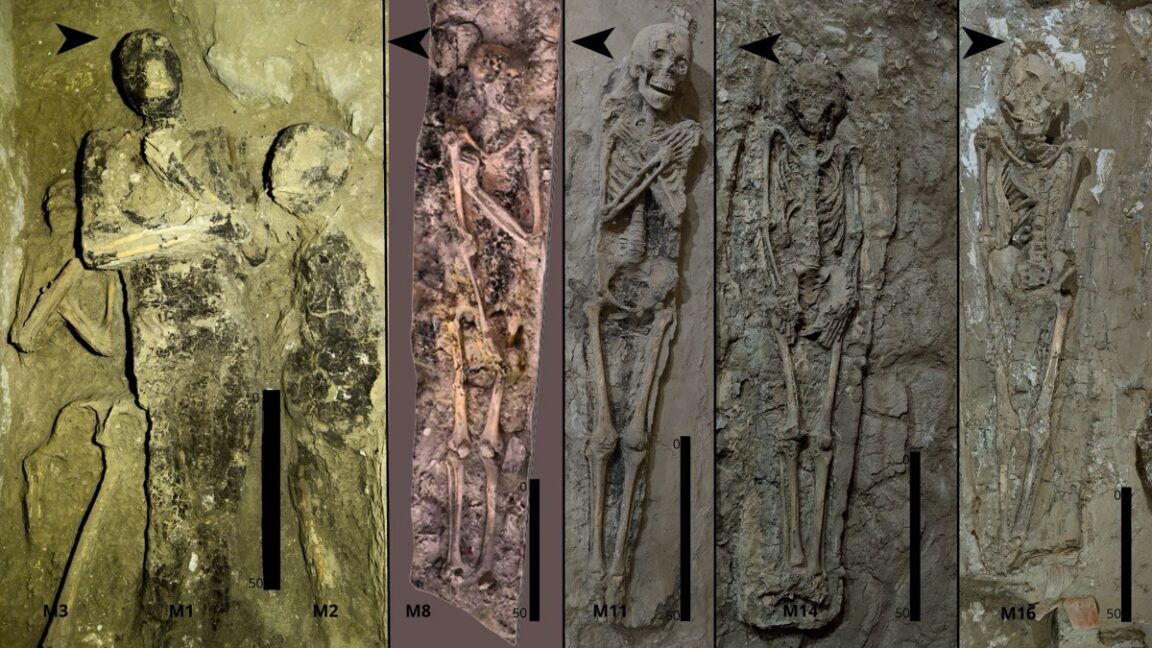
The earliest individuals buried at the site appear to have held high social status. Researchers found them in coffins accompanied by valuable grave goods, including objects stored in Phoenician amphorae, funerary nets, and amulets. Many of these items were placed alongside the deceased. “Bodies buried vertically, one on top of another, did not have coffins but were carefully mummified,” said co-author Miguel Ángel Molinero Polo of La Laguna University, according to a statement. “They may also be associated with upright urns, suggesting the presence of rituals that were not part of the tomb’s earliest period of use.”
Archaeologists also found evidence that several rooms were repeatedly altered over time. Deposits of silt, sand, gravel, limestone blocks, plaster, pottery, and other displaced materials indicate a combination of human activity and possible flooding. One room, which contained the fragmented remains of four people, may have been damaged by fire. The intense heat—estimated at approximately 550 degrees Celsius (1,022 degrees Fahrenheit)—caused particularly severe damage to the skulls and lower limbs.
Overall, the researchers describe the site as a funerary space with a “cumulative biography.” Reuse involved more than adding new burials; it gradually changed the organization, materials, and meaning of the space. Rather than serving as a passive container for the dead, the room functioned as a dynamic mortuary environment in which bodies, objects, sediments, and architectural limitations shaped the site’s funerary history over time, the authors conclude.
Frontiers of Environmental Archaeology, 2026. DOI: 10.3389/fearc.2026.1888379 (About DOI).
Source: arstechnica.com