


Close Menu
HitechubHitechub
    What's Hot
    Science

    NASA SkyFall Helicopters at Work: Artist’s Concept

    Science

    New Evidence Reveals Spinosaurus Spent Most of Its Life Underwater

    Technology

    Critics Question Hwang’s Return to Nvidia Amid “Trump Was in Bed With Jensen” Controversy

    Important Pages:
    • About Us
    • Privacy Policy
    • Terms & Conditions
    Facebook X (Twitter) Instagram Pinterest
    Facebook X (Twitter) Instagram
    HitechubHitechub
    Tuesday, November 24
    • Shop
      • Fashion
        • Mens
        • Womens
        • Accessories
          • Handbags
          • Keychain
          • Masks
          • Money clicps
          • Neck Pillow
          • Rings
          • Towels
          • Wallets
        • Jewelry
        • Watches
        • T-shirts
        • Hawaiian shirts
        • Vests
        • Swim trunks
        • Swimsuits
      • Fun
        • Magic cubes
        • Magnifiers
        • Misc
        • Photo books
        • Puzzles
        • Toys
      • Home
        • Cleaning/Care
        • Mailbox covers
        • Mugs
        • Pot Holders
        • Spoon
      • Office and Electronics
        • Chairs
        • Office Supplies
        • IPad cases
        • Laptop stickers
        • Mouse pads
        • Notebooks
        • Pencil bags
        • Pens
        • Phone cases
      • Personalized
      • Pets
      • Sports
        • Cycling
          • Balaclava Mask
          • Bike Bell
          • Bike Computer
          • Bike Fender
          • Bike Grips
          • Bike Kickstand
          • Bike Light
          • Bike Locks
          • Bike Mitts
          • Bike Pumps
          • Bike Repair Stand
          • Bike Seat
          • Bike Trainer
          • Bike Wheels
          • BIKES
            • Folding Bikes
            • Road Bikes
          • Carbon Fiber Bike Products
          • Cycling Mask
          • Kid’ Bike Helmets
          • Inner Tube
          • Motorcycle Bag
          • Nylon Pedals
          • Adult Helmets
          • Photochromic Sunglasses
          • Soft Coolers
          • Suction Cup Bike Rack
          • Tool accessories
          • Winter Cloth
          • Heart Rate Monitor
        • Outdoors/Camping
          • Outdoor Bags
        • Sweatband
    • Technology
      1. AI
      2. Gadgets
      3. View All

      This is the most popular CEO in the world

      Sectors in which “Chat-GPT” is most often used

      Artificial intelligence has begun to “swallow” professions

      The unusual robot conductor of a concert in Seoul

      Here’s how you can tell if your phone is being tapped

      PlayStation 5 becomes a completely silent console and gets more space

      This is the first phone that can be used to park a car

      Best Gaming Laptops 2023: Powerful Portables for PC Games

      Amazon Reveals AI Hacker Agents Discovered and Exploited a Zero-Day With Minimal Human Intervention

      Meta’s Muse AI Is Now Available in the UK: Helpful but Tedious

      Spanish La Liga Confirms Hackers Stole Soccer Fans’ Personal Information

      Please provide the title you want rewritten.

    • Science
      1. Space
      2. Wheels
      3. View All

      Space Perspective: A Journey to the Edge of Space

      5 Fascinating Facts About Space

      Space Exploration: Unveiling the Wonders of the Universe

      Toyota wants to make a new generation battery with a range of up to 1,200 km

      Meet Toyota’s lunar “baby” that could make exploring the Moon easier

      What does a night drive look like with one of the most beautiful cars in the world: the Rolls-Royce Ghost

      2,200-Year-Old Roman Shipwreck Reveals Ancient Waterproofing Technique

      Accelerating Drug Development Through Public Funding and Private Innovation

      2,900-Year-Old Artemis Sanctuary Discovered on Greek Mountaintop May Have Been Ancient Worship Destination

      NASA’s Webb Telescope Reveals How Supernova Dust Records Stellar Evolution

    HitechubHitechub
    Home » 2,200-Year-Old Roman Shipwreck Reveals Ancient Waterproofing Technique
    Science

    2,200-Year-Old Roman Shipwreck Reveals Ancient Waterproofing Technique

    Share Facebook Twitter Pinterest WhatsApp
    Share
    Facebook Twitter LinkedIn Pinterest WhatsApp

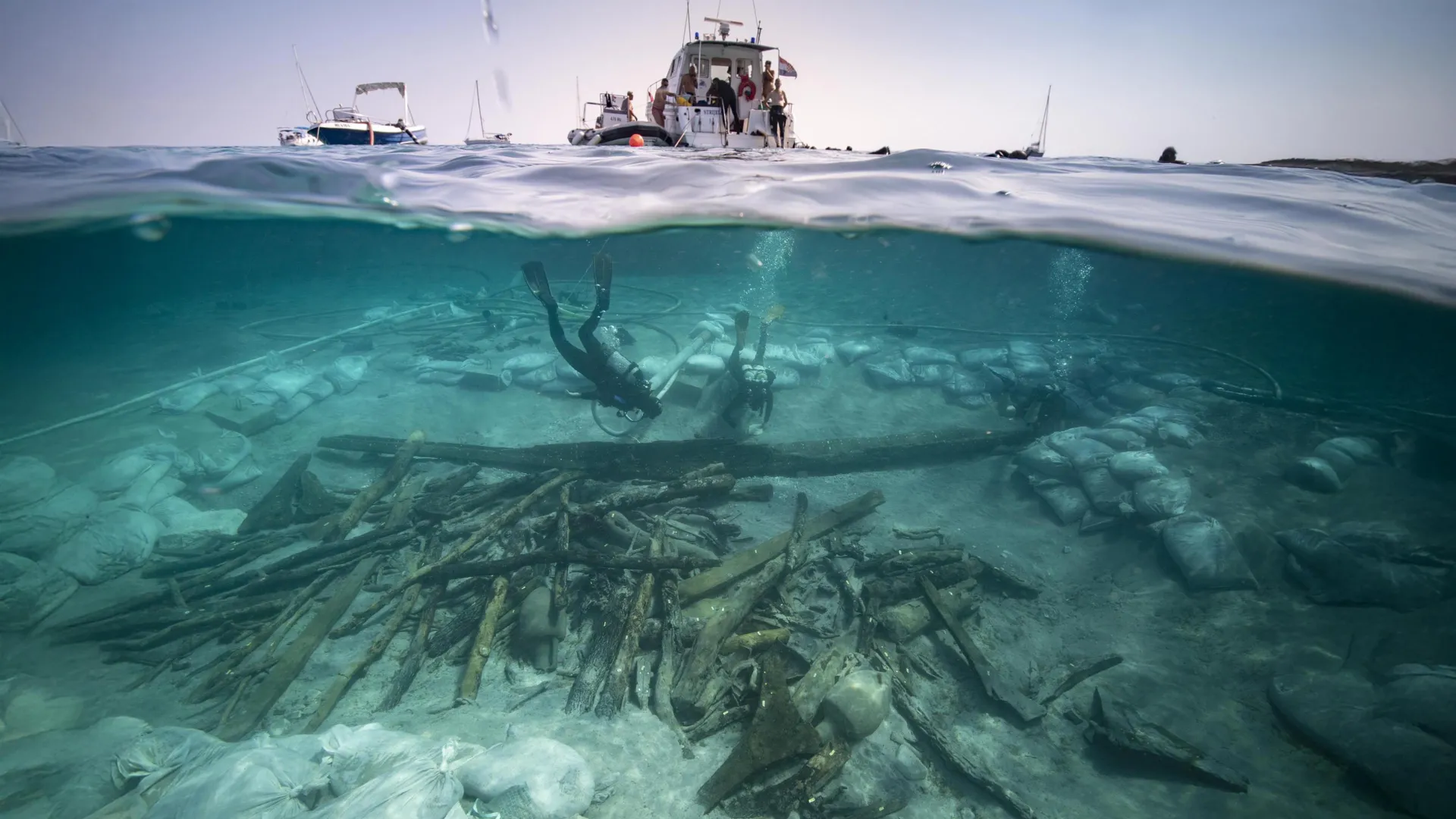
    A 2,200-year-old Roman shipwreck off Croatia has revealed two ancient waterproofing recipes, including a mixture of pine tar and beeswax. Researchers also found microscopic pollen trapped in the coatings, providing clues about where the ship was built, repaired and maintained during its lifetime.

    Since humans first began navigating the oceans, shipbuilders have had to protect wooden vessels from seawater, microorganisms and marine organisms such as shipworms. Despite their name, shipworms are marine mollusks that burrow into wood and can cause extensive structural damage.

    Until the mid-20th century, archaeological research on ancient ships focused mainly on their wooden components. The protective materials that helped make vessels seaworthy received far less attention, leaving waterproofing as an understudied aspect of ancient marine technology.

    In a new study published in Frontiers in Materials, French and Croatian researchers examined the protective coating on the Roman Republic-era ship Ilovik Parzine 1. The vessel sank about 2,200 years ago off the coast of present-day Croatia.

    “In archaeology, organic waterproofing materials have received little attention. However, they are essential for navigation in seas and rivers and are a real witness to past naval technology,” said lead author Dr. Armel Charrier, an archaeologist at the Institute for Interaction and Systems Mass Spectrometry in Strasbourg.

    “When we studied the coatings, we found that the ship had two different coatings: one made of pine tar, also known as pitch, and one made of a mixture of pine tar and beeswax. Analysis of the pollen in the coating made it possible to identify plant taxa that were present in the surrounding environment during the construction or repair of the ship.”

    Ancient waterproofing recipes

    Since its discovery in 2016, the shipwreck and its cargo have been the subject of several scientific investigations. This is the first study to combine molecular analysis with ancient-pollen analysis to determine both the composition of the waterproofing materials and the vegetation growing near the locations where the coatings were made or applied.

    The research brought together experts from the Underwater Archaeology Department of the Croatian Institute for Nature Conservation and the ADRIBOATS program at the Camille Julien Center of Aix-Marseille University in France.

    “Some regions of the Adriatic Sea have special characteristics that allow the local population to develop a particular style of shipbuilding,” Charrier said. “Only studies like ours provide an overview of these traditions, testifying to their genuine know-how and diverse traditions.”

    To identify the ancient waterproofing recipes, the researchers examined the coating’s physical structure, molecular composition and pollen content. They used mass spectrometry, an analytical technique that identifies substances according to the mass of their molecules or atomic components and measures their abundance.

    Pine tar and beeswax

    The team analyzed 10 samples of the ship’s protective coating and determined the biological origin of their components. Chemical signatures characteristic of pine trees appeared throughout the samples, showing that the main waterproofing material was pitch produced from heated coniferous resins or tar.

    Pitch is a thick, sticky substance that has been used for centuries to seal wooden containers and protect them from water. When heated, it spreads across surfaces and fills gaps between wooden parts.

    One sample, however, contained evidence of a different recipe. The shipbuilders had combined pine tar with beeswax to create zopissa, a protective substance known from Greek shipyards.

    Beeswax would have made the coating more flexible and easier to apply while hot. That flexibility could have been valuable on wooden ships, whose components shift or bend in waves and changing environmental conditions.

    Pollen records the ship’s past

    The stickiness of pitch gave it another property that was likely unanticipated by ancient shipbuilders: it could capture tiny airborne pollen grains from surrounding plants and preserve them for thousands of years.

    Different plants produce pollen with distinctive shapes and structures, allowing scientists to identify vegetation long after the plants themselves have disappeared. By examining the types and relative abundance of pollen embedded in the coating, the researchers narrowed down where the pitch might have been applied during the ship’s construction or repairs.

    The pollen preserved in Ilovik Parzine 1 revealed a highly diverse landscape. Some species were characteristic of Mediterranean and Adriatic coastal regions and valleys, including forests dominated by holly and pine. Other pollen was associated with maquis, a type of Mediterranean shrubland that includes olive and hazel trees.

    Alder and ash pollen suggested vegetation near rivers and coastlines, either close to the sea or farther inland. Small quantities of fir and beech pollen indicated a mountainous environment. This combination of vegetation is characteristic of the northeastern Adriatic coast, where the mountains of Istria and Dalmatia rise close to the shoreline.

    Evidence of repeated repairs

    The distribution and composition of the protective material indicated that the ship had probably received four or five separate batches of waterproofing coating.

    The stern, or rear section, and the central part of the ship shared the same coating. Researchers identified three distinct batches at the bow. These differences suggest that the ship underwent several repairs using materials obtained from different parts of the Mediterranean.

    Earlier research on the ship’s ballast—the heavy material carried to improve stability—identified the ancient city of Brundisium as a likely construction site. The port, now known as Brindisi, lies on Italy’s southeast coast and was an important maritime center in the ancient Roman world.

    The new pollen evidence suggests that some of the waterproof coating was applied near Brundisium. Other layers may have been added along the northeastern Adriatic coast, near the area where the ship eventually sank.

    The findings show how microscopic biological traces can reveal aspects of ancient maritime history that might otherwise remain hidden. Although waterproofing materials may have chemically identical profiles, the pollen trapped within them can preserve evidence of separate repair events and the environments in which they took place.

    “It is clear that ships traveling long distances need repairs, but it is not easy to demonstrate,” Charlier concluded. “Pollen was very useful in distinguishing between different coatings with identical molecular profiles.”

    Source: www.sciencedaily.com

    Share. Facebook Twitter Pinterest LinkedIn WhatsApp
    Previous ArticleAmazon Reveals AI Hacker Agents Discovered and Exploited a Zero-Day With Minimal Human Intervention

    Related Posts

    Technology

    Amazon Reveals AI Hacker Agents Discovered and Exploited a Zero-Day With Minimal Human Intervention

    Science

    Accelerating Drug Development Through Public Funding and Private Innovation

    Science

    2,900-Year-Old Artemis Sanctuary Discovered on Greek Mountaintop May Have Been Ancient Worship Destination

    Science

    NASA’s Webb Telescope Reveals How Supernova Dust Records Stellar Evolution

    Science

    Growing Lava Dome Oozes Like Toothpaste from Russia’s Hyperactive Snow-Covered Volcano, Seen from Space

    Science

    Delia Smith Joins Campaign Against £1.2 Billion Keswick Data Centre

    Science

    NASA+ Documentary Follows Europa Clipper’s Journey Into Deep Space

    Science

    Volcanic Eruption Widens Iwo Jima Coastline

    Add A Comment
    Leave A Reply Cancel Reply

    Stay In Touch
    • Facebook
    • Twitter
    • Instagram
    • Pinterest
    Top Picks
    Science

    Understanding Strange Behavior When Disconnecting Photons: A Comprehensive Guide

    Cutting Photons: A Quantum Mystery Muhammad Fawaid/Alamy In Greek mythology, if you sever one head…

    Scientists Discover New Clues That Could Explain Why Life Exists

    James Webb Space Telescope Discovers Scorching Lava Planet with a “Giant Sunscreen” Atmosphere

    GLM-5.3-Flash Can Handle 45% of AI Workloads

    Can Bose Disrupt Skullcandy’s Budget Brand Image?

    Most Popular
    Technology

    LG B6 OLED TV Review 2026: Picture Quality, Features, and Value

    Science

    New 2D Memory Device Stores Data Using Just One Electron

    Categories
    • AI (9)
    • Gadgets (6)
    • Science (3,556)
    • Space (3)
    • Technology (3,199)
    • Wheels (3)
    Our Picks
    Science

    Telescope Images Inspired by Van Gogh’s “Starry Night” Reveal Some of the Universe’s Oldest Stars | Space Photo of the Week

    Science

    Why the World Health Organization (WHO) Is More Important Than Ever

    © 2026 Hitechub.
    • Home
    • About Us
    • Privacy Policy
    • Terms & Conditions

    Type above and press Enter to search. Press Esc to cancel.

    GDPR Cookie Banner

    We are using cookies to give you the best experience on our website.

    You can find out more about which cookies we are using or switch them off in .

    Ad Blocker Enabled!
    Ad Blocker Enabled!
    Our website is made possible by displaying online advertisements to our visitors. Please support us by disabling your Ad Blocker.