


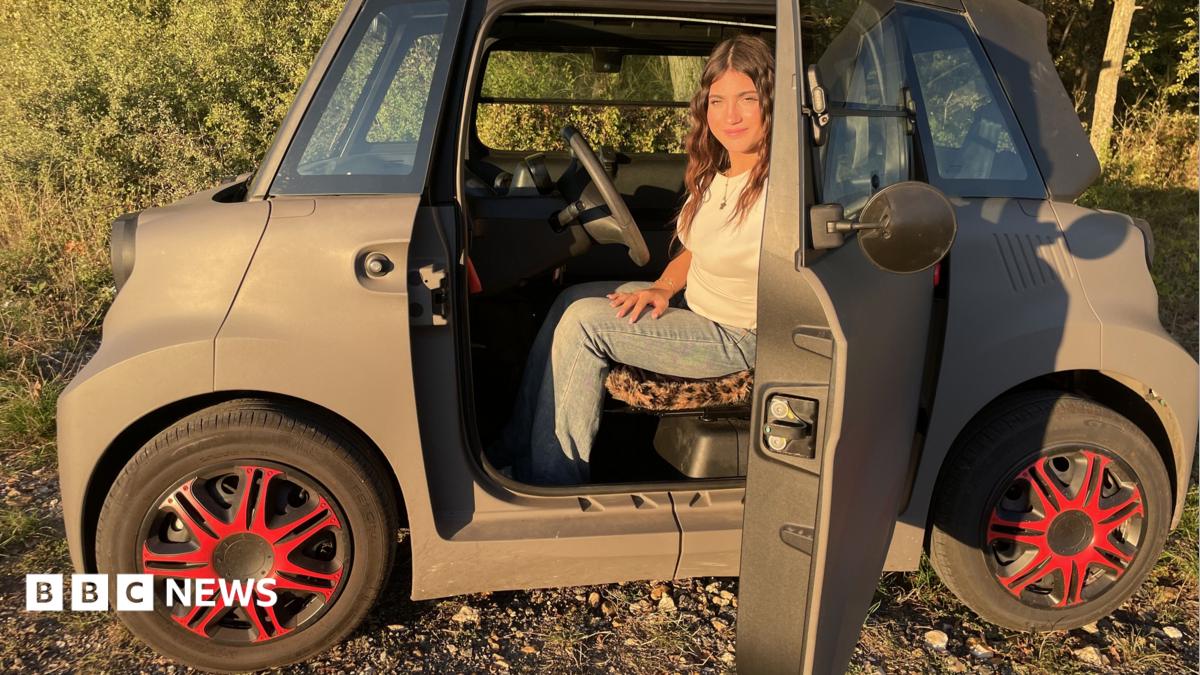
In rural France, license-free microcars provide essential mobility for people who cannot drive conventional vehicles, but their limited speed can create serious safety concerns on faster roads. Daniel Lapré, a 77-year-old resident who drives a microcar made by French market leader Isam, says the vehicles are affordable and practical, yet vulnerable when larger vehicles approach from behind.
A practical alternative in rural France
Lapré and his wife moved from Paris to a rural village two years ago. The Canadian national lost his right to drive after failing to convert his foreign license to a French one in time. In Paris, this was not a major problem because he could rely on public transportation. In the countryside, however, public transport was not a viable option.
“We tried to make a living in taxis, but in the end it was a huge failure. Then we heard about how you can drive without a license. That was the exact solution to our problem. It’s cheap, it costs less to run, there’s basically no administrative formalities, and you can get insurance.”
Lapré said he even stopped to allow the car behind him to pass. Despite the convenience of his small vehicle, he does not consider it safe.
“It’s just a tin can on wheels, right? I mean, you’re not going to drive fast, but other people might be.”
Speed differences create risks
License-free microcars are prohibited on expressways. Even on moderately fast highways, however, their low speeds can create problems because they travel much more slowly than most other vehicles.
“You drive on the national highway knowing the risks. I did it once, and I won’t do it again. On that road (speed limit is 110 km/h), everyone, even the biggest trucks, will overtake you. And it’s scary because they’re coming at you from behind at breakneck speed,” Lapré said.
Electric models are changing the market
At 77, Lapré fits the long-established customer profile for these vehicles: older people living in rural areas. The market previously included many drivers whose licenses had been revoked for drunk-driving violations.
However, the launch of the electric Citroën Ami in 2020 changed both the customer profile and the products available.
Marie-Laure Nivot, a market analyst at AAA Data, said: “The launch of Ami marks the beginning of a transformation in this sector, with more and more electric models coming onto the market. By 2026, more than 67% of new unlicensed cars will be electric.”
Source: www.bbc.co.uk