


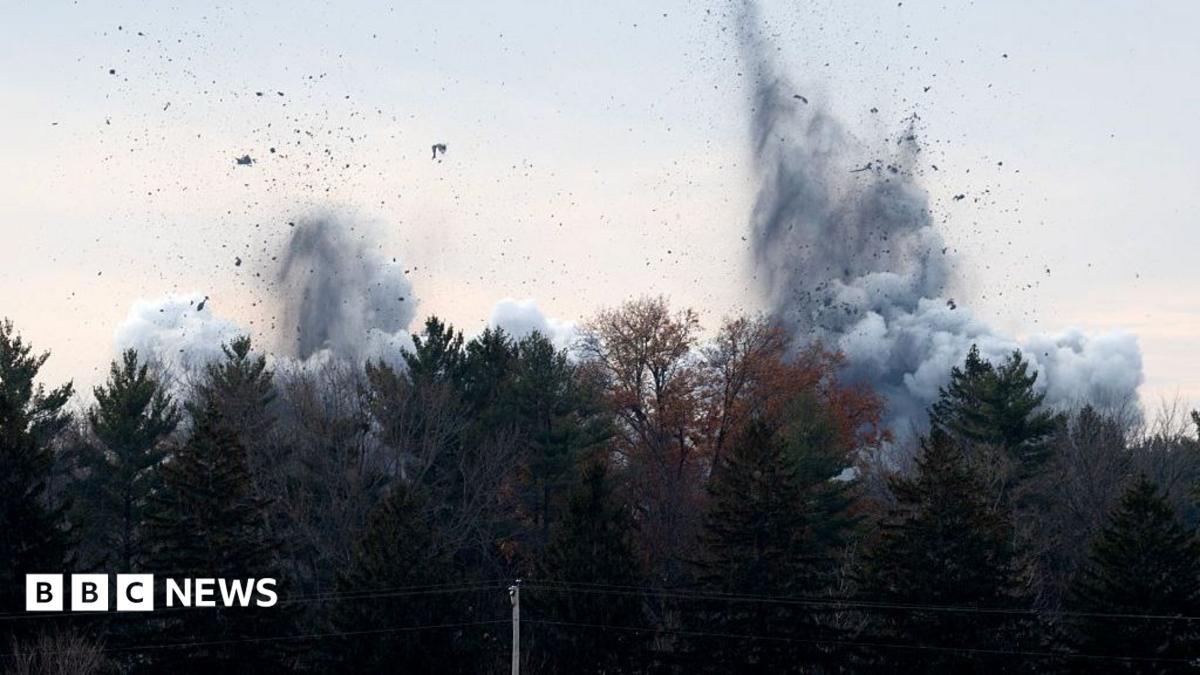
Days after the U.S. military detonated nearly five tons of toxic explosives in Iowa, the Environmental Protection Agency said it had found no elevated lead levels in local public drinking water. The result followed widespread concern about possible air and water pollution from the Nov. 25 explosion involving lead azide, a volatile compound reportedly capable of exploding spontaneously.
EPA finds no lead in initial drinking-water samples
The EPA said it detected no lead in 38 samples collected from public water supplies after the explosion. The agency tested “samples of completed treated drinking water and untreated water at the water intake.”
The agency said it would continue releasing results as additional testing is completed. “We will continue to provide updates in the coming days as new research results on over 3,200 air, soil, dust, and water samples (collected before and after the explosion) are quickly returned and verified,” the EPA wrote in a post on X.
A team of 300 employees and contractors spent 30 consecutive hours after the explosion collecting samples and monitoring for airborne lead.
Testing covered three states
Before the detonation, the EPA sampled 35 drinking-water sources across Iowa, Illinois and Missouri to “establish baselines.”
The explosion plan was halted several times before the detonation after public opposition and legal challenges raised concerns about possible health and environmental effects.
Source: www.bbc.co.uk