


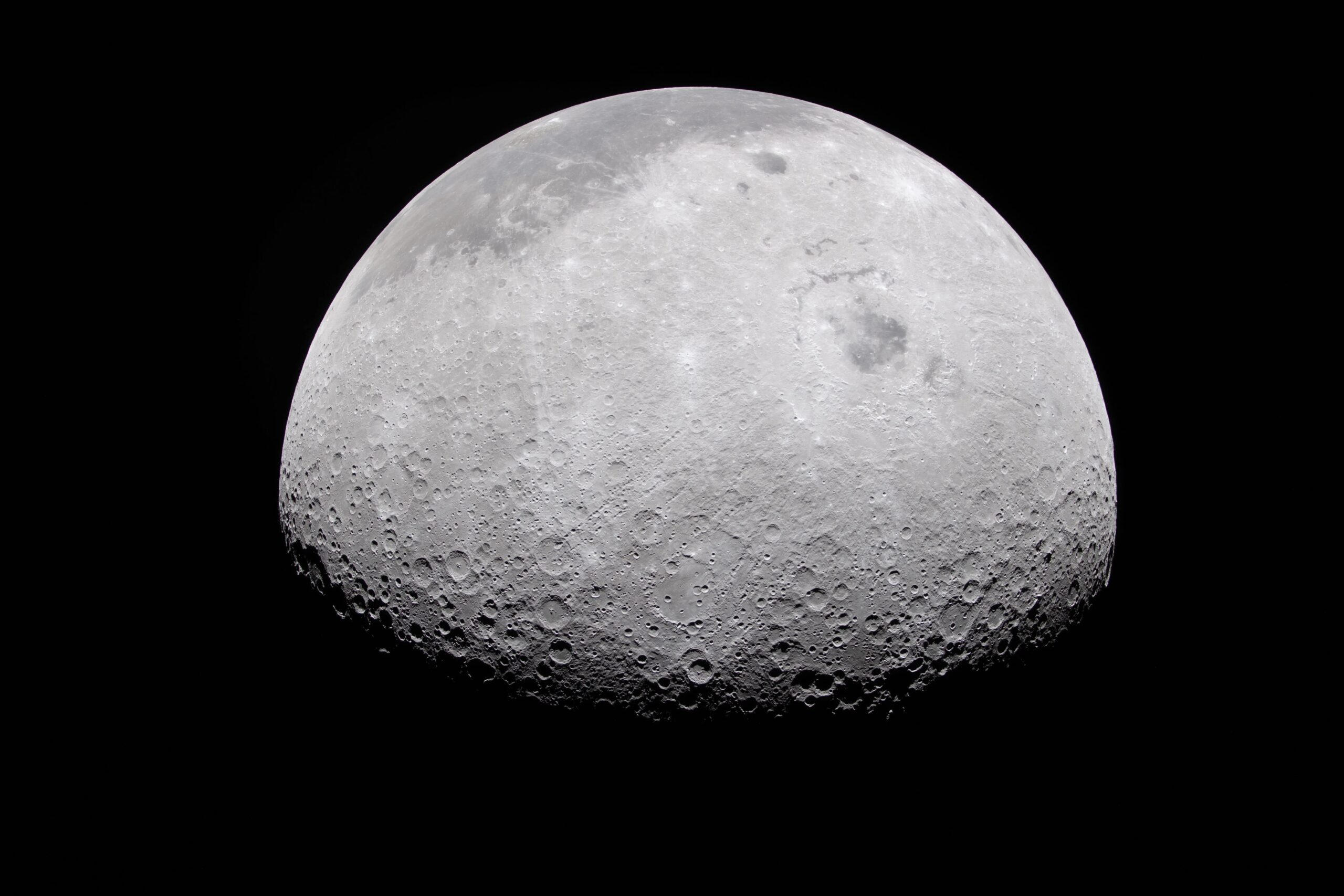
NASA and SpaceX are tracking a used SpaceX Falcon 9 upper stage from a commercial lunar mission that is expected to impact the Moon on Wednesday, Aug. 5, near the Einstein and Bell craters. The planned lunar impact poses no risk to Earth. NASA scientists will study the event to collect valuable lunar data and improve methods for tracking objects in space.
On Jan. 15, 2025, SpaceX launched a Falcon 9 rocket that successfully delivered Firefly Aerospace’s Blue Ghost 1 lunar lander to the Moon through NASA’s CLPS (Commercial Lunar Payload Services) initiative. Solar activity and gravitational forces later altered the rocket stage’s trajectory, resulting in its unplanned return to the lunar surface. NASA and SpaceX continue to coordinate and monitor the Falcon 9 upper stage’s flight path.
Independent astronomers initially calculated the rocket stage’s trajectory using publicly available data. NASA’s Center for Near Earth Object Studies at the agency’s Jet Propulsion Laboratory in Southern California later confirmed that the Falcon 9 upper stage has a 100% probability of impacting the Moon. NASA will continue tracking the object as part of its space-monitoring and training operations.
Because the Moon has no atmosphere to slow incoming objects, meteoroids strike its surface every day. Human-made spacecraft impacts are much less common, but they do occur. The Falcon 9 upper stage is expected to create a crater approximately 60 feet wide and 12 feet deep, sending lunar dust and rock outward as ejecta. For comparison, a meteoroid carrying the same amount of energy impacts the Moon approximately every six days. Studying this artificial lunar impact will help scientists understand how ejecta plumes behave, learn more about lunar geology, and improve models used to plan future exploration and science missions.
The Moon impact will not be visible to the naked eye from Earth, but NASA will try to observe it in real time. The agency’s Meteoroid Environments Office at Marshall Space Flight Center in Huntsville, Alabama, will use ground-based telescopes to capture images of the impact. Weather, lunar illumination, and observing conditions could make the event difficult to see.
NASA’s Lunar Reconnaissance Orbiter and the ShadowCam instrument aboard South Korea’s Korea Pathfinder Lunar Orbiter will also look for opportunities to image the impact site before and after the Falcon 9 stage reaches the Moon. The availability of images will depend on lighting, spacecraft position, and orbital timing, and some data may take several days to arrive. These observations will help researchers better understand artificial impacts and their implications for future lunar exploration.
Although this Falcon 9 impact was not planned, disposing of upper rocket stages on the Moon is considered a technically accepted and safe option. For missions operating in low lunar orbit, a controlled lunar impact can sometimes be the only practical way to dispose of a spacecraft or rocket stage. Many mission operators choose controlled impacts because they provide predictable and trackable end-of-life outcomes.
NASA remains committed to responsible space debris mitigation and safe disposal practices. These efforts help protect Earth, the orbital environment, and other planetary bodies while supporting scientific discoveries that expand humanity’s understanding of the solar system.
Source: www.nasa.gov