


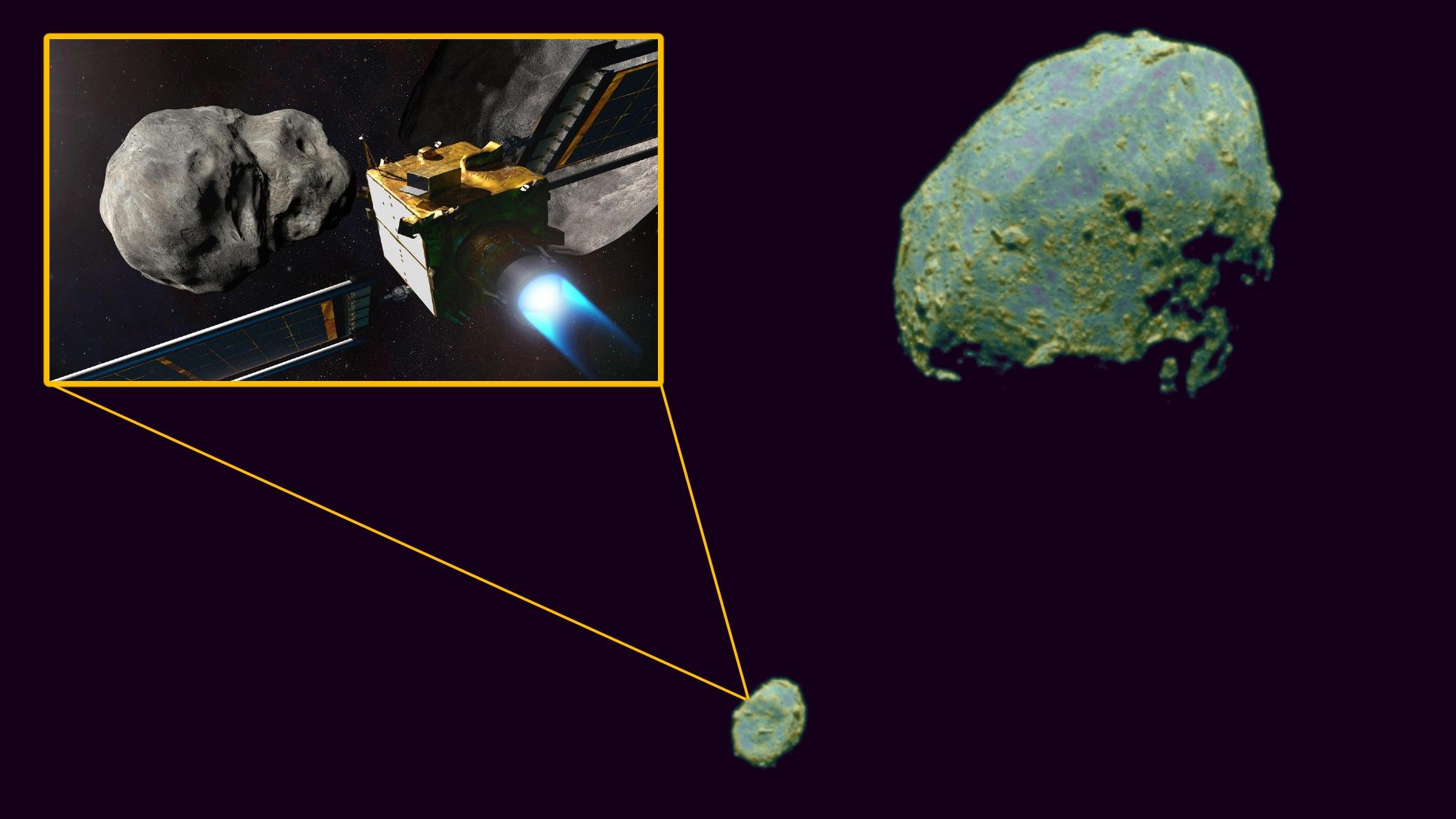
New images from the European Space Agency’s Hera spacecraft show how NASA’s Double Asteroid Redirection Test (DART) dramatically reshaped the asteroid Dimorphos. The spacecraft’s 2022 impact created a stadium-sized crater, left the roughly 500-foot (150-meter) asteroid with a flattened surface, and scattered hundreds of previously unknown rocks around the Dimorphos–Didymos system.
Hera reveals DART’s impact
In September 2022, humanity’s first asteroid-deflection test ended when NASA’s DART spacecraft slammed into Dimorphos, a rocky body roughly the size of a skyscraper. The spacecraft struck the asteroid at about 14,000 miles per hour (22,500 kilometers per hour), producing a bright flash and ejecting debris into space. The impact was observed from millions of miles away by the Hubble and James Webb space telescopes.
The DART mission successfully shortened Dimorphos’ orbit around its larger companion, Didymos, by an astonishing 33 minutes. However, no other spacecraft was nearby to observe the impact at close range, leaving scientists with limited information about how the collision changed Dimorphos itself.
On Wednesday, November 25, the ESA released the first close-up images of the asteroid pair taken by Hera. The spacecraft is currently traveling in a rectangular orbit around the system and photographed Dimorphos and Didymos from about 15 miles (24 kilometers) away.
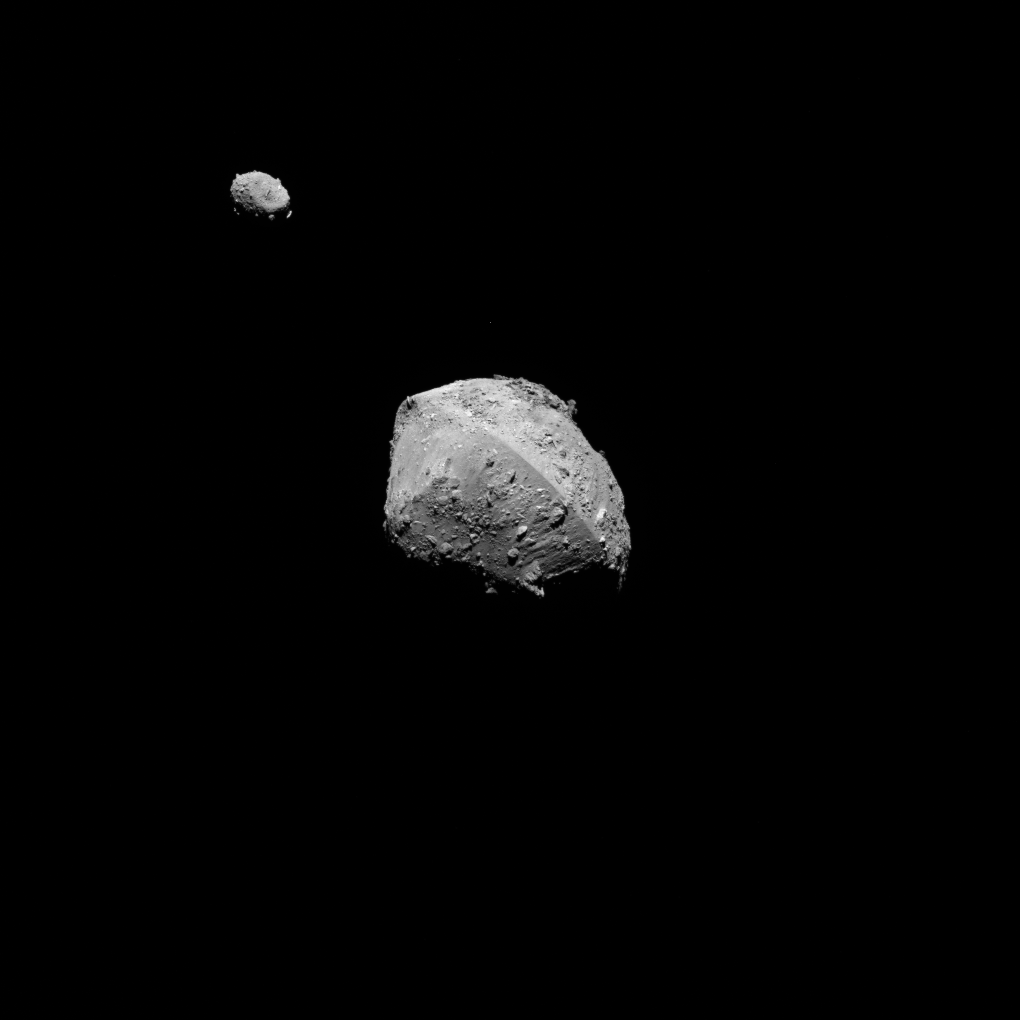
Hera’s observations indicate that DART completely altered Dimorphos’ visible surface. About half of the approximately 500-foot-wide (150-meter-wide) asteroid was flattened by the impact crater, which ESA compared in size to a sports stadium.
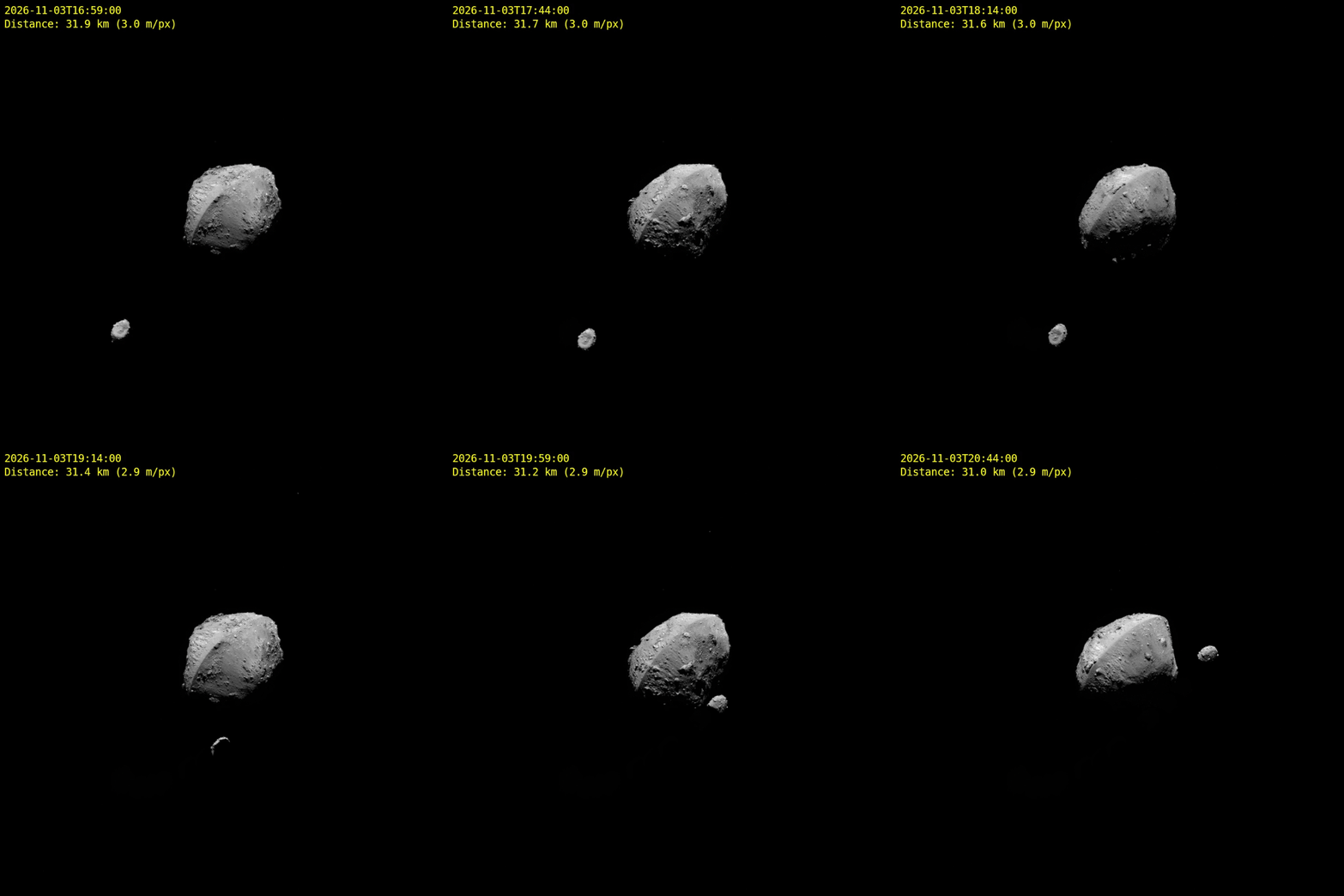
Time-lapse observations also show Dimorphos spinning chaotically around Didymos. Scientists attribute this behavior to the asteroid’s new, uneven shape and to the forces generated by the impact.
An unexplained object in the crater
When Hera’s cameras zoomed in on the impact site, they revealed a strange, cigar-shaped structure at the center of the crater. Mission scientists do not yet know what the tubular object is. They hope to examine it more closely when Hera approaches the asteroid pair to within about 1.2 miles (2 kilometers) in December.
Hundreds of rocks surround the asteroid pair
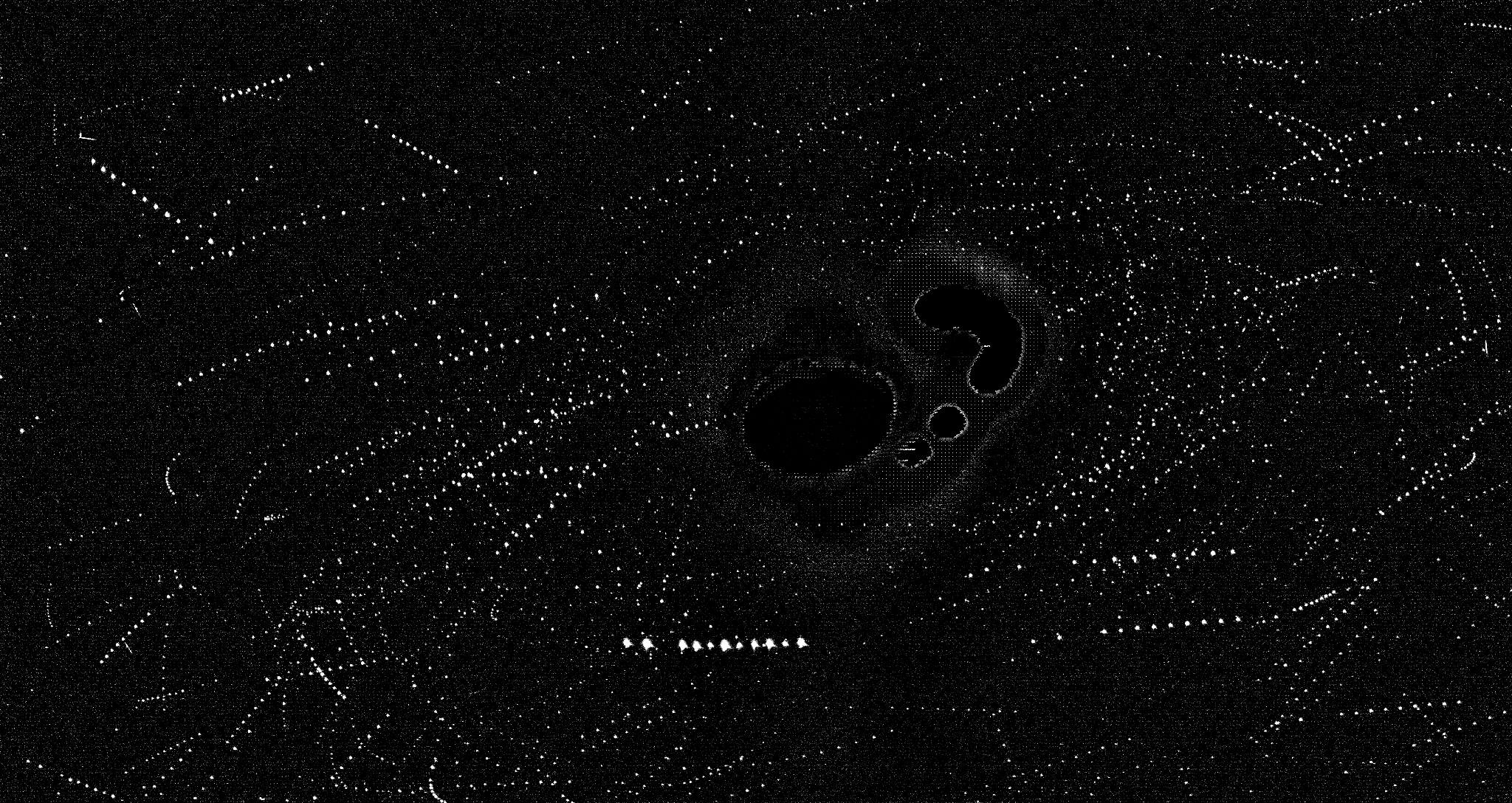
Hera also surveyed the space around the asteroid pair and found hundreds of previously unknown rocks, most only a few feet in diameter. Some of these ejected rocks may have produced many of the new craters observed on Dimorphos and Didymos after the DART impact.
ESA Hera mission scientists called the discovery a “big surprise.” Mission controllers will need to account for the swarm of rocks as Hera moves into the next stage of its mission.
Michael Kueppers, an ESA Hera mission scientist, is among the researchers involved in interpreting the observations.
More probes will investigate Dimorphos
After Hera moves closer to the asteroid pair in December, it will deploy two additional probes: Juventas and the smaller Milani CubeSat. The probes will turn the mission into a three-part investigation.
According to ESA, Juventas will use low-frequency radar to study Dimorphos’ interior, while Milani will analyze the composition of nearby dust and surface materials. The best images of the asteroid system have yet to be released, because both probes are expected to fly even closer to Dimorphos and Didymos than Hera.
The observations will help scientists determine exactly how effective DART’s impact was and under what conditions similar techniques could be used to protect Earth from potentially dangerous asteroids in the future.
Source: www.livescience.com