


Close Menu
HitechubHitechub
    What's Hot
    Technology

    Windows 12 requires more powerful hardware

    Technology

    The end of passwords

    Science

    How Land Plants Transform River Ecosystems – Cyworthy

    Important Pages:
    • About Us
    • Privacy Policy
    • Terms & Conditions
    Facebook X (Twitter) Instagram Pinterest
    Facebook X (Twitter) Instagram
    HitechubHitechub
    Friday, June 5
    • Technology
      1. AI
      2. Gadgets
      3. View All

      This is the most popular CEO in the world

      Sectors in which “Chat-GPT” is most often used

      AI Pioneer Expresses Concern About Potential for AI to Surpass Humanity

      Artificial intelligence has begun to “swallow” professions

      What’s new in Android 14

      Europeans have about 700 million old mobile phones in their drawers

      Here’s how you can tell if your phone is being tapped

      “Sneaker X” – computer case in the shape of a sneaker

      Russian Gamers Unite to Prevent Nuclear War: Join the Fight Online

      Challenges of Space Travel: Why Journeying to Space is So Difficult

      NASA Astronaut Casts Historic Vote from Space

      Discover the Future of Comfort: What If You Could Wear a Chair?

    • Science
      1. Space
      2. Wheels
      3. View All

      Galaxies in the universe are growing more slowly than they should

      “Espace” presented the new lander “Apex 1.0”

      The largest asteroid sample ever collected has arrived on Earth

      (VIDEO) Incredible flight of the Parker Solar Probe

      Toyota wants to make a new generation battery with a range of up to 1,200 km

      Meet Toyota’s lunar “baby” that could make exploring the Moon easier

      Microlino – Is this the perfect city car?

      Alfa Romeo 4C gets an electric successor

      Neil deGrasse Tyson Discusses New Book: Exploring Aliens on Earth and the Fascinating Science of Wormholes

      Red Stripes in Welsh Caves: Britain’s Oldest Art Finally Recognized After Natural Phenomenon Dismissal

      Timeless Math Memes That Have Captivated Mathematicians for Over a Century

      Exploring Distant Galaxies: Uncovering New Planets – Sciworthy

    HitechubHitechub
    Home » As Africa Splits in Two, Magma Surge Accelerates – Insights from Sciworthy
    Science

    As Africa Splits in Two, Magma Surge Accelerates – Insights from Sciworthy

    Share Facebook Twitter Pinterest WhatsApp
    Share
    Facebook Twitter LinkedIn Pinterest WhatsApp

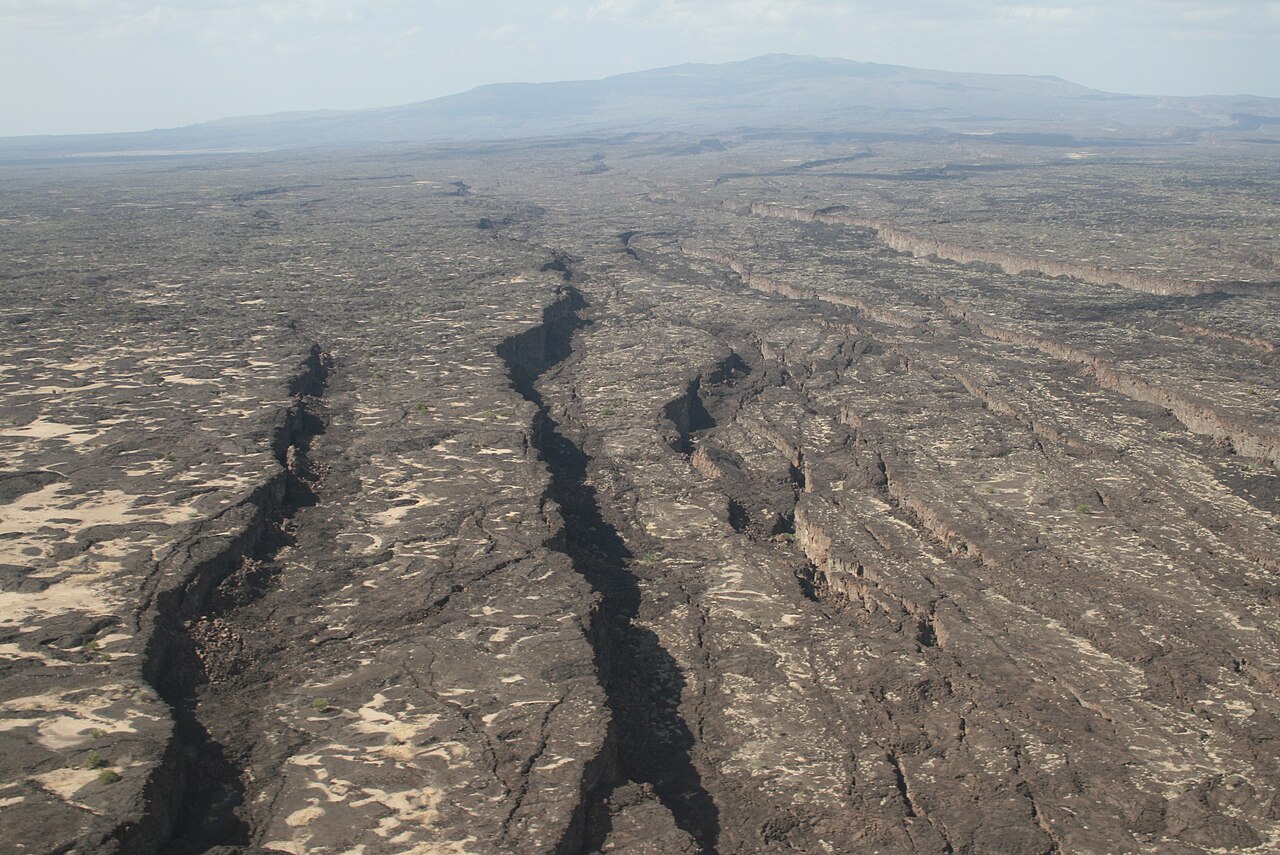
    The African continent is divided by tectonic plates in the heart of Ethiopia. Recent investigations by geophysicists have significantly enhanced our understanding of tectonic plate separation. Research indicates that continents initiated their break-up when the crust and upper mantle, known as the lithosphere, began to exhibit cracks and misalignments. Magma from deep within the Earth’s interior ascends through these fractures, resulting in volcanic formations. While scientists are aware that volcanoes emerge in continental rift areas, the pace of their formation remains uncertain, complicating assessments of volcanic hazards in these zones.

    Researchers, spearheaded by Kevin Wong, sought to address this mystery by examining minerals formed during magma cooling, specifically focusing on olivine. They analyzed 72 olivine crystals sourced from the Bok and Jiwei volcanoes within Africa’s Main Ethiopian Rift (MER) zone, with sizes ranging from 1 to 4 millimeters (0.04 to 0.16 inches). The research revealed that the lithosphere in this region remains approximately 35-40 kilometers (21-25 miles) thick, suggesting that the MER is at an intermediate stage in continental separation. This provides a unique platform for studying the transition between tectonic deformation and magmatic fractures during the separation process.

    Wong and his team analyzed olivine due to its position as one of the earliest minerals to crystallize from magma, continuing to grow as the magma rises and cools. As the magma ascends, its composition shifts, generating distinct chemical “zones” within the crystals, akin to tree rings. Variations in temperature and magma composition cause different elements, such as magnesium and iron, to diffuse into and out of the crystals at varying rates. This allows scientists to model chemical zones in olivine crystals and determine the magma’s ascent rate from the upper mantle to the surface.

    Wong and his team studied olivine crystals from the MER volcanic field using high-magnification imaging and chemical analysis via an electronic microprobe. They conducted mappings at 10 to 15 points, spaced 5 to 15 microns apart (approximately 10% the thickness of a human hair) along a cross-section from the inner core to the outer edge of each crystal.

    They identified two distinct populations of olivine crystals. The first featured a normal zone crystal with a magnesium-rich inner core, while the second showcased a reverse zone crystal with a magnesium-poor core. The researchers clarified that freshly formed magma deep within the Earth typically contains a higher concentration of magnesium compared to iron. The magnesium-rich zone presents a distinct boundary with the magnesium-poor zone, yet this boundary can become indistinct due to diffusion. Given that diffusion smoothes these boundaries over time at a known rate, researchers leveraged this “fuzziness” to ascertain the rate at which the crystals equilibrated with the surrounding magma.

    Employing a numerical model, the researchers estimated the diffusion rates of magnesium and iron across chemical boundaries at varying temperatures and magma chemistries. They compared thousands of simulated diffusion profiles with their measured olivine diffusion profiles. Through this iterative process, they projected that during the Bok and Jiwei eruptions, the crystals ascended from deep within the Earth and integrated into the surrounding magma for an average of 40 and 17 days, respectively. They additionally validated these figures using a growth-diffusion model that replicates natural crystal behavior, yielding an average ascent time of about 27 days and better aligning with the observed crystal band pattern.

    From these models, researchers concluded that intermediate-stage rifting events occur on surprisingly short time scales. On average, magma ascends up to 40 kilometers (25 miles) from the Earth’s depths to the surface within approximately one calendar month. This timeframe aligns more closely with human perceptions than geological ones. They proposed that this rapid ascent is likely due to a sophisticated magmatic plumbing system present within the lithosphere before significant thinning occurs. However, the research also indicated that the timescale of magma ascension lies within a broader range than ideal for disaster prediction and mitigation.


    Post views:
    1,432

    Source: sciworthy.com

    Share. Facebook Twitter Pinterest LinkedIn WhatsApp
    Previous ArticleBoost Your Mood Daily with a Glass of Fruit Juice: Study Insights
    Next Article Exploring Distant Galaxies: Uncovering New Planets – Sciworthy

    Related Posts

    Science

    Neil deGrasse Tyson Discusses New Book: Exploring Aliens on Earth and the Fascinating Science of Wormholes

    Science

    Red Stripes in Welsh Caves: Britain’s Oldest Art Finally Recognized After Natural Phenomenon Dismissal

    Science

    Timeless Math Memes That Have Captivated Mathematicians for Over a Century

    Science

    Exploring Distant Galaxies: Uncovering New Planets – Sciworthy

    Science

    Boost Your Mood Daily with a Glass of Fruit Juice: Study Insights

    Science

    Ancient Human Settlement Unearthed at 2,000 Meters in the Mountains: Experts in Awe

    Science

    Transforming Polystyrene with Sunlight and Sulfur: Innovative Upcycling Techniques – Sciworthy

    Science

    Is the Arctic Ocean Mitigating or Intensifying Global Warming? Insights from Cyworthy

    Add A Comment
    Leave A Reply Cancel Reply

    Stay In Touch
    • Facebook
    • Twitter
    • Instagram
    • Pinterest
    Top Picks
    Science

    How Plants Altered Magma Chemistry: Insights from Sciworthy

    Approximately 400 million years ago, vascular land plants with advanced venous systems for transporting water…

    Astronomers Discover Clearest Evidence of an Exoplanet’s Magnetic Field Yet

    Coin tossing is not as perfectly fair as it is thought to be

    Revealing the Truth: Stonehenge’s Altar Stones Likely Not Transported by Glaciers

    Unusual planet with no atmosphere discovered

    Most Popular
    Science

    Why Restoring Pluto’s Planet Status Isn’t as Simple as It Seems

    Science

    Boost Your Brainpower: Essential Tips for Strengthening Your Cognitive Health in Middle Age

    Categories
    • AI (13)
    • Gadgets (10)
    • Science (70)
    • Space (9)
    • Technology (37)
    • Wheels (9)
    Our Picks
    Technology

    This is the future of processors!

    Science

    Ancient Human Settlement Unearthed at 2,000 Meters in the Mountains: Experts in Awe

    © 2026 Hitechub.
    • Home
    • About Us
    • Privacy Policy
    • Terms & Conditions

    Type above and press Enter to search. Press Esc to cancel.

    We are using cookies to give you the best experience on our website.

    You can find out more about which cookies we are using or switch them off in .

    Ad Blocker Enabled!
    Ad Blocker Enabled!
    Our website is made possible by displaying online advertisements to our visitors. Please support us by disabling your Ad Blocker.
    Go to mobile version
    Hitechub
    Powered by  GDPR Cookie Compliance
    Privacy Overview

    This website uses cookies so that we can provide you with the best user experience possible. Cookie information is stored in your browser and performs functions such as recognising you when you return to our website and helping our team to understand which sections of the website you find most interesting and useful.

    Strictly Necessary Cookies

    Strictly Necessary Cookie should be enabled at all times so that we can save your preferences for cookie settings.