


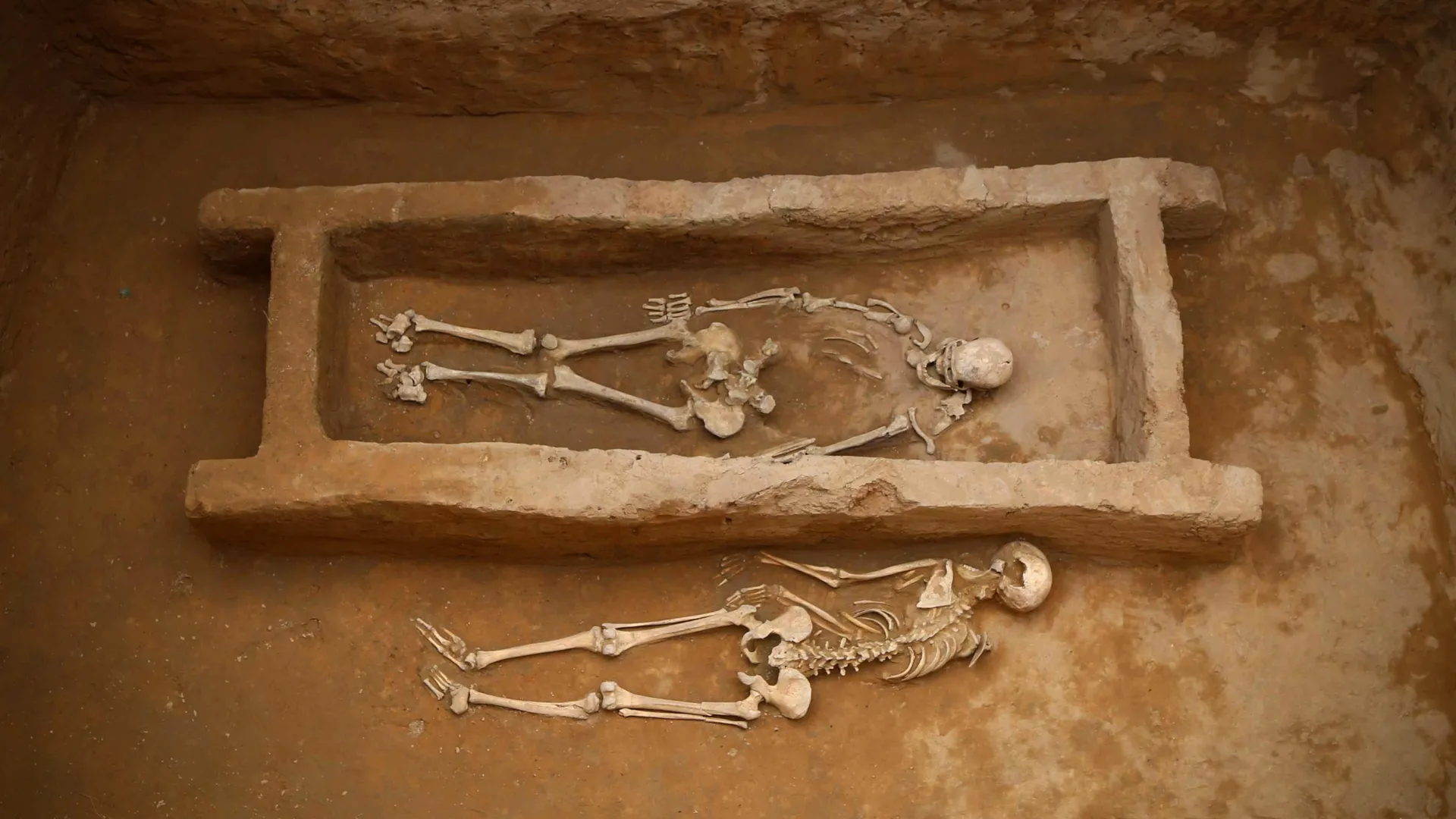
Ancient DNA is uncovering fascinating insights into the inhabitants of Shimao, a significant Late Neolithic settlement in China. Recent survey results in Nature highlight the origins, family ties, and social structures of these ancient populations. Findings reveal genetic connections to communities further south and suggest that mass burials linked to human sacrifice predominantly involved men.
The research was spearheaded by Professor Qiaomei Fu from the Institute of Vertebrate Paleontology and Paleoanthropology (IVPP) at the Chinese Academy of Sciences, with invaluable contributions from the Shaanxi Provincial Academy of Archeology and other institutions.
Over 13 years, the research team performed a comprehensive, high-resolution analysis of nuclear DNA from 169 ancient hominin samples, comprising 144 unrelated individuals. These remains were excavated from Shimao, nearby ruins, and various sites across southern Shanxi province.
A Vast Walled Village in Ancient China
Shimao, dating back approximately 4200 to 3700 years, is situated in northern Shaanxi province, covering around 4 square kilometers. This massive stone-walled settlement was organized into functional areas, indicating advanced planning.
Archaeological evidence suggests that Shimao boasted a complex hierarchical society with a structured political and social system. The site also reveals extensive ritual activities, including human sacrifices.
Local Routes and Remote Connections
By comparing newly sequenced genomes with previously published ancient DNA from various Chinese populations, researchers found that most Shimao residents descended from local inhabitants dating back 1,000 years.
The genomic analysis further unveiled cultural and genetic connections to the Yangshao culture, a prominent Neolithic civilization that flourished across the Loess Plateau near the Yellow River. These insights are crucial for understanding the origins and societal development of the Shimao people.
Additionally, Shimao’s population maintained close ties with communities linked to the Taocang culture in southern Shanxi, Yuming-associated groups from the steppe, and rice-farming societies to the south. Such relationships illustrate widespread interaction among prehistoric agricultural and pastoral communities.
Ancient DNA Reconstructs the Shimao Family
About 80 human bones were recovered near Shimao’s east gate, marking the excavation of the largest collection of human remains in China before the late Shang period.
Genetic analysis enabled the researchers to reconstruct a family tree spanning up to four generations, suggesting that Shimao’s societal hierarchy operated through a patrilineal lineage, where ancestry and social status were traced through males. The system was patriarchal, with women commonly relocating to live near their male partners’ families.
These patterns provide valuable perspectives on how familial relationships influenced authority, inheritance, and social standing within ancient settlements.
Male Sacrifice at the East Gate of Shimao
Additionally, findings challenge previous beliefs about the victims near Shimao’s eastern gate. Earlier interpretations posited that most victims were female, yet genetic analysis revealed that nine out of ten examined burials were male.
Distinct patterns emerged across various settlement areas: male victims were concentrated near the East Gate, while female remains were found in elite cemeteries like Huangchengtai and Hanjia Gedan.
This separation indicates that sacrificial practices at Shimao were meticulously organized, with men and women possibly chosen for different rituals based on the purposes and locations of the ceremonies.
New Clues About the Rise of Early States
Genetic findings suggest that Shimao’s population evolved primarily from local communities with Yangshao culture ancestry in northern Shaanxi, indicating over 1,000 years of cultural and genetic continuity in the region.
Moreover, the connections to distant communities signify that Shimao was not isolated; its people engaged in a broad network linking agricultural and pastoral societies throughout northern, central, and southern China.
This study provides the first direct genetic evidence aiding in the investigation of power inheritance and the formation of social classes at Shimao, a site linked to the Gozoku. The insights gleaned can contribute to a deeper understanding of the family structures and political systems pivotal to the rise of early states in East Asia.
Source: www.sciencedaily.com