


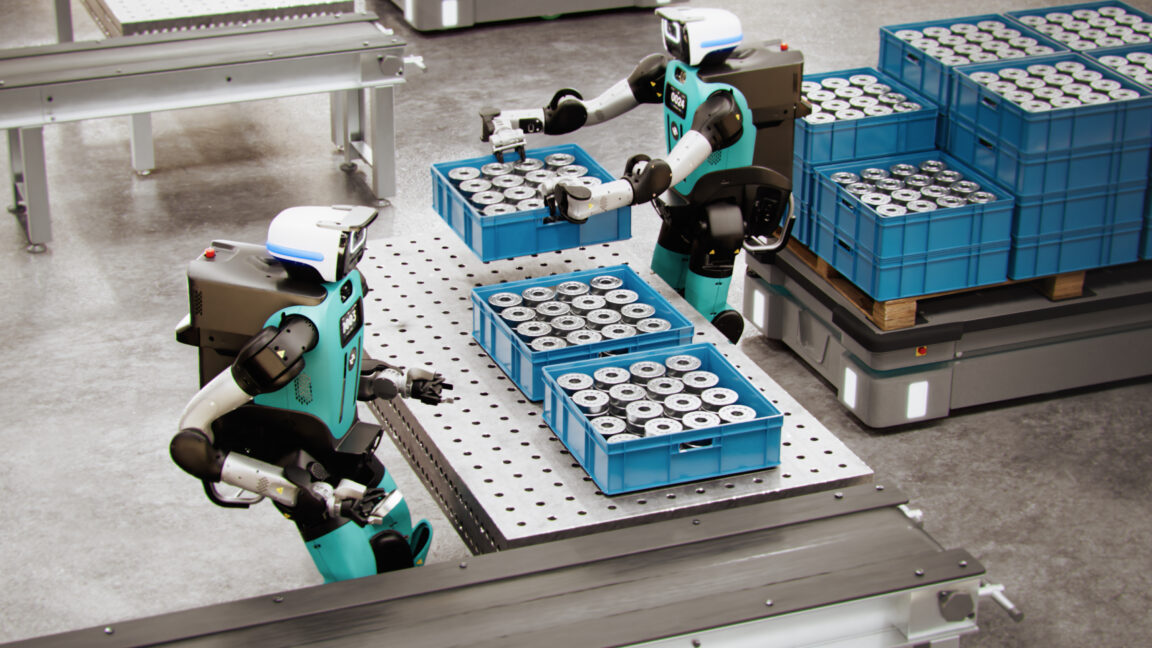
Agility Robotics is continuing to invest heavily in humanoid robot research, development, manufacturing, software, and artificial intelligence as it prepares to expand customer deployments of its Digit robot. The company sees a potentially large market for machines that can fill manual-labor roles, but its filings also highlight growing competition, workplace safety concerns, regulatory uncertainty, and cybersecurity risks.
Future risks and prospects
Agility said it “continues to devote substantially all of its resources to the research, development and commercialization of its humanoid robots” while expanding its RoboFab manufacturing facility.
On October 21, the company announced plans to build a new facility in Pittsburgh, Pennsylvania. The site is intended to support the introduction of Digit robots and further development of the robot’s software and AI.
Beyond the challenges of building its own business, Agility’s financial disclosures warn that “competition in the humanoid and robotics market is rapidly increasing, with well-funded entrants such as Boston Dynamics, Tesla, Uptronic, Figure AI, 1X Technologies, Sanctuary AI, Hexagon, and Neura Robotics, among others, actively developing competing humanoid systems.”
Agility’s S-4 filings identify advantages that some of these companies bring to the market, including “significantly increased brand recognition, customer relationships, financial, technical, manufacturing, and other resources.” The filings also list risks involving the uncertain performance of AI-driven robots in real-world conditions, safety when robots share workspaces with people, regulatory changes, and cybersecurity threats.
A market for routine manual work
Agility co-founder Hurst nevertheless believes there is a potentially large market consisting of “millions of unfilled roles” involving manual labor that typically requires high-cost but relatively unskilled human workers.
Within the next year, Hurst predicts that several of Agility’s customers will share videos of Digit robots “just doing their jobs so boringly that all the excitement and hype and novelty of humanoids wears off.”
“It’s going to be a little bit like the early days of the auto market, and different companies will have different niches. Some companies will make the Ford F-150, some companies will make the Mazda Miata,” Hurst told Ars. “There will be a lot of different niches for a human-centric multi-purpose machine like this.”
General-purpose robots remain a longer-term goal
Although Hurst sees Agility’s eventual path leading toward general-purpose autonomous robots, he has consistently rejected the idea that companies will immediately deploy humanoids in risky, unstructured environments such as people’s homes.
“Number 5 is not going to come into the living room and do the dishes or anything like that,” he said. “Nobody does that.”
Whatever happens with Agility’s efforts over the next few years, the company’s progress will offer a useful indication of the broader trajectory of the humanoid robot industry.
Source: arstechnica.com