


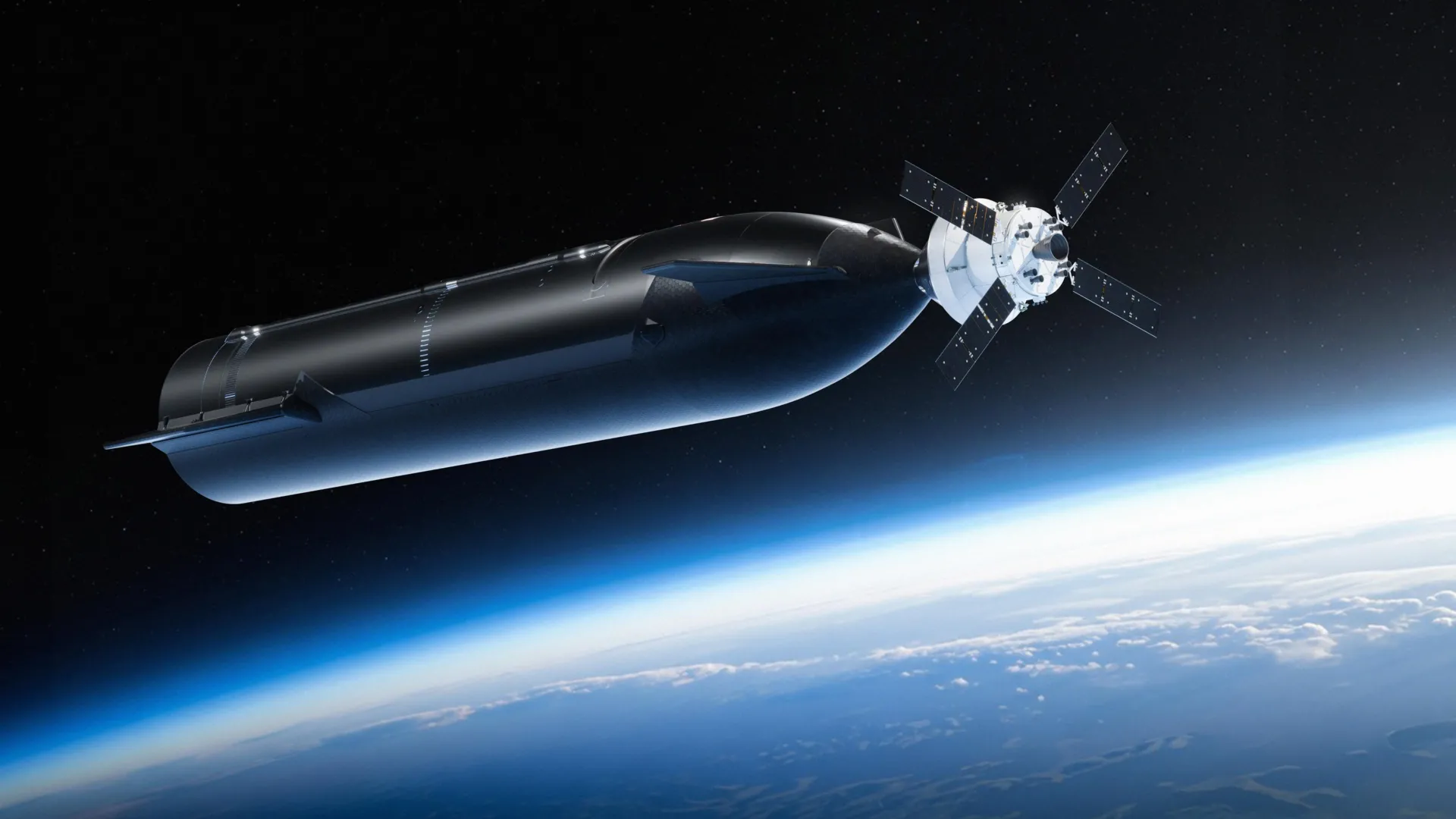
NASA is gearing up for a significant milestone: a future astronaut landing on the Moon, with a crucial orbital rehearsal scheduled for 2027. During the Artemis III demonstration mission, space crews and Earth-based teams will simulate rendezvous and docking operations involving the Orion spacecraft and a commercially developed lunar lander.
The data collected during Artemis III, as well as insights from future unmanned lunar demonstrations, will enhance astronaut safety and mitigate risks prior to manned moon landings, projected to commence in 2028.
Introducing Civilian Landing Craft for Artemis III
NASA has joined forces with SpaceX and Blue Origin to create a human landing system capable of transporting astronauts between lunar orbit and the Moon’s surface.
For Artemis III, these companies will launch a test version, known as a test lander, in preparation for subsequent crewed missions. A commercial rocket will carry two lander prototypes into space, while Artemis III astronauts travel separately to low Earth orbit aboard Orion, launched on NASA’s Space Launch System (SLS) rocket.
Advancing Hardware for Manned Lunar Missions
NASA has collaborated closely with both human landing system providers to outline the objectives and technical specifications for Artemis III. As the mission approaches, SpaceX and Blue Origin are fine-tuning their plans based on the available hardware and capabilities of each spacecraft.
SpaceX aims to fly Version 3 of its Starship design, forming the backbone for the future Starship HLS. Meanwhile, Blue Origin is set to test crew cabins essential for human landing systems. This mission will pave the way for valuable lessons applicable to both unmanned and manned flights to the Moon.
“Each human landing system provider is taking a distinct approach to the Artemis III mission,” stated Steve Creech, program manager for the Human Landing System Program at NASA’s Marshall Space Flight Center. “Ultimately, SpaceX and Blue Origin are presenting a bold set of objectives designed to complement upcoming unmanned lunar demonstrations, enhancing our understanding and confidence in the spacecraft and launch vehicles before manned landings. The lander prototype design will inform future developments and continue to evolve over the next year.”
Blue Origin Prepares Manned Cabin
Blue Origin’s Blue Moon test lander draws upon the architecture of its Mark 2 manned lander, featuring crucial avionics, flight software, and control systems necessary for future demonstrations of manned lunar missions.
Up to two Artemis III astronauts, donning orange Orion Crew Survival System suits, will enter the hatch and board the Blue Origin test lander. The final crewed version will incorporate many of the same systems, including the Environmental Control Life Support System (ECLSS), crew cabin, and avionics.
The Blue Origin spacecraft will also transport an instrumented lunar spacesuit mass simulator, akin to the suit “Mounikin” mannequin that flew aboard Orion during the Artemis I mission. This low-fidelity simulator will relay real-time data regarding conditions inside the Blue Moon cabin.
Docking Procedure with Orion
SpaceX’s test article, based on Starship version 3, is currently under construction and testing. The docking system will be mounted on the nose of the spacecraft at a height of 52 meters (171 feet).
This configuration will enable NASA and SpaceX to evaluate how the Orion and Starship test landers function as a unified spacecraft. The team is also selecting tests related to communications and spacecraft control. Artemis III astronauts will remain within Orion and will not board the Starship prototype.
Rapid Launch of Three Powerful Rockets
NASA, SpaceX, and Blue Origin will launch three of the Earth’s most powerful rockets in quick succession, putting strain on launch staff, ground processing systems, facilities, control centers, communications networks, and data sharing across multiple U.S. locations.
Orion will conduct two distinct rendezvous and docking sequences, one for each lander prototype. Upon completion, the Artemis III astronauts will return to Earth aboard Orion and safely splash down in the ocean.
“Artemis III will be a meticulously choreographed operation, featuring rigorous launch sequences across multiple launch pads and equally demanding mission operations for ground and flight teams, making it one of the most complex missions NASA has ever pursued,” said Jeremy Parsons, Artemis program manager. “This demonstration will set the stage for our next significant leap forward. NASA’s expertise in systems engineering, integration, launch, and mission operations in low Earth orbit will bring this mission to fruition.”
Rehearsing Future Dual Launch Missions
For subsequent crewed missions to the Moon, NASA and a commercial partner will embrace a “dual launch campaign.” The lunar module will first reach orbit, launched via SLS, awaiting astronauts arriving aboard Orion.
By sending three rockets into space during Artemis III, NASA and its partners gain a unique opportunity to fine-tune launch preparation and operational timing essential for future mission structures.
Blue Origin’s test lander is scheduled to launch first and can stay in orbit for up to 30 days, providing ample time for inspection and testing before SLS and Orion lift off from Launch Complex 39B at NASA’s Kennedy Space Center in Florida.
Once Blue Origin has completed its rendezvous and docking tests, the Artemis III crew will launch on SLS, followed by SpaceX’s Starship test article entering orbit, joining Orion for the second phase of testing.
Orion will maintain a circular orbit throughout the mission, facilitating more launch opportunities since the spacecraft operate in Earth orbit instead of direct lunar transit. Each rocket can reach the requisite altitude in a single launch.
Orion as Chaser Spacecraft
During docking and undocking phases, the lander prototype will act as the target, while Orion takes on the role of the tracking spacecraft. NASA plans to implement a similar arrangement for future missions transporting astronauts to the Moon.
Before launching Artemis III, NASA will confirm that both lander test articles are mission-ready and safe for approach by the manned Orion spacecraft. Reviews will ensure hardware and software meet performance standards, with appropriate hazard controls established.
These safeguards are crucial for protecting the Artemis III astronauts while they remain onboard Orion during docking tests.
Docking Systems Tested on Earth
SpaceX and Blue Origin have conducted docking system ground tests for their respective landers. SpaceX achieved docking capability certification in 2023, while Blue Origin completed development ground tests of its pressurized docking system earlier this year.
The two landers have different docking mechanisms; Orion will dock on the side of Blue Moon test lander by the crew compartment, while a subsequent test will involve Orion and a larger Starship docking nose-to-nose.
Testing Compatibility Between Different Spacecraft
The mission will assess whether Orion and a commercial lander prototype can utilize software to achieve precise docking at the same location and time.
After Orion connects with Blue Moon, its software will oversee the combined spacecraft’s operation. During the Starship test phase, SpaceX’s article will manage the connected vehicle.
NASA and its commercial partners intend to leverage both docking stages to evaluate how the spacecraft’s hardware and software function together. They will also investigate the dynamics and behavior of the Orion and lander combinations in space.
Through the Artemis program, NASA aims to send astronauts to the Moon for scientific exploration and economic benefits while building the necessary experience and technology for the first crewed mission to Mars, benefiting all of humanity.
Source: www.sciencedaily.com